VI
VI EN
EN
The reusable box decision in warehousing
Modern warehousing needs containers that survive many trips. Corrugated plastic and solid plastic boxes are the two main options. Corrugated plastic, also known as Danpla, coroplast, correx or corflute, is a hollow-core fluted PP sheet. Solid plastic boxes, in contrast, are molded from dense plastic in one piece.
Both replace single-use cardboard. However, they behave very differently in daily operations. For example, they differ in weight, upfront cost and stacking strength. Therefore, picking the wrong one raises storage cost and product damage.
The returnable packaging trend is also spreading across manufacturing and logistics. As a result, reusable plastic boxes are steadily replacing cardboard to cut cost and waste. Therefore, choosing the right plastic box has become a key operational decision.
This article compares corrugated plastic vs solid plastic boxes for warehousing. In addition, it focuses on six practical criteria. These are weight, cost, load capacity, foldability, customization and hygiene.
As a result, B2B buyers can match each product line to the right box. First, though, it helps to understand how the two are built.
How corrugated plastic and solid plastic boxes differ
The two boxes use different materials and processes. The difference starts with the sheet itself. Consequently, it drives weight, price and durability.
Corrugated plastic boxes
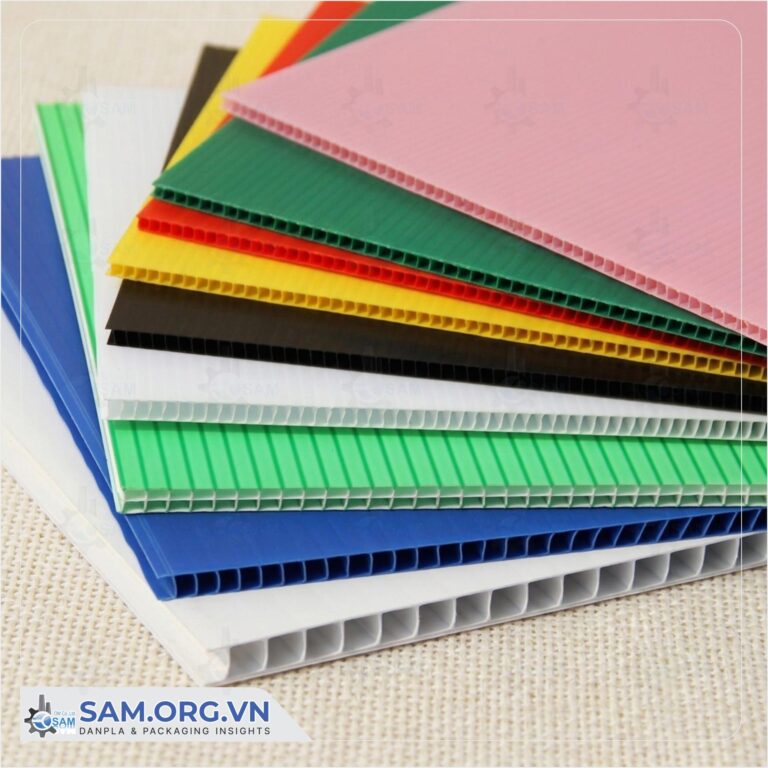
Corrugated plastic boxes are folded from twin-wall PP sheet. The sheet has two flat skins and a fluted core between them. Thickness usually ranges from 2 to 10mm. As a result, the sheet stays light yet resists bending well.
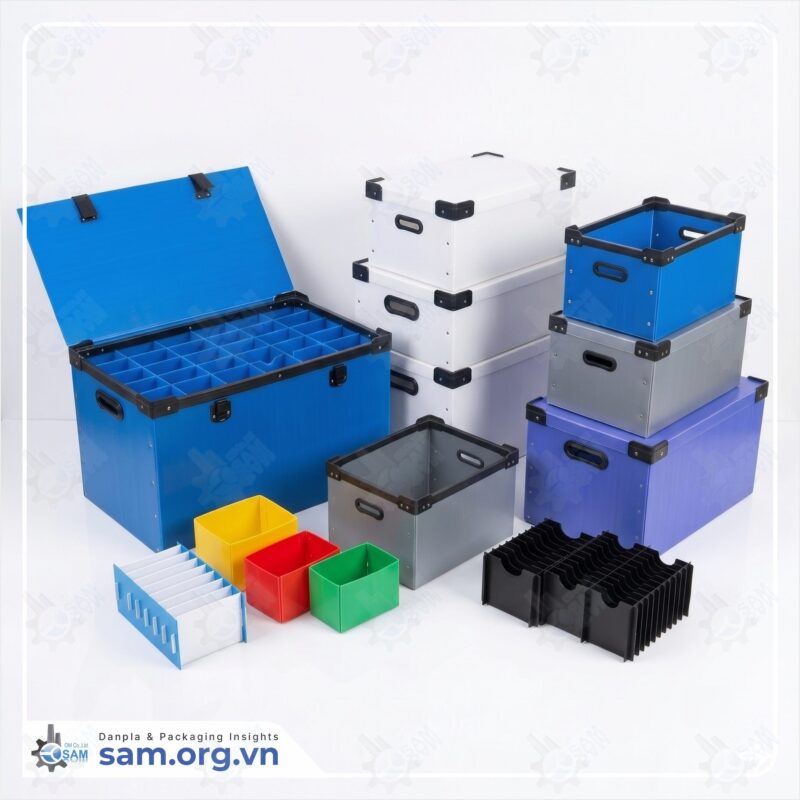
Fabricators cut, crease and join flat sheets into boxes. In addition, they fix edges with rivets, welding or plastic profiles. Sizes follow the order, so no fixed mold is needed. Therefore, upfront cost is low and sample lead time is short.
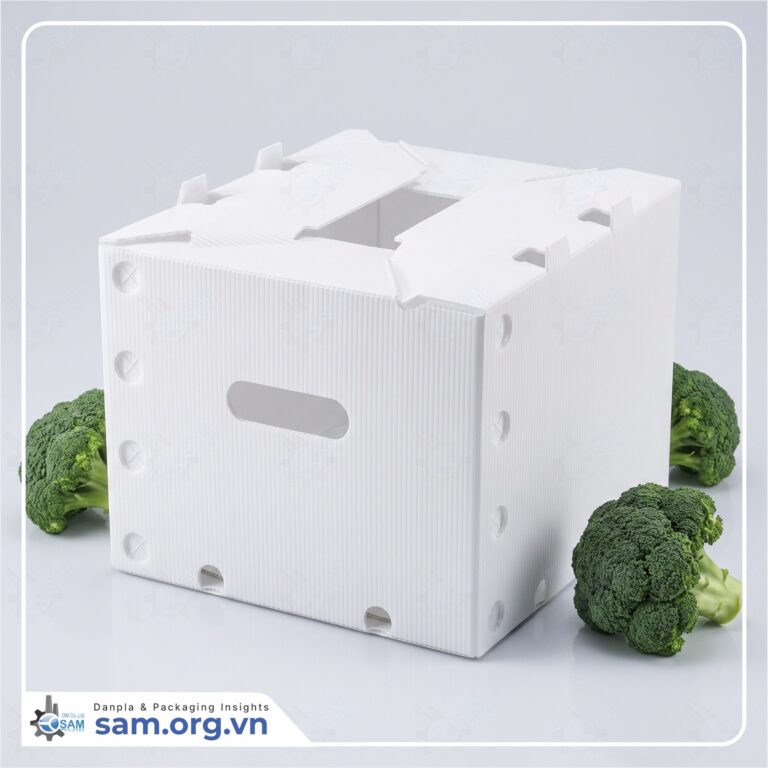
Moreover, the PP surface accepts direct printing for logos and color coding. An antistatic grade is also available for electronics. Meanwhile, the box folds flat when empty.
The low weight also cuts injury risk during manual handling. As a result, workers lift empty boxes with less strain. In a fast-moving warehouse, therefore, this affects daily productivity directly.
Solid plastic boxes
Solid plastic boxes are injection molded in one piece. The material is usually HDPE or dense PP. The walls are thick, rigid and seamless. For that reason, buyers often call them crates or industrial totes.
However, each box comes from a fixed mold. Every size needs its own tooling. Tooling is expensive, so it pays off only at high volume. Consequently, sizes and shapes stay limited to existing molds.
In return, rigid walls handle impact and heavy loads well. In addition, the boxes stack high on racking. They last for years and resist moisture and mild chemicals.
Standard sizes also let solid boxes work with conveyors and robotic stackers. Moreover, the rigid walls hold shape under automation. As a result, large sites often pick them for mechanized lines.
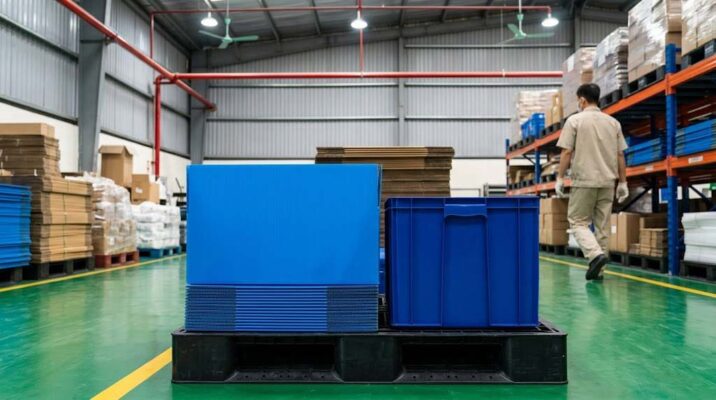
Comparing the two on six warehousing criteria
Both are reusable, yet they serve different needs. The table below sums up the key differences. After that, each group is explained in turn.
No single criterion stands alone. For example, weight drives cost, and cost drives order size. Therefore, weigh the whole set of criteria together.
| Criterion | Corrugated plastic box | Solid plastic box |
|---|---|---|
| Weight | Light | Heavy |
| Upfront cost | Low, no mold | High, needs tooling |
| Customization | Flexible, made to order | Limited to molds |
| Load and impact | Light to medium | Heavy, high impact |
| Folds when empty | Folds flat | Bulky |
| Hygiene | Wipe clean, waterproof | Pressure wash, chemical resistant |
Weight, cost and customization
A corrugated plastic box is far lighter than a solid box of the same size. As a result, freight cost drops and handling is easier. In addition, upfront cost is low because no mold is required. Therefore, buyers can order small trial batches.
A solid box is heavier and needs tooling. The upfront cost is high, so it suits large, stable orders. For customization, however, corrugated plastic clearly wins. Each product line can get its own size at no mold cost.
For seasonal sizes, corrugated plastic saves more. Meanwhile, one fixed size used for years lets a solid box recover its tooling cost. Either way, size the box close to the product. See our guide on choosing the right box size.
A clear example is weight-based trucking cost. For instance, lighter boxes let you carry more product per trip. Over a regular route, moreover, these savings add up each month.
Durability, load and hygiene
Solid boxes handle load and impact better than corrugated ones. Rigid walls allow high stacking and heavy contents. For heavy goods such as metal parts, this is a clear strength. Corrugated plastic, meanwhile, suits light to medium loads.
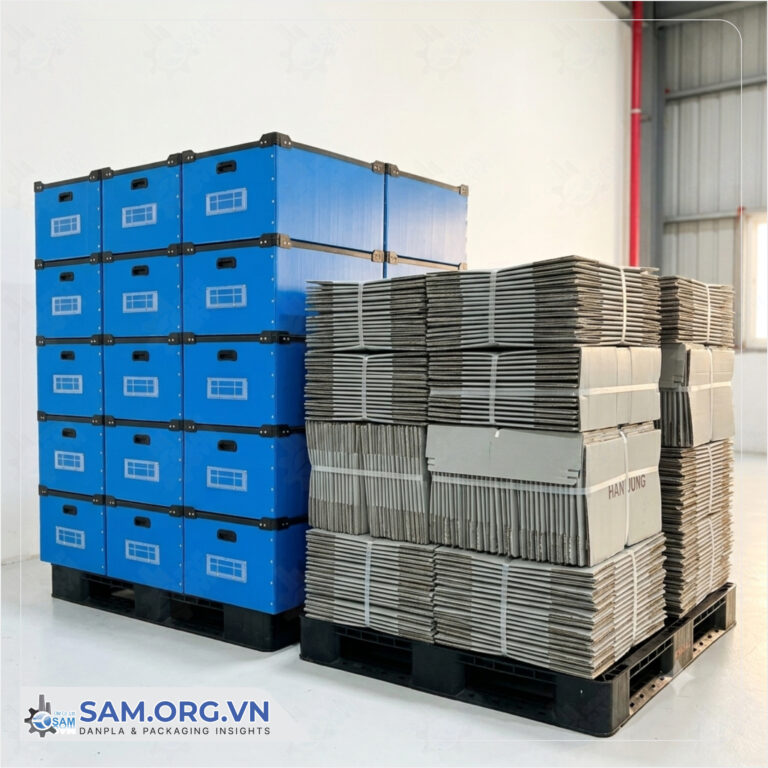
For space saving, however, corrugated plastic leads. The box folds flat when empty, so return trips cost less. A solid box stays bulky when empty. Nesting helps, yet it is still larger than a folded sheet.
Both are waterproof and easy to clean. The PP surface does not absorb moisture or grow mold. Solid boxes, however, take pressure washing and stronger chemicals. Corrugated boxes should be wiped and kept out of long soaking.
On temperature, both handle cold storage and damp air better than cardboard. Solid boxes resist impact better in low temperatures. Corrugated boxes, meanwhile, keep shape in chilled rooms and shrug off water.
Ergonomics and stacking
Box weight affects worker health over a shift. As a result, light empty corrugated boxes reduce shoulder and back strain. Solid boxes are heavier, however, and often need trolleys at volume.
For stacking, solid boxes hold heavy loads across many tiers. Corrugated boxes, in contrast, stack well at light to medium loads. In addition, ribs and a flat lid help them stack evenly without crushed corners.
Total cost of ownership
The purchase price is only part of the cost. In addition, count freight, storage space and reuse cycles. Because it is light and folds flat, corrugated plastic is cheap to ship and return. A solid box costs more to buy, yet lasts longer for heavy goods.
Therefore, judge cost per trip, not just the sticker price. For long life and heavy loads, solid boxes spread cost over years. For light, fast-moving goods, corrugated plastic gives the lower total cost.
Damage is also a hidden cost to include. For instance, a snug, rigid enough box reduces dents in transit. Fewer defects then mean fewer claims and returns.
Need technical advice tailored to your production line? Contact SAM’s engineering team — free, no obligation: +84 363 939 228 (Mr. Đạt)
Which box to choose for your operation
Neither type is better in every case. Instead, the choice depends on load, turnover and budget.
In addition, both types are made from recyclable PP. Reuse over many cycles cuts packaging waste versus cardboard. Therefore, companies with environmental goals should weigh this factor too.
When to choose corrugated plastic
Corrugated plastic suits light to medium goods. For example, electronics, textiles, produce and consumer items fit well. Moreover, it is ideal when you need many different sizes. It also fits a collect-and-fold return model.
Electronics lines use the antistatic grade to protect boards. In addition, tight warehouses gain from the fold-flat design. Companies that want branding on the box should choose it too. Many returnable programs rely on reusable corrugated plastic boxes for their low weight.
It also suits fast prototyping and small trials first. With no mold, moreover, design changes are easy and low risk. So a company can pilot one size, then scale later.
If you want to drop cardboard and cut waste, this is a logical step. As a result, one box replaces hundreds of single-use cartons.
When to choose solid plastic
Solid plastic suits heavy goods and hard impact. For example, machine parts, bottles and metal components fit this type. It lasts for years in tough conditions. In addition, it survives frequent industrial washing.
A closed loop with one fixed size favors solid boxes. High volume then spreads the mold cost. Wet or oily environments also prefer this type. Moreover, solid boxes stack well on tall racking.
Food and pharma lines wash boxes often, so they favor solid types. In addition, the seamless surface traps no dirt in seams. Strict cleaning cycles are why many plants pick them.
Many warehouses use both. Heavy goods go in solid boxes, while light, foldable goods go in corrugated plastic. This mix balances cost and performance.
Custom corrugated plastic boxes from SAM
Switching to reusable boxes needs a fabricator that hits your specs. SAM has produced corrugated plastic boxes and partitions to size since 2010. The factory runs 6 lines with over 150 tons of output per month. In addition, products use virgin PP with more than 20 colors for sorting.
Every batch is checked under ISO 9001:2015 and ISO 14001:2015. Sheets and boxes also meet SGS testing for export markets. Today the plant serves over 300 customers across 15 markets. These include electronics makers such as Canon, LG and Sumitomo Electric.
The engineering team advises on thickness, rib structure and joint type by real load. You send product and pallet sizes, and the workshop proposes a fit. An antistatic grade is ready for sensitive goods. See the full range of corrugated plastic boxes and partitions.
The workshop also takes both small sample runs and large seasonal orders. In addition, approved drawings and samples are stored for fast repeat production. As a result, later batches match the first one exactly.
Frequently asked questions
Are corrugated plastic boxes as durable as solid plastic boxes?
Solid boxes handle heavy loads and impact better. However, corrugated plastic boxes are durable for light to medium goods and reuse hundreds of times when stored well. Therefore, choose by the real load of your product line.
Which is cheaper, corrugated plastic or solid plastic boxes?
Corrugated plastic has a lower upfront cost because it needs no mold and allows small orders. In contrast, solid boxes need costly tooling and only get cheaper at high volume over long, fixed use.
Do corrugated plastic boxes fold flat to save space?
Yes. Corrugated plastic boxes fold flat when empty, so they cut storage volume and return freight. Solid plastic boxes, meanwhile, stay bulky when empty even when nested.
Can I use corrugated plastic and solid plastic boxes together?
Yes. Many warehouses run solid boxes for heavy goods and corrugated boxes for light ones. As a result, this mix optimizes cost per product line and uses the strengths of each type.
Is corrugated plastic the same as Danpla or coroplast?
Yes. Those are regional trade names for the same product. They all describe one twin-wall fluted PP sheet used for boxes and partitions. The material and structure stay identical across the names.