VI
VI EN
EN
Why fresh produce needs breathable packaging
Fresh produce keeps breathing after harvest. Because of this, it releases heat, moisture and ethylene gas. When the box is sealed, that moisture condenses inside. As a result, you get mold, soft rot and weight loss.
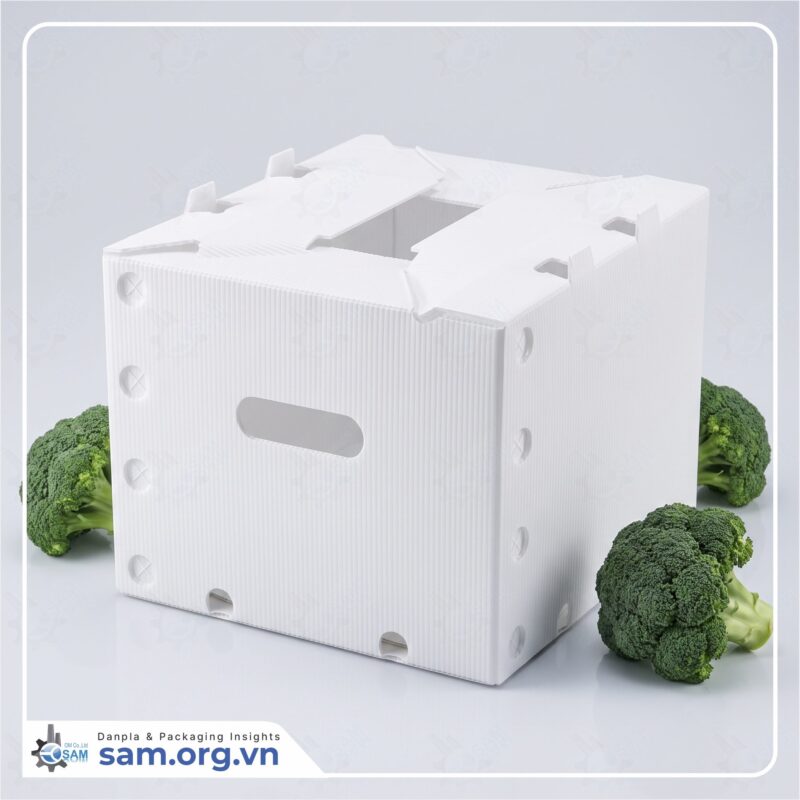
Ventilated corrugated plastic boxes solve this problem directly. Corrugated plastic, also known as Danpla, coroplast, correx or corflute, is a hollow-core fluted PP sheet. The vents let air move through the load. Therefore, the core temperature drops faster in a cold room, and excess humidity escapes instead of pooling on the fruit.
This article is written for packaging buyers in produce, seafood and processed food. In short, it covers vent design, material specs and how to match a box to each type of goods. The goal is to cut waste while keeping packaging cost under control.
How the ventilated design works
The basic idea is to create a path for air in and air out. Cool air enters low, and warm air leaves high. Therefore, a good design cools the whole load, not just the outer layer. For that reason, vent position and count matter as much as total open area.
The hollow fluted PP core
The sheet has a hollow fluted core running along its length. As a result, it stays stiff while the weight stays low. The material is virgin PP, and the common thickness ranges from 2 to 10mm. Moreover, PP does not absorb water, so the box surface stays dry in humid air.
This hollow core also allows venting without weakening the structure. Therefore, the walls keep their top-load strength when boxes are stacked. That is the key difference from cardboard, which loses stiffness as soon as it gets damp.
Sheet thickness and weight set how stiff the box feels. Thin sheet is light and cheap, but it carries less load. Thicker sheet, however, holds its shape better on tall stacks and long routes. For a vented box, moreover, the thickness must also offset the material lost to the holes.
Vent layout and open area
Vents usually sit on the two long walls and the base. Consequently, air flows sideways through the load. In practice, an open area near 5 percent of the surface is a common balance. Too little is stuffy, while too much cuts the load rating.
Vents can be round holes, long slots or mesh windows. For example, round holes are easy to cut and keep the walls stiff. Long slots give more airflow, so they suit goods that need fast cooling. In addition, vents should line up between stacked boxes, otherwise the airflow gets blocked.
Very large vents can let small items or insects through. Therefore, the hole size should follow the specific goods. For small fruit like berries, for instance, use many small holes rather than a few big ones. As a result, the box stays breathable yet still holds the load.
Pairing vents with partitions
Some fragile goods need internal cells inside the box. Therefore, partitions hold each fruit or tray in place. In that case, the vents must still line up with the partition gaps. As a result, air passes through every cell without getting blocked. This layout suits premium fruit and trayed goods.
Applications across produce and food groups
Vegetables and fresh fruit
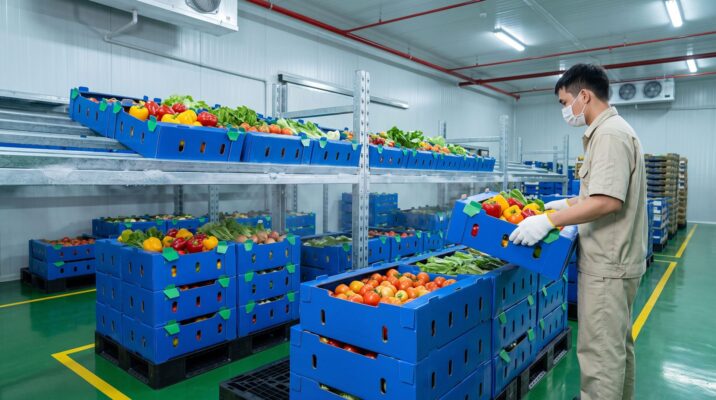
Leafy greens and soft fruit need to shed respiration heat all the time. Therefore, a vented box keeps fruit firmer for longer and reduces bruising. For chilled loads, cold air passes through the vents and cools the whole stack evenly. As a result, the cooling time drops and quality stays consistent.
Temperature and humidity both decide how fresh the goods stay. A vented box, therefore, helps control both during transit. For herbs and mushrooms, for example, a few stuffy hours can spoil the whole batch. As a result, the packaging choice directly affects the reject rate at delivery.
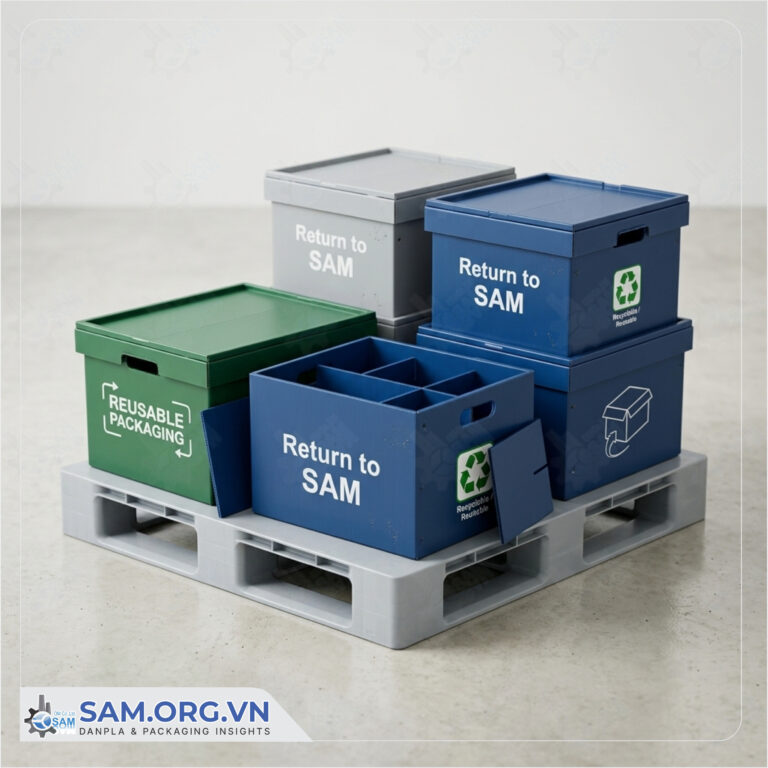
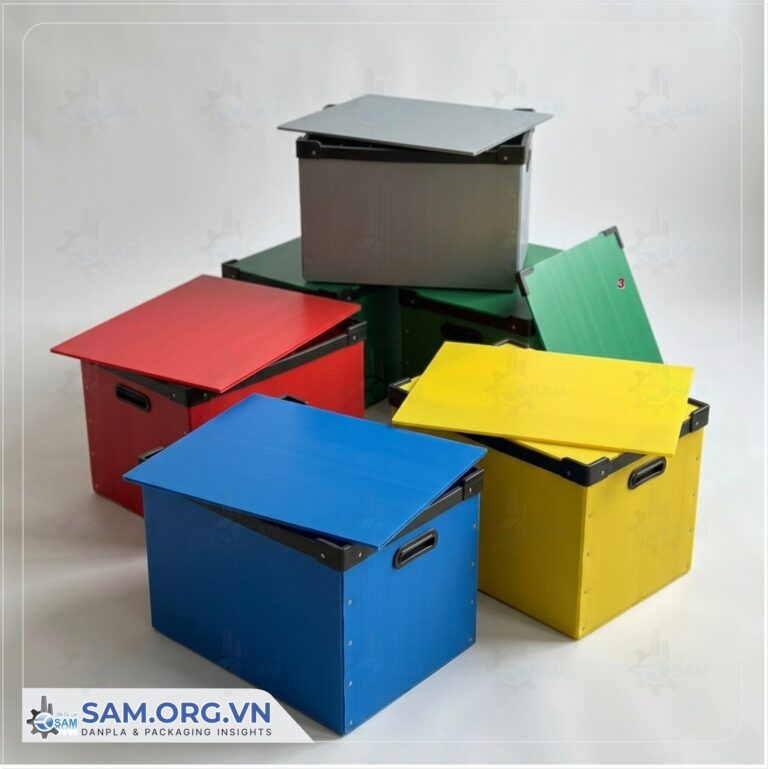
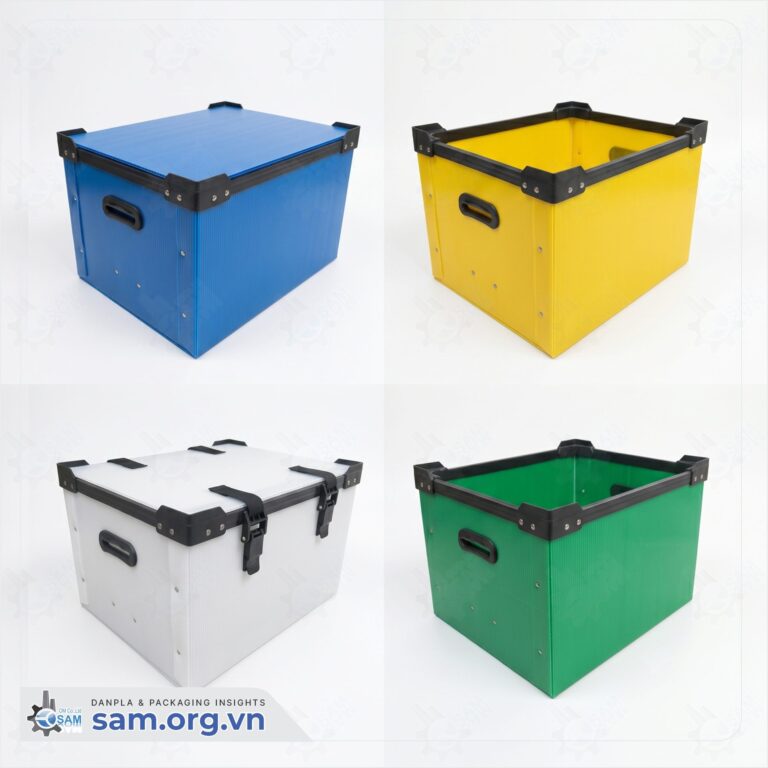
These boxes also run many trips, so they fit closed-loop supply chains. In addition, buyers can review our reusable corrugated plastic boxes to work out the cost per rotation.
Need vent and thickness advice tailored to your produce? Contact SAM’s engineering team, free and with no obligation: +84 363 939 228 (Mr. Đạt)
Seafood and processed food
Seafood and wet food must drain water and survive washdown. Because PP does not soak up water, you can rinse the box, wipe it and reuse it. Meanwhile, base vents let melt water drain out, so it does not pool under the load. For frozen goods, the box also keeps its stiffness at low temperature.
Trayed processed food uses vented boxes too, mainly to release heat after freezing. Therefore, the vent count and box size should follow the load weight and the pallet pattern.
The low box weight also speeds up handling inside the cold room. As a result, workers lift and stack with less strain than with solid crates. Moreover, the smooth surface makes each box easy to clean between shifts. That is why this matters for goods under food-safety rules.
Cut flowers and seedlings
Cut flowers and seedlings lose water very fast after cutting. Therefore, a vented box reduces trapped moisture and stem mold. Side vents let excess humidity escape evenly. For seedlings, moreover, base drainage stops root rot during watering. As a result, this group needs a box that is both breathable and light to cut air-freight cost. The box color can also be chosen to shade each plant type as needed.
Material comparison and how to choose the specs
Vented corrugated plastic vs cardboard and solid crates
Vented cardboard is cheap at first, but it soaks up water and fails fast. In the humid world of produce, therefore, its service life is very short. Solid plastic crates are durable, yet they are heavy and cost more upfront. Corrugated plastic sits in between: light, moisture-proof and good for many trips.
Hygiene is another point where the two materials differ. Cardboard cannot be washed, so it retains moisture and odors. The PP surface, however, wipes clean and dries fast. As a result, the same box can move food safely across many cycles.
The low weight also cuts freight cost per trip. Moreover, boxes fold flat when empty, so they save warehouse space and return volume. For that reason, many teams switch from cardboard to corrugated plastic boxes and partitions on repeat lanes.
You should also weigh material choice on total cost of ownership, not just purchase price. A cheap box that damages the goods, after all, costs far more. For high-value fresh produce, therefore, the spoilage cost often beats the packaging cost.
Cost per rotation
One plastic box costs more than one cardboard box upfront. However, it runs many trips, so the shared cost drops sharply. If a box runs a few dozen trips, therefore, the cost per trip beats single-use cardboard. In addition, you should add the saved spoilage and the lower freight from light weight. This math is clearest on lanes that repeat all year.
Locking the specs: thickness, size and vent type
Choose thickness by load weight and stack height. For example, light goods like leafy greens work well at 3 to 4mm. Heavy or tall stacks, however, should use 5mm and above. In addition, the size should match the pallet, so you avoid wasted space and keep the stack stable.
Pick the vent type by the cooling speed you need. After that, lock the inner size to your pack pattern. For guidance, see how to approach choosing the right box size by product and pallet.
Beyond those three specs, you should also plan for transport and reuse. For long hauls, therefore, pick a higher thickness to handle vibration. For internal loops, meanwhile, favor fold-flat boxes to save storage. If you are unsure, moreover, run a small sample batch before a large order.
Why work with a local converter
A vented box must match the exact goods, because there is no one-size template. Therefore, custom converting capacity is the deciding factor. SAM has produced since 2010, with over 150 tonnes per month across 6 lines. In addition, the plant holds ISO 9001:2015 and ISO 14001:2015 certification.
The engineering team advises on thickness, vent position and size for each crop. After approval, the boxes are punched, die-cut and folded from a signed drawing. Moreover, the material is virgin PP, with over 20 colors to sort boxes by lane.
A short sample loop also lowers the risk before a big commitment. For example, you can test one vent layout on a real route first. Then, based on the result, you adjust the hole count or the thickness. As a result, the final spec fits the actual cargo rather than a guess.
The virgin PP gives a clean surface, so it suits goods that touch food. Moreover, pre-colored sheets help teams sort boxes fast by lane and by product. Each batch can also carry a printed code or logo for traceability.
A 5,000 m² plant lets the team take large seasonal orders. In addition, ready material stock shortens delivery during peak demand. For produce, therefore, the harvest window is short, so response speed is a real advantage.
Over 300 customers across 15 export markets already use packaging from this plant. As a result, that experience shortens sampling and keeps delivery on time for the season. For fresh goods, after all, an on-time delivery matters as much as the right spec.
Frequently asked questions
Is corrugated plastic the same as Danpla or coroplast?
Yes. These are simply regional trade names for the same hollow fluted PP sheet. In other words, coroplast, correx and corflute all describe one material.
Do vented boxes survive cold and frozen storage?
Yes. PP keeps its stiffness at the low temperature of chilled and frozen rooms. Because the surface does not absorb water, it does not go soft with humidity or melting ice.
How much open vent area is right?
An open area near 5 percent of the surface usually balances airflow and load. For goods that need fast cooling, however, you can add more open area. In practice, set the exact figure by the load type and the stack pattern.
Can I order a custom size?
Yes. The size, thickness and vent type are all made to order. Moreover, the team builds a sample to your pack pattern and pallet before production.