VI
VI EN
EN
Why partitions must be designed around each component
Corrugated plastic, also known as Danpla, coroplast, correx or corflute, is a hollow-core fluted PP sheet. Partitions cut from it are not a one-size-fits-all product. Instead, each component has its own size, weight and fragile points. As a result, a divider set that is off by a few millimeters lets parts shift in transit. Moreover, impact between parts is a common cause of scratches and cracks.
Corrugated plastic partitions solve this problem because cells are cut to match the part profile. Therefore, B2B buyers get dividers that fit snugly, allow fast picking and last for many cycles. This article explains how to design partitions around the component. In addition, it covers measurement, cell structure, thickness and cell density. Ultimately, the goal is strong protection at a low cost per use.
How corrugated plastic partitions are built
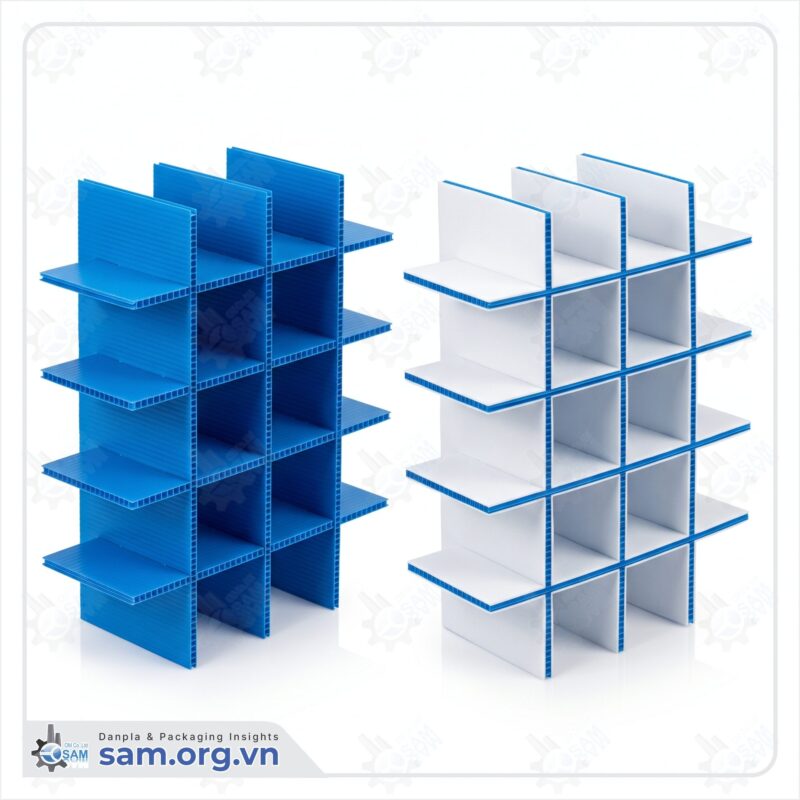
A partition is a set of slotted plastic sheets that interlock into a grid. Each cell holds one part and separates it from the parts nearby. The base material is fluted PP sheet, from 2 to 10mm thick. Because of the hollow flutes, the sheet stays light yet stiff along the load direction.
Why fluted PP works well
Fluted PP is lighter than solid plastic at the same stiffness. Therefore, the divider set adds little weight to the box. Moreover, the material handles moisture well and does not soften like cardboard. Because the surface is smooth, parts slide into cells with little friction. As a result, the partition fits cold rooms and humid areas alike.
The flutes run in one direction, so the sheet is stiff along that axis and softer across it. During design, therefore, the flute direction lines up with the main load of the cell. This detail decides whether the divider sags under a stack. Consequently, a good set plans the flute direction from the drawing stage.
The cross-slot assembly method
The most common style uses cross-slots. First, the vertical and horizontal sheets are cut halfway through. Then, they interlock without glue or staples. As a result, the set comes apart for cleaning and stores flat when idle. This is a clear advantage over foam dividers that are glued in place.
Loose dividers versus one-piece inserts
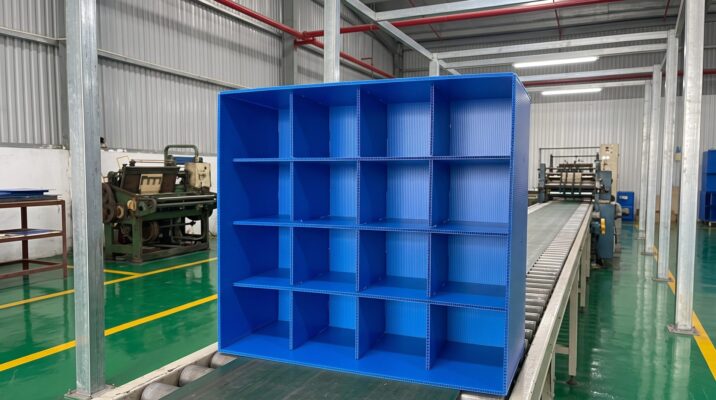
Besides the slotted style, a one-piece folded insert can be made from a single blank. This type suits small parts, a fixed cell count and high volumes. However, loose dividers stay more flexible when the cell count changes by batch. Typically, the set fits inside corrugated plastic boxes and partitions of the same material, so the dimensions match exactly.
Designing cells around the part profile
Design starts from a drawing or a real sample of the component. First, a technician measures length, width, height and any protruding feature. Then, each cell is sized slightly larger than the part. Consequently, this small gap allows quick picking but stops the part from rattling.
Tolerance and pick-out clearance
For rigid parts, a tolerance of about 2 to 4mm per side works well. However, scratch-prone surfaces need a wider gap so they do not rub the cell walls. In addition, you can chamfer the cell edge or add a finger notch for faster handling. As a result, the operator picks and places parts without lifting the whole divider.
Shaped cells for non-square parts
Many components are round, curved or stepped in shape. For these, a square cell is often too wide and lets the part lean. Therefore, the fix is to cut a curved profile into the sheet or to add a locating insert. As a result, the part sits in one position, which lowers the risk of dented edges and bent pins. This layout matters most for connectors, sensors and boards.
Labeling and color coding cells
Beyond size, cell identification also matters from the start. For example, a part code or a sequence number can appear on the wall. Thus, the operator places the right part into the right cell. Otherwise, a wrong position on an assembly line causes mix-ups and traceability errors.
Color coding is another quick method. In practice, each sheet color maps to one product line or one shift. As a box moves through stations, therefore, color routes it without label reading. Because the sheet comes in many colors, it can encode several product groups at once.
Cushioning for fragile parts
Some parts, such as glass, ceramics or optics, are highly shock-sensitive. For this group, therefore, the cell should include extra clearance around the part. In addition, a thin foam pad under the cell floor absorbs vibration. As a result, the divider holds position while the pad softens any hard set-down.
For parts with long pins or connectors, moreover, leave a separate slot for the protruding feature. Otherwise, the pins press against the wall and bend. Because such contact is hard to see on a drawing, a real trial set is worth making. Consequently, one trial reveals the pressure points early.
Need technical advice tailored to your production line? Contact SAM’s engineering team, free, no obligation: +84 363 939 228 (Mr. Đạt)
Pick direction and repeat handling
The cell layout should follow how operators pick and place parts each day. When cells sit in the order of the task, therefore, the reach distance and cycle time drop. On a fast line, moreover, a few seconds per cycle add up to a large gap over a shift.
Divider height also affects handling. If the wall stands too tall, it hides the part and makes removal hard. If it sits too low, however, it cannot hold a tall part. As a rule, therefore, a height near two-thirds of the part works well.
Choosing thickness, cell density and material
Three parameters decide divider quality: sheet thickness, cell density and plastic type. When these three are right, protection and cost stay balanced. In contrast, a wrong choice makes the divider either too weak or too heavy and costly.
Thickness by part weight
For light, small parts, a 3 to 4mm sheet is stiff enough. However, heavy parts or multi-tier stacks need 5mm or more. Moreover, the taller the divider, the thicker the sheet must be to resist bending. If you are unsure, review it together with choosing the right box size so the divider and box stay in sync.
Standard versus antistatic material
For mechanical, plastic or packaging goods, standard PP is a good fit. In contrast, static-sensitive electronics need a specialized grade. In that case, choose antistatic corrugated plastic partitions to protect the circuits. This material drains static away, so a discharge does not damage the chips. Furthermore, color helps sorting, because each color can map to one product line or one process step.
Cell density and box balance
Cell density is the number of cells per box area. When cells grow smaller and denser, the design adds more walls, which raises protection but also weight. For parts that knock together easily, therefore, high density is worth it. In contrast, for less sensitive parts, a sparser grid lowers material cost.
The cell layout should spread evenly so the box stays balanced. Otherwise, heavy parts on one side make the box tip during stacking. For this reason, heavy cells sit near the base and split across both axes. As a result, this rule keeps pallets stable in storage and transit.
Corrugated plastic versus foam and carton
Carton dividers are cheap, but they absorb water, tear easily and rarely reuse well. Foam dividers cushion well; however, they are hard to clean and bulky to store. In contrast, corrugated plastic balances both: stiff enough, light, moisture-resistant and flat to store.
Because the life span is long and reuse is high, the cost per trip drops sharply. For this reason, internal delivery loops prefer this type. When a soft touch is needed for glossy surfaces, moreover, a foam liner can pair with the plastic divider.
Matching the divider to the box
A divider only works well inside the right box, so you design the two together. First, the internal box dimensions set the outer size of the grid. Then, wall thickness and any box ribs reduce the usable space. As a result, the cell count fits without forcing the sheets in.
Because both parts share the same PP material, they hold shape alike over many trips. Moreover, a snug divider stops the load from shifting even when the box runs half full. For a deeper look, the ribbed walls and base carry as much load as the divider itself.
Standard cells versus a fully custom cut
Not every divider needs a fully custom cut. For common parts, therefore, a standard cell size is often enough and faster to make. A fully custom cut helps only when the part has a hard shape or a tight tolerance. Weighing the two options, as a result, saves both time and tooling cost.
A common trick is to size cells as multiples of the standard sheet width. Because of this, the offcut waste drops noticeably. Moreover, a design that follows the stock sheet shortens the lead time. For repeat orders, finally, the cutting template stays on file so the next run goes faster.
Custom partition fabrication at SAM
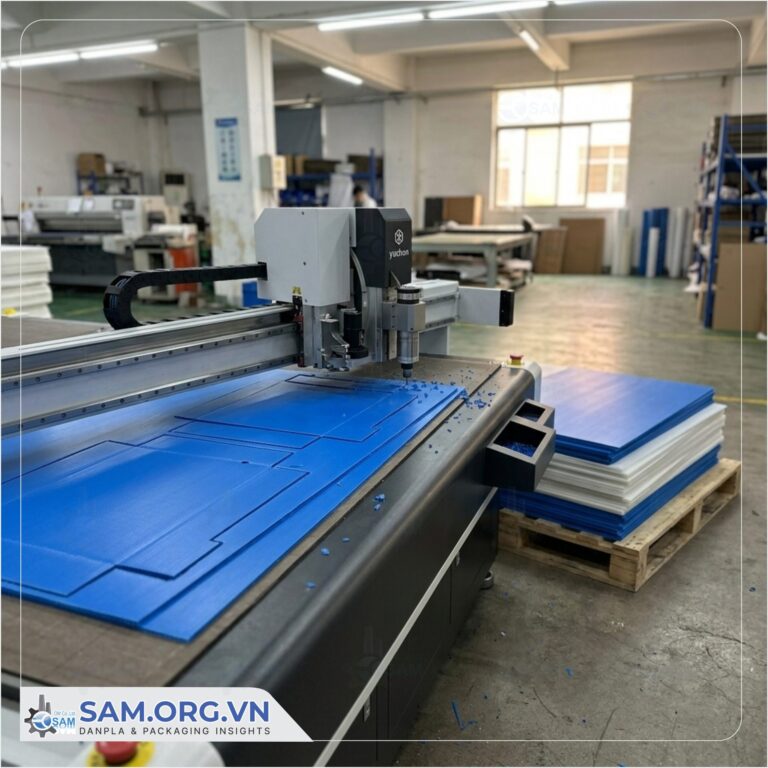
SAM produces the sheet and fabricates the partitions from the same virgin PP source. Because the extrusion step is in-house, cell size and thickness are cut to the exact drawing you send. In addition, the plant runs 6 lines, over 150 tons per month and more than 20 sheet colors. Therefore, this scale serves both small trial orders and repeat volume runs.
Every batch is checked for cell size and fit before dispatch, under an ISO 9001:2015 system. Moreover, the engineering team takes a part sample, builds a cell drawing and makes a trial set before full production. As a result, this workflow lowers the risk of a wrong cell in the real run. Today, electronics and logistics buyers across more than 15 export markets use partitions made this way. For deeper detail, see the corrugated plastic box structure guide.
Frequently asked questions
Are corrugated plastic partitions reusable?
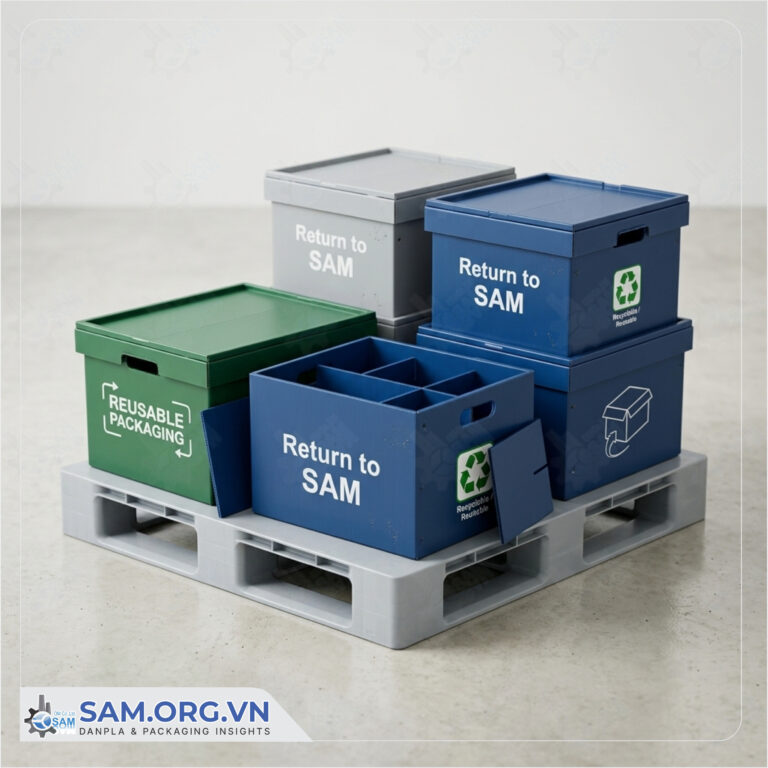
Yes, they are. Because slotted dividers come apart, they store flat and reassemble many times. Moreover, PP does not absorb water, so the divider wipes clean and returns for many delivery cycles. For this reason, these partitions suit a returnable packaging model.
What do I send to order a custom divider?
Ideally, send a technical drawing or a real part sample. In addition, include the number of parts per box and the current box size. From this, the plant builds the cell layout, selects the thickness and makes a trial set for approval.
Which sheet thickness should I choose?
For light parts, use a 3 to 4mm sheet; for heavy parts or tall dividers, use 5mm or more. Because the sheet ranges from 2 to 10mm, you can match the load exactly. Therefore, the choice follows part weight and divider height rather than guesswork.
How does an antistatic divider differ from a standard one?
An antistatic divider uses PP with a conductive additive, so it drains charge safely. In contrast, a standard divider has no such feature and suits only non-sensitive goods. Therefore, for boards and sensors, the antistatic grade is the safer choice.