VI
VI EN
EN
Why sustainable packaging now defines modern factories
Environmental pressure is reshaping the packaging industry. For example, Vietnam aims to expand eco-friendly packaging across sectors. Buyers in the US, Japan, and the UK also tighten emission rules. Therefore, sustainable packaging is no longer a bonus. In fact, it has become a condition for joining global supply chains.
For factories, however, the challenge goes beyond swapping materials. It means balancing cost, durability, and waste goals at once. A wrong choice damages goods in transit. In contrast, a smart choice saves money for years.
In addition, regulators keep raising the bar each year. For this reason, early movers gain a clear edge. Therefore, acting now beats reacting later. This article examines sustainable packaging from a production view. Above all, we focus on measurable solutions that map to a real B2B line.
What sustainable packaging means in industrial production
Sustainable packaging reduces environmental impact across its full lifecycle. In other words, it covers production, use, and end-of-life handling. In an industrial setting, however, the definition must stay concrete. Therefore, it should rely on data and verifiable criteria.
In practice, a clear definition guides better buying choices. For example, a buyer can compare two options on the same scale. Without it, vague claims drive the decision instead. Therefore, a shared definition protects both cost and credibility.
The three pillars of sustainable packaging
First, the material should create low emissions during production. Moreover, it should use less energy and fewer raw inputs. Second, the packaging should be reusable or recyclable. As a rule, reusable packaging stays greener than single-use packaging. Finally, the design should reduce the total waste left behind.
Only packaging that meets all three pillars is truly sustainable. However, many firms meet just one pillar and still claim a green label. As a result, this approach can mislead buyers. Therefore, a fair review must consider the whole lifecycle, not one stage.
Reuse first, then recycle
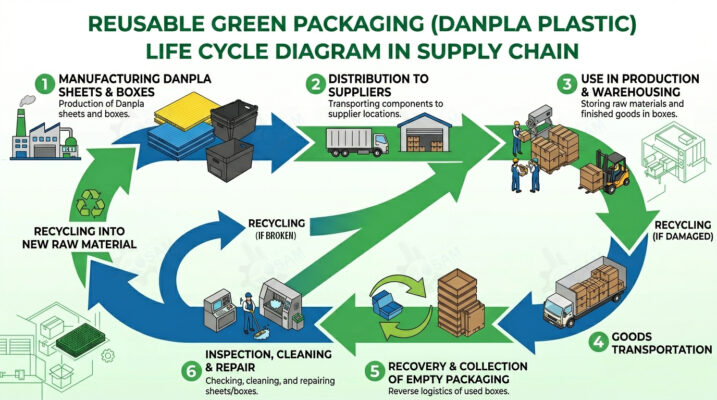
Reuse and recycling are not the same step. In short, reuse keeps the product whole for another trip. Recycling, by contrast, breaks it down into new material. Therefore, reuse should come first in any green plan.
For most factories, reuse delivers the larger and faster gain. For example, one durable box can replace dozens of disposable ones. Recycling then handles the box at the very end of life. As a result, the two steps work best together, not alone.
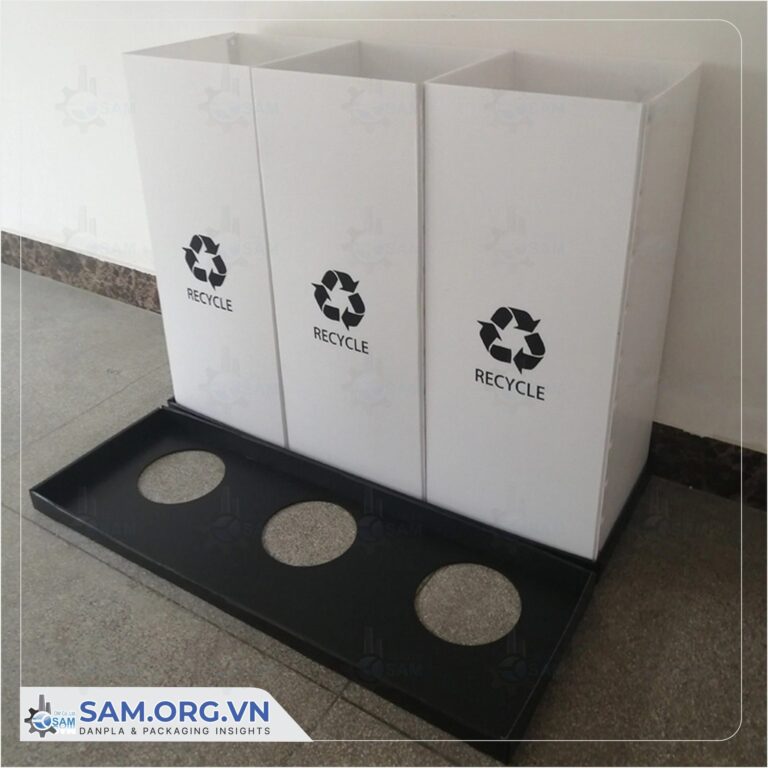
Still, recycling stays essential at the close of the loop. For example, a worn box should not end up as landfill waste. Instead, the PP material returns to make new sheets. As a result, almost nothing is truly thrown away.
Recyclable and reusable materials
PP plastic is a clear example of a recyclable material. For instance, Corrugated plastic sheets made from virgin PP can be ground and recycled at end of life. In addition, the material stays light, strong, and ready for many trips. As a result, it forms the base for a circular packaging model.
Compared with carton, Danpla resists moisture and pressure far better. For example, a carton sheet often fails after a few uses. A Danpla sheet, however, can serve dozens of cycles. Therefore, its long life cuts total waste per shipment.
Sustainable packaging solutions for the production line
Moving to sustainable packaging does not require a full process overhaul. Instead, companies can start with items used over and over. For this reason, that is where reusable packaging delivers value fastest.
Reusable packaging for internal handling
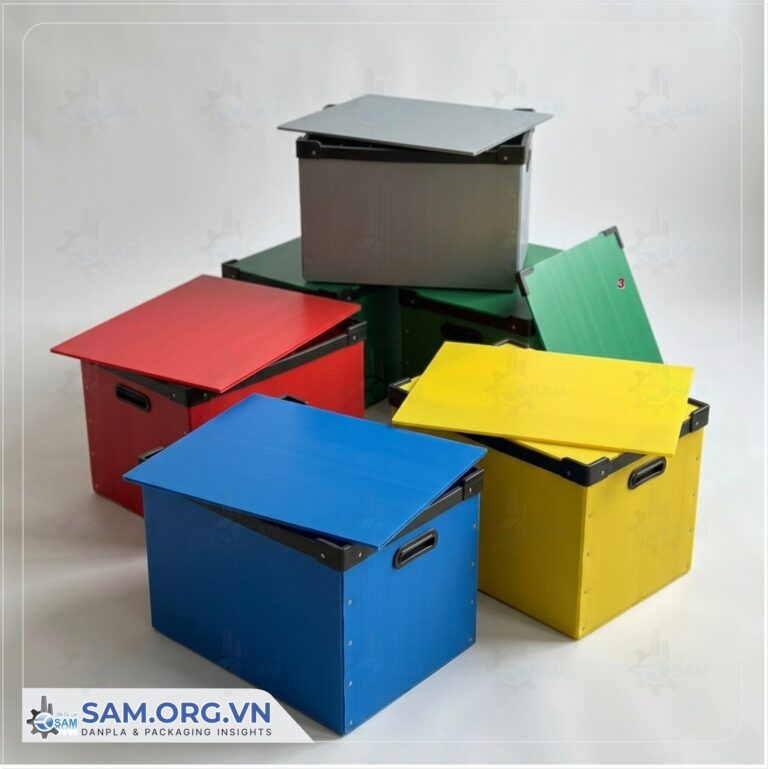
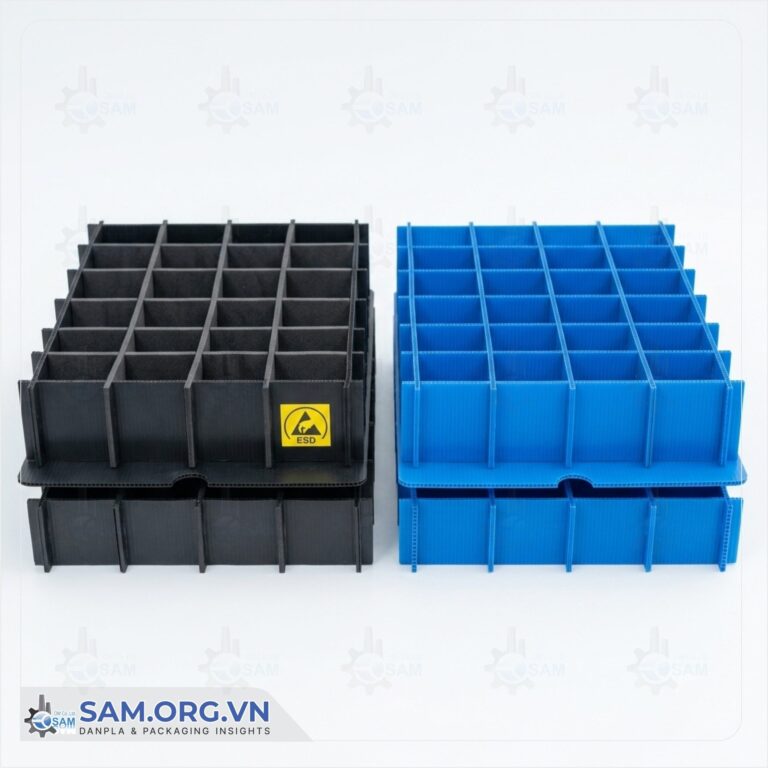
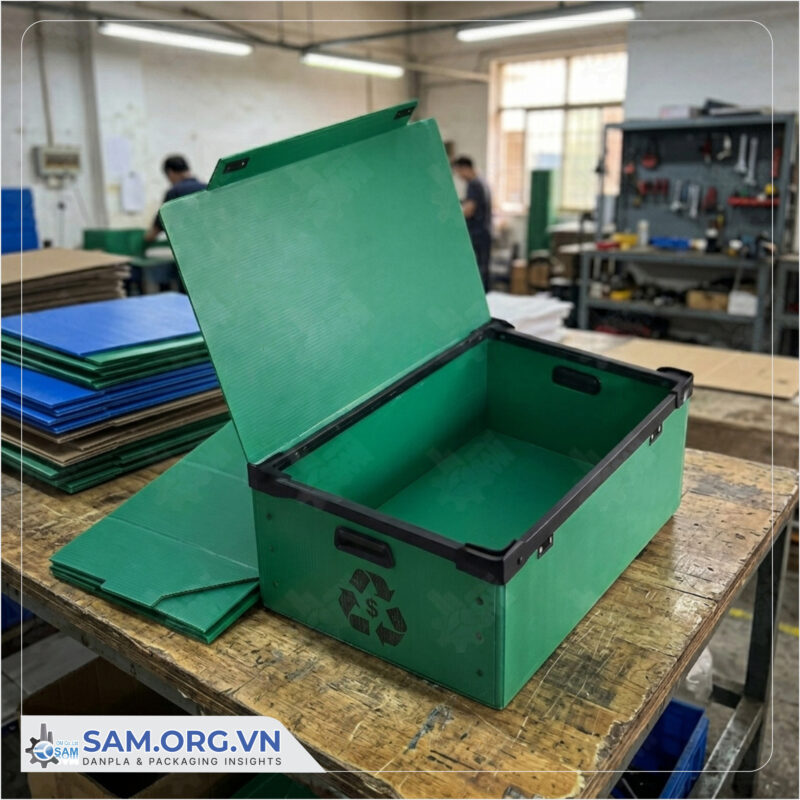
Moving parts between stations repeats every single day. Therefore, this is an ideal place for reusable packaging. Corrugated plastic boxes and partitions are built to product size. In addition, they protect goods and fold flat when idle.
This model is also known as returnable packaging. In practice, the box cycles many times across supply points. As a result, each cycle replaces several single-use cartons. Moreover, the environmental gain grows with every loop.
In addition, durable boxes lower the rate of damaged parts. As a result, the line keeps a steadier flow of good units. Over time, this stability also trims rework and scrap. Therefore, the benefit reaches well beyond the box itself.
Want to know which packaging items to convert to reusable solutions first? Contact the SAM technical team — free and with no obligation: +84 2203.851.833
Cushioning instead of hard-to-recycle materials
Many factories still use foam that is hard to sort and recycle. In contrast, EVA and PE foam offer a cleaner option. For example, the material is CNC cut and routed to the exact product shape. As a result, this method reduces excess padding and packaging waste.
Moreover, a snug-cut cushion protects goods better in transit. In turn, fewer damaged goods mean fewer items remade. This is an environmental benefit that teams often overlook. Therefore, cutting damage also cuts hidden emissions across the chain.
Standard sizes that travel well
Standard box sizes also support a greener line. In practice, uniform boxes stack tightly on a pallet. Therefore, each truck carries more goods per trip. As a result, fewer trips mean lower transport emissions.
In addition, fold-flat boxes save space on the return leg. Empty boxes ship back compact, not bulky. For this reason, return logistics stay cheap and efficient. Moreover, the same boxes can serve many product lines at once.
Together, these steps form a practical green roadmap. For example, a plant can start with one product family. Then it can measure waste and cost before scaling up. As a result, the shift stays low-risk and easy to defend. Finally, the data builds a strong case for the next phase.
Why choose SAM for your sustainable packaging roadmap
Sustainable packaging works only with stable production behind it. SAM has operated since 2010, with over 16 years of experience. In addition, the plant runs 6 lines and over 150 tonnes per month. As a result, this scale meets large orders and strict technical demands.
Certifications and verifiable capability
SAM holds ISO 9001:2015 for quality management. Moreover, the company holds ISO 14001:2015 for environmental management. This environmental certificate matters greatly for sustainable packaging goals. Therefore, it shows the process is controlled to international standards.
Furthermore, a documented system makes audits far easier. For example, partners often request proof of environmental control. With certificates in hand, SAM answers these requests quickly. As a result, onboarding with new buyers moves faster.
In addition, products serve over 300 clients across 15+ export markets. For example, shipments to the US, Japan, Australia, the UK, and Russia each carry their own rules. As a result, this experience helps SAM advise the right fit per industry. For instance, reusable corrugated plastic boxes are already proven in the field.
Beyond products, SAM supports the full switch with technical advice. For example, the team helps map which items suit reuse first. In addition, custom sizes match each line without excess waste. Therefore, the roadmap stays practical and easy to follow. In short, the team turns a broad goal into clear, costed steps for each line.
Frequently asked questions about sustainable packaging
Is sustainable packaging more expensive than standard packaging?
The upfront cost is usually higher than single-use packaging. However, reusable packaging lasts for dozens of cycles. As a result, the cost per trip drops clearly over time. In most cases, companies recover the investment within a few months.
Can corrugated plastic sheets be recycled?
Yes. Danpla is made from PP plastic, so it can be ground and recycled. After its service life, the material returns for reprocessing. Therefore, the packaging joins a circular economy model.
Does sustainable packaging meet export requirements?
Many large markets now demand lower supply-chain emissions. As a result, reusable and recyclable packaging helps meet these rules. In addition, SAM products are made under ISO 14001:2015. Therefore, the certification record supports work with overseas partners.
Can we convert part of the line instead of all of it?
Yes, absolutely. First, start with internal handling items. As a rule, that is where reusable packaging pays off fastest. After that, expand to other stages along a clear roadmap.