VI
VI EN
EN

Why buyers should compare PP corrugated plastic sheets first
PP corrugated plastic sheets are not a single uniform product. In fact, the market offers many grades that differ in thickness, color and function. Each grade serves a specific packaging need. As a result, the wrong choice raises cost and lowers protection.
B2B buyers usually want a clear classification framework. Such a framework helps match production needs to material specs. Therefore this article groups the common types into three criteria. These are thickness, color and technical grade.
With these three groups, you can narrow down the right material quickly. Moreover, SAM produces its sheets from 100% virgin PP. As a result, mechanical strength stays consistent between batches. The next sections cover each group in turn.
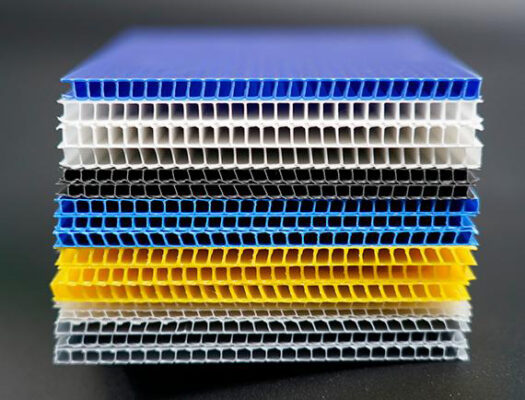
PP corrugated plastic sheets are also called PP hollow board or corflute. The structure has two flat skins and a fluted core between them. Thanks to this hollow core, the sheet stays light yet rigid. This feature is the basis for every classification below.
This guide focuses on practical selection rather than chemistry. Therefore it targets buyers who must place an order soon. Each section ends with a clear takeaway for procurement. In short, the aim is a faster and more confident decision.
Types by thickness and basis weight
Thickness is the first criterion to define. It drives load capacity and the weight of the package. Thicker sheets resist compression better, but they also cost more.
The 2–10mm range and matching uses
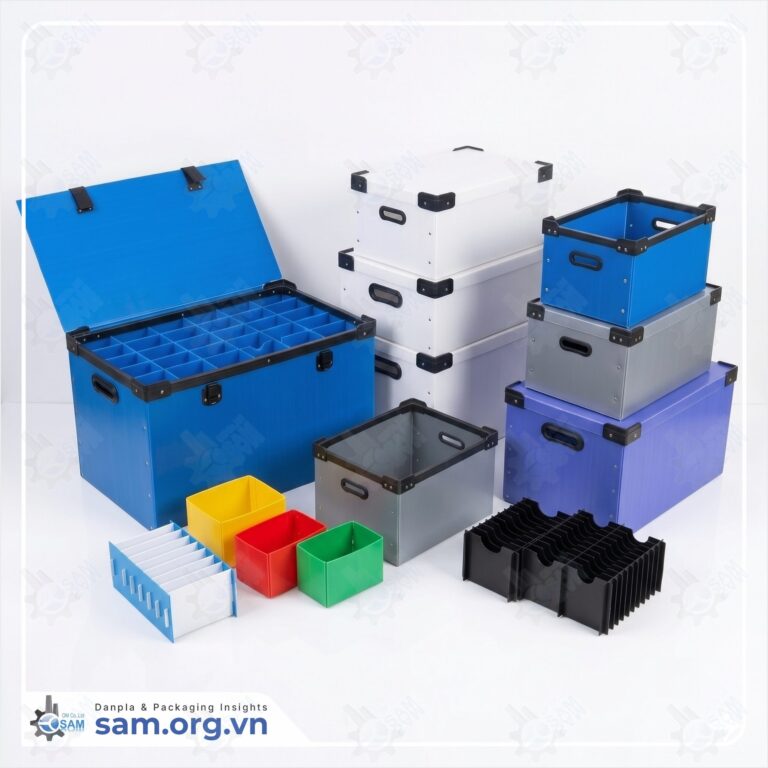
SAM produces sheets from 2mm to 10mm thick. For example, thin 2–3mm sheets suit liners, light partitions and printed boards. Medium 4–5mm sheets work well for component bins and trays. Meanwhile, thick 6–10mm sheets fit heavy-duty boxes and pallets.
You should pick thickness based on load and reuse cycles. Therefore packaging that circulates often deserves a thicker sheet. As a result, service life rises and cost per trip falls.
Many buyers compare these sheets with carton to pick a thickness. For example, a 4mm sheet often replaces a 3-ply carton box. A 5mm or thicker sheet replaces a 5-ply carton box. As a result, this comparison speeds up the switch between materials.
Basis weight, sheet width and tolerance
The same thickness can come in several basis weights. Basis weight is measured in grams per square meter. In addition, a higher value gives a stiffer, more impact-resistant sheet. The maximum sheet width reaches 2100mm, so large boxes are easy to cut.
When you request a quote, state thickness, basis weight and width clearly. The engineering team will then match them to your real application. The goal is to avoid over-specifying and wasting material.
Stiffness matters as much as raw thickness in many uses. For example, a higher basis weight at the same thickness adds rigidity. For tall stacked boxes, that rigidity prevents bulging. Therefore both numbers belong in the spec.
Thickness also affects folding and die-cutting. Thin sheets fold into compact boxes easily. However, thicker sheets need deeper crease lines to fold cleanly. As a result, the team plans crease lines during sampling.
Types by color and technical grade
Besides thickness, color and additives create different product lines. This group ties directly to industry requirements. In some cases, a sector requires a specialized grade by default.
More than 20 standard colors
SAM offers more than 20 standard sheet colors. Color is not only for brand identity. It also sorts goods by zone or by process step. For example, each line can use one box color to prevent mix-ups.
Basic colors such as blue, red and yellow are usually in stock and cheaper. Special colors such as clear white or grey are made to order. However, for large orders, SAM mixes custom colors on request.
Color coding also supports lean workflows on the floor. For example, teams sort work-in-progress trays by color at a glance. As a result, this cuts picking errors during busy shifts. In addition, it speeds up the return of empty packaging.
ESD, conductive and flame-retardant grades
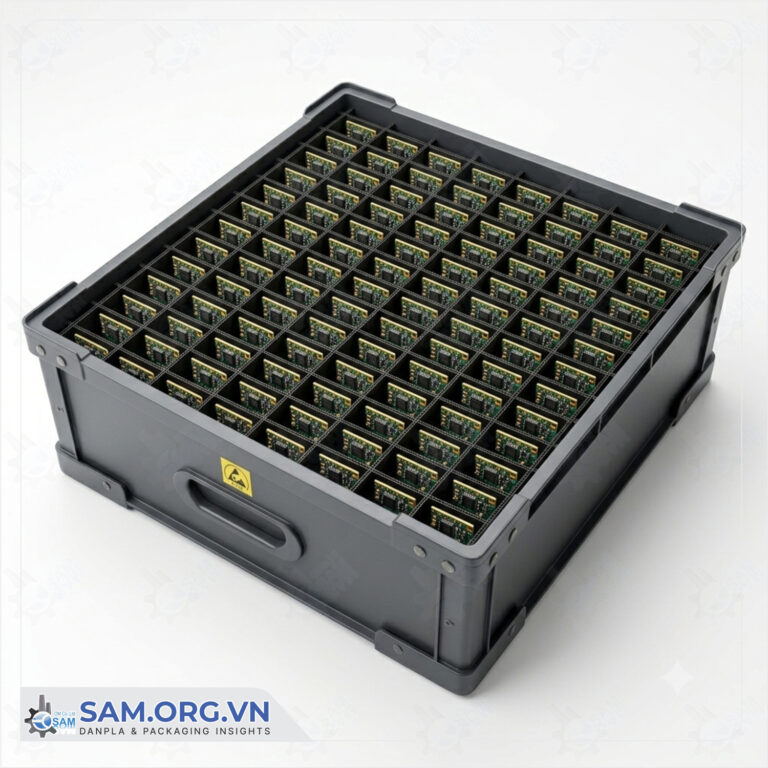
The technical grade is the biggest differentiator. The antistatic ESD sheet usually comes in a signature black. As a result, it is almost mandatory in electronics and semiconductor work. It dissipates charge safely and protects circuit boards.
The conductive sheet has a lower resistance than a standard ESD grade. Therefore it suits highly sensitive components. In addition, the flame-retardant sheet adds additives that slow ignition. This grade fits warehouses and construction sites. For more detail, see our guide to ESD corrugated plastic partitions.
Surface treatment is another option to mention early. For example, a corona-treated surface improves print and label adhesion. Many buyers need this for branded boxes. As a result, the print stays sharp through many reuse cycles.
Grade and color should match the storage environment too. For instance, outdoor stock benefits from a UV-resistant sheet. Likewise, damp areas favor a sheet that resists moisture well. Therefore the environment guides the grade as much as the load does.
Need technical advice tailored to your production line? Contact SAM’s engineering team — free, no obligation: +84 363 939 228 (Mr. Đạt)
How to choose the right sheet with SAM
Knowing the types is only the first step. The bigger step is matching the right grade to a real application. This is where manufacturing experience makes the difference.
An application-driven advisory process
SAM’s engineering team starts with load and product size. Next comes the use environment and the number of reuse cycles. Finally, it reviews special needs such as antistatic or flame-retardant grades. As a result, it locks in the right thickness, color and function.
The plant has run since 2010, with over 16 years of experience. Moreover, output exceeds 150 tons per month across 6 lines. The management system meets ISO 9001:2015 and ISO 14001:2015. As a result, quality stays consistent between batches.
Today SAM serves more than 300 customers and exports to over 15 markets. In addition, our Corrugated plastic sheets and Corrugated plastic boxes and partitions are all made to order. Customers can request test samples before mass production.
One step that buyers often skip is a real load test. Therefore SAM encourages customers to trial samples under true conditions. The trial confirms thickness and grade before a large order. As a result, the risk of the wrong material drops sharply.
Quality records accompany each batch on request. For example, an SGS certificate is available for export orders. This helps when customers must meet a foreign partner’s standard. Moreover, it simplifies audits along the supply chain.
Lead time depends on color and grade availability. Standard colors and thicknesses ship faster from stock. However, custom grades need extra time for additives and color mixing. As a result, early specs help keep your schedule on track.
Finally, keep a small buffer stock of your chosen grade. A buffer covers demand spikes without a rush order. In addition, SAM can hold an agreed safety stock for repeat customers. As a result, your line keeps running through peak season.

Frequently asked questions about PP corrugated sheets
What thicknesses are available?
SAM produces sheets from 2mm to 10mm thick. Thin grades suit liners and partitions. Thick grades suit heavy-duty boxes and pallets. The maximum sheet width reaches 2100mm.
How does an ESD sheet differ from a standard one?
An ESD sheet adds antistatic additives. Therefore it usually comes in black and serves electronics work. A standard sheet lacks this property, so it does not suit sensitive components.
Can I order custom colors and sizes?
Yes. SAM offers more than 20 standard colors and mixes custom colors for large orders. In addition, box and partition sizes are cut to your drawings.
How do I choose the right thickness?
Base it on product weight and the number of reuse cycles. Heavier loads and frequent reuse need thicker sheets. Therefore SAM’s team advises the optimal thickness for your application.