VI
VI EN
EN
What Corrugated Plastic Sheet Color Actually Tells You
When you order Danpla sheets, the supplier usually sends a chart of more than 20 colors. Naturally, the first question is which color to pick, and whether it means anything beyond looks. For a factory, however, Danpla sheet color coding is not decoration. Instead, it ties into how goods get sorted, how safety rules are marked, and even features like static protection.
For example, a red sheet and a blue sheet may share the same thickness. Moreover, they can share the same weight and the same load capacity. Yet on the line, those two sheets often do two different jobs. As a result, the wrong color rarely damages a product. Rather, it slows handling and causes mix-ups between stages.
Therefore, this article groups Danpla colors by real purpose. In turn, you learn when color drives sorting, when it only marks identity, and when it signals a specific feature such as static dissipation. With that map, buyers can brief a supplier clearly instead of guessing.
Why One Corrugated Plastic Sheet Comes in Over 20 Colors
Virgin PP resin looks translucent, with a slightly milky tone. Consequently, the color on a Danpla sheet comes from a masterbatch step during extrusion. Because of that, the color runs evenly through the whole material, not just a surface coat.
Color Comes From Masterbatch, Not Paint
First, the masterbatch pellets blend into the PP resin before extrusion. As a result, the flutes and both faces share one color. Therefore, a scratch or a cut edge never reveals a different color underneath.
In addition, this method lasts longer than printed coatings. The color does not peel or fade, even when sheets rub together many times in storage. For this reason, reusable Danpla boxes and partitions keep their color after hundreds of trips.
Common Colors Used in Industry
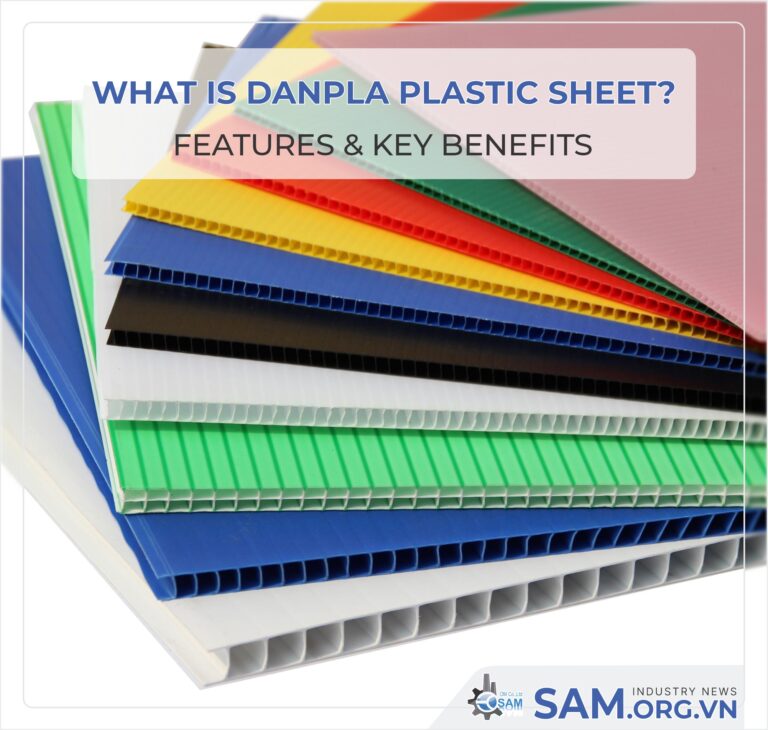
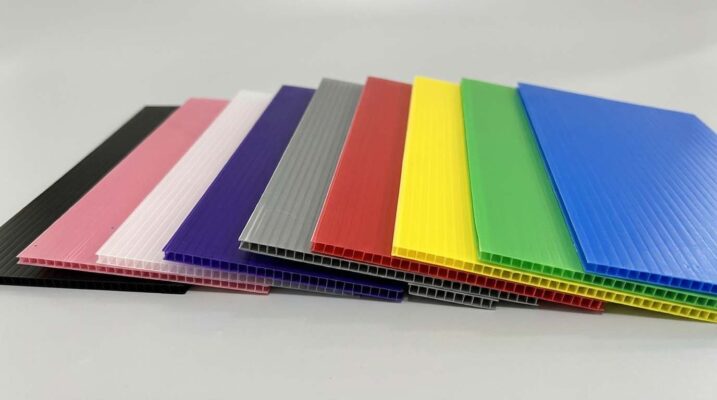
The common set includes natural milky white, blue, red, yellow, green, and black. White is the default and the cheapest option. Meanwhile, the other colors serve sorting or identity needs. Furthermore, a domestic maker can match more than 20 colors to a company color code.
However, the more special the color, the higher the minimum order. For codes outside the standard chart, the plant must mix a dedicated batch of colorant. For thickness and stiffness choices, you can also read our guide on the types of PP corrugated plastic sheets.
Besides solid colors, Danpla also comes clear or semi-clear. In practice, this option helps when staff need to see the contents without opening a lid. Clarity depends on the amount of colorant and the sheet thickness. Therefore, thinner sheets with less pigment stay easier to see through.
Color also has a small effect on outdoor heat behavior. Light sheets absorb less heat than dark ones. For long outdoor exposure, therefore, ask about a UV additive as well. That additive is separate from color, and it keeps the sheet stronger under sunlight.
What Color Means on the Factory Floor
In production, color works as a fast visual signal. In practice, workers read color before they read text. Therefore, a clear color rule guides the right action at first glance.
Color Coding Speeds Up Sorting
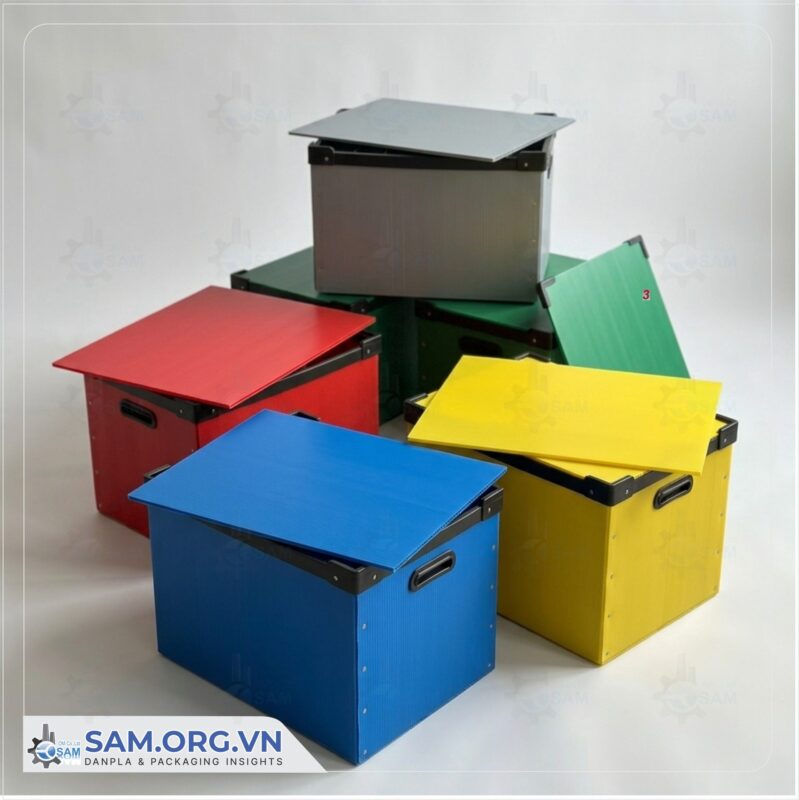
Many plants assign each color to one item type or one stage. For example, blue partitions hold work in progress, while red partitions flag defects awaiting rework. In addition, yellow often marks priority goods or areas that need attention.
As a result, this rule shortens the time to find and separate goods. Moreover, new staff learn the flow faster. Because color replaces part of the labeling, it also cuts printing and sticker work.
In some plants, the same color also links to a location code on the rack. As a result, a worker matches the color of the box to the color of the shelf. This pairing removes a step of reading numbers. In turn, it speeds returns during a busy shift.
A Suggested Color Scheme by Goods Type
There is no single mandatory color standard for every plant. Even so, many workshops use a fairly similar mapping. The list below serves as a reference so you can build your own rule.
- Milky white: general goods, not yet sorted, lowest cost
- Blue: work in progress or items still in a stage
- Red: defects, returns, or restricted areas
- Yellow: priority goods or zones that need attention
- Green: approved goods, ready for export packing
- Black: electronics zones, when the correct ESD grade is used
The key point is to pick one rule and then keep it fixed. Indeed, a rule that changes often causes more confusion than no color at all. Therefore, write the color chart into your operating documents. In addition, post it at the work area so the whole shift reads one standard.
Fewer Mix-Ups and Better 5S
In a 5S setup, each zone gets its own color to make the flow visible. Therefore, boxes and partitions that match the zone color return to the right spot. Consequently, a wrong color becomes an obvious signal that staff catch quickly.
Audits also get easier with a fixed color scheme. During a quick walk, a supervisor spots a red box in a green zone at once. As a result, problems surface before they reach the next stage, which keeps rework low.
For export orders with many product lines, color also splits lots by customer. As a result, this approach lowers the risk of shipping the wrong batch between similar orders.
Need help building a color rule for your line and ordering sheets to an exact color code? Contact the engineering team for free, no-obligation advice: +84 363 939 228 (Mr. Đạt)
Black and ESD Corrugated Plastic: Do Not Confuse Color With Function
This point causes the most confusion. Many buyers assume that a black sheet is an antistatic sheet. In reality, however, color and ESD function are two separate things.
Why ESD Sheets Are Usually Black
Conductive antistatic sheets usually contain a carbon additive. Because of that additive, the material turns naturally black. As a result, black sheets and ESD sheets often appear together on the market.
Even so, a plain black sheet colored with ordinary black pigment cannot dissipate static. On the other hand, an antistatic sheet sometimes comes in another color. Therefore, black is only a hint, not proof.
Verify the Feature by Spec, Not by Eye
For electronic components, therefore, ask for the surface resistance value instead of picking by color. The supplier should state clearly whether the sheet is conductive or antistatic. In addition, they should give a measured resistance range, not a vague description.
In practice, it also helps to mark ESD stock separately so nobody mixes it. For example, some sites print an ESD symbol or add a color tag onto the dedicated black sheets. As a result, staff can tell an ESD black sheet from a plain black sheet in the same store.
Our article on ESD corrugated plastic partitions explains how to match each component group. As a result, choosing by resistance helps you avoid ordering plain black sheets for static-sensitive zones.
Choosing Corrugated Plastic Color by Industry and Supplier Capability
Technically, no single color beats another. Instead, the choice depends on how each industry operates. Electronics teams, for example, prefer black ESD sheets for assembly areas. Food and pharma lines, on the other hand, often pick light colors so dirt shows easily.
Meanwhile, logistics and warehousing lean toward zone colors, with one color per route. Companies with a brand identity can also order sheets in their corporate color. In that case, you should weigh thickness and weight along with color, as covered in our Corrugated plastic sheet GSM guide.
Cost is another practical factor in this choice. White stays cheapest because it skips extra colorant. In contrast, a custom brand color adds a mixing step and a higher minimum. Therefore, many buyers reserve custom colors for boxes that customers actually see. Meanwhile, they keep neutral white for internal handling to hold the unit price down.
Some plants also combine both layers of meaning at once. For instance, the base color marks the zone, while an added color strip marks the shift or the batch. Therefore, this mix keeps the scheme compact yet informative. The condition, of course, is a clear rule so nobody misreads it.
Ultimately, the deciding factor is the plant’s ability to mix color consistently. If each batch drifts slightly under the same code, the color rule breaks down. SAM produces Danpla sheets from 100% virgin PP, matches more than 20 colors, and holds color consistent across lots. In addition, the plant runs to ISO 9001:2015 and ISO 14001:2015, with over 150 tons per month, serving 300+ customers across 15+ export markets.
Frequently Asked Questions
Does color change the strength of a corrugated plastic sheet?
No. Strength depends on thickness and weight, not color. Therefore, at the same spec, a white sheet and a red sheet carry the same load. Only the black ESD sheet differs, and that comes from the carbon additive, not the color.
Is a black sheet always antistatic?
No. An ESD sheet turns black because of carbon, but a plain black sheet does not resist static. Therefore, ask for the surface resistance spec to confirm, instead of choosing by color.
Can I order sheets in my brand color?
Yes, provided the order meets the minimum for a dedicated colorant batch. In practice, you supply the color code, and the plant mixes a sample for approval before mass production.
Which color is in stock and ships fastest?
Natural milky white is usually in stock and the cheapest. Basic colors such as blue, red, and yellow are common too. However, special colors need mixing, so their lead time runs longer.