VI
VI EN
EN
The Corrugated Plastic Fluted Core and a Weight Paradox
Industrial packaging buyers often face a tricky trade-off. First, they want a light material to cut freight costs. However, that same material must still carry heavy stacked loads. Danpla sheets solve this with a distinctive fluted structure.
The Danpla fluted core makes each sheet far lighter than a solid board of similar stiffness. For example, a 4mm sheet weighs only a few hundred grams per square meter. Even so, it still supports boxes stacked several layers high.
In short, the secret lies in geometry, not in the plastic itself. This article explains the engineering behind that structure. As a result, you will see why the hollow part matters as much as the solid part. Moreover, you will learn to pick the right thickness and flute direction.
The Three-Layer Structure of Corrugated Plastic Sheets
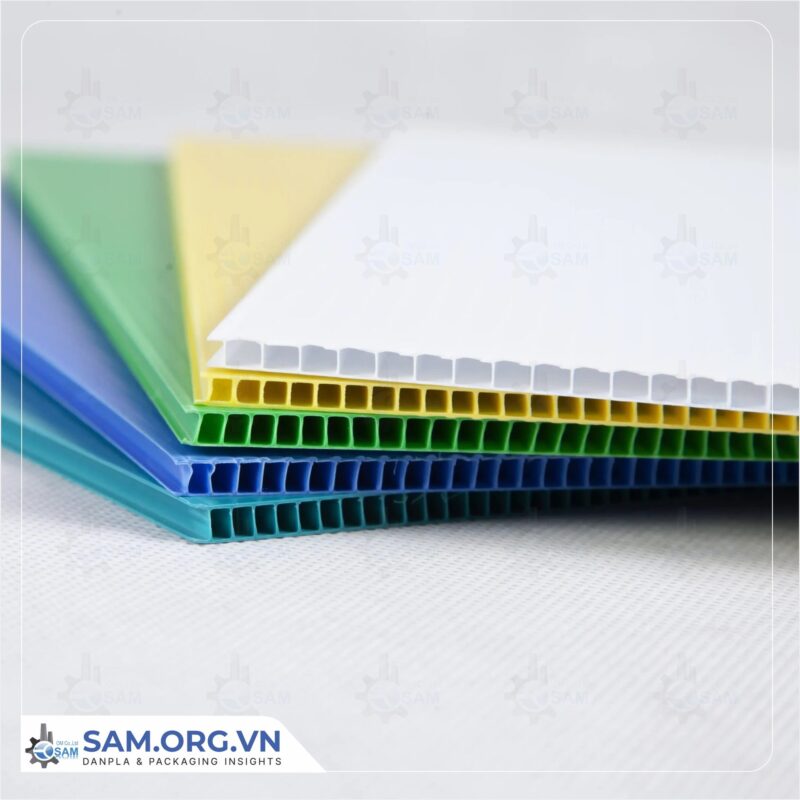
Seen from the cross-section, a Danpla sheet shows three clear parts. Two flat outer walls enclose a layer of vertical ribs. In addition, these ribs run parallel along the length of the sheet. Together, they form a row of hollow cells that resembles a honeycomb.
In other words, the shape does the structural work here. Therefore, the same amount of plastic performs far better. As a result, the design saves material without losing strength. In practice, fluted panels now replace many solid boards.
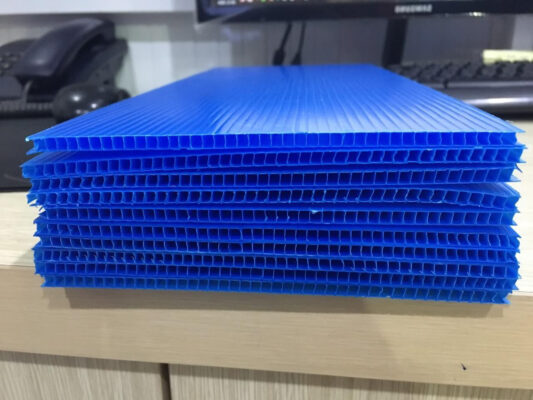
Two Flat Walls and a Ribbed Core
The two flat walls carry tension and compression during bending. For instance, the top face compresses while the bottom face stretches. Meanwhile, the middle ribs hold both walls at a fixed distance. As a result, the sheet resists bending far better than a thin film.
Engineers call this a twin-wall structure. Moreover, the whole sheet uses virgin PP resin, uniform from wall to rib. Because of this, color and strength stay consistent from batch to batch. In contrast, boards with recycled blends often vary in both.
In addition, virgin PP resists many mild chemicals. Therefore, the sheet does not rust or rot like metal or paper. Moreover, a damp cloth wipes the surface clean quickly. As a result, it fits clean factory environments well.
Thickness and Grammage Set the Stiffness
Danpla sheets commonly range from 2 to 10mm thick. In addition, each sheet can be up to 2100mm wide. The thicker the sheet, the wider the gap between its two walls. Therefore, that gap directly drives the bending resistance.
Grammage (gsm) tells you the mass of plastic per square meter. At the same thickness, a higher gsm means thicker ribs and a stiffer board. Together, these two factors set the final stiffness. For guidance, see how to choose Corrugated plastic thickness and sheet gsm by application.
In practice, thickness choice starts from the expected load. For example, light documents need only a 2 to 3mm sheet. Meanwhile, trays and partitions often use 3 to 5mm. However, heavy-duty boxes call for 5mm or more.
Hollow Cells Add Insulation and Cushioning
The hollow cells do more than cut weight. In addition, they trap a layer of air between the two walls. As a result, that air slows heat transfer through the sheet. Therefore, the panel insulates better than a thin solid film.
Moreover, the trapped air absorbs part of any vibration. For example, under a light knock, the ribs flex and spring back. Because of this, the sheet helps protect the goods inside. In practice, Danpla partitions often guard scratch-prone parts.
Why a Hollow Core Carries Load So Well
The answer comes from the mechanics of materials. In short, bending stiffness does not depend on mass alone. Instead, it depends heavily on how material spreads around the center axis. Therefore, moving material away from the neutral axis raises stiffness quickly.
The I-Beam Principle in a Thin Sheet
The steel I-beam is a classic example in construction. Most of the steel sits in the top and bottom flanges. Meanwhile, the thin web in the middle simply links them. As a result, the beam gains high stiffness while saving steel.
A Danpla sheet works on the very same principle. For instance, the two flat walls act like the flanges. In addition, the vertical ribs act like the web between them. Therefore, you get large stiffness from a very small mass.
For example, engineers measure this with the second moment of area. As a result, spreading mass outward raises that value sharply. Therefore, a hollow section beats a solid slab of equal weight. In short, geometry, not bulk, drives the stiffness.
Vertical Ribs Resist Buckling and Spread Load
When boxes stack up, compression runs straight downward. However, the vertical ribs sit right along that load path. In effect, they behave like many small parallel columns. As a result, each rib carries part of the load and passes it down.
Because of this, the sheet resists compression well along the flute direction. In contrast, laid flat, the ribs resist surface crushing instead. Therefore, flute direction strongly affects the load a panel can take. A wrong orientation can cut the capacity noticeably.
In addition, the bending benefit grows with the gap between walls. Therefore, more thickness raises bending stiffness by a large factor. As a result, a thick hollow sheet beats a thin solid one. At equal weight, the thicker sheet always bends less.
To raise load, a maker can add ribs per meter. As a result, denser ribs give higher compression strength. However, the sheet then grows heavier and uses more resin. Therefore, buyers balance the load they need against cost.
Need technical advice tailored to your production line? Contact SAM’s engineering team — free, no obligation: +84 363 939 228 (Mr. Đạt)
Comparing the Fluted Structure With Other Materials
Understanding the structure helps you compare Danpla with familiar materials. In practice, two comparisons come up most often: corrugated carton and solid plastic.
Each comparison highlights a different strength of the fluted design. Therefore, the right choice depends on your storage and load. In practice, buyers weigh moisture, weight, and reuse together. As a result, structure becomes a practical selection tool.
Versus Paper Corrugated Carton
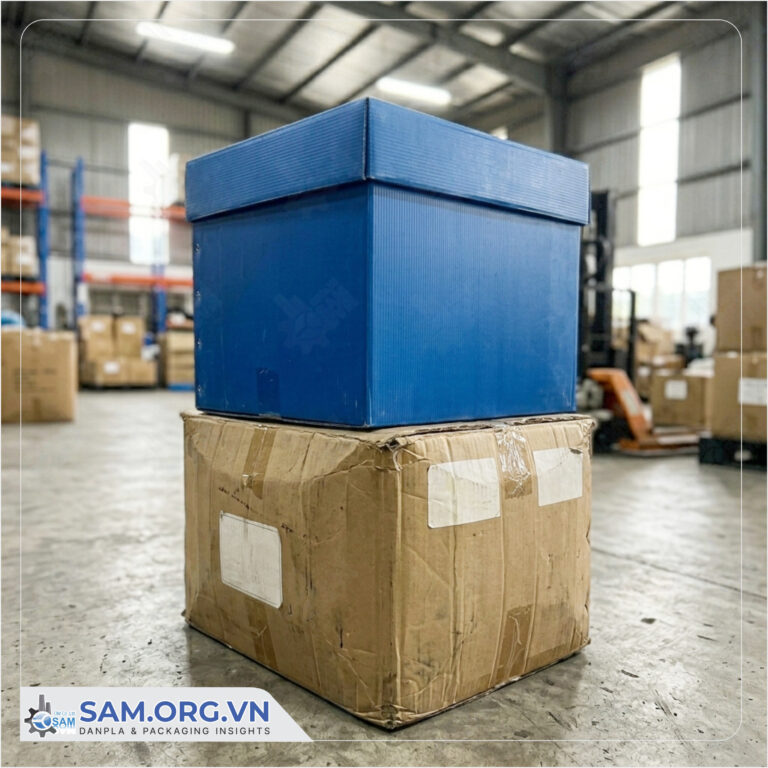
Carton also uses a fluted idea to gain stiffness. However, its flutes lie horizontally between two paper liners. Moreover, paper fibers absorb moisture and lose strength when wet. As a result, carton collapses easily in damp or cold storage.
Danpla ribs, in contrast, use PP and shed water. Therefore, the sheet keeps its stiffness in humid rooms and washes clean. Because of this, its service life beats single-use carton. In addition, it suits returnable packaging loops.
Moreover, carton attracts insects and mold over time. As a result, paper boxes degrade fast in long storage. In contrast, PP sheets avoid this problem. Therefore, they suit goods held in the warehouse for long periods.
Versus Solid Plastic of the Same Thickness
A solid 4mm plastic sheet weighs several times more than 4mm Danpla. However, the solid core adds mass yet contributes little bending stiffness. In effect, the hollow structure removes that inefficient material.
As a result, the sheet stays lighter while keeping the needed stiffness. Therefore, when freight and cost matter, the hollow core wins. To match a grade to your load, review the Corrugated plastic sheets range.
How Structure Aids Fabrication and Printing
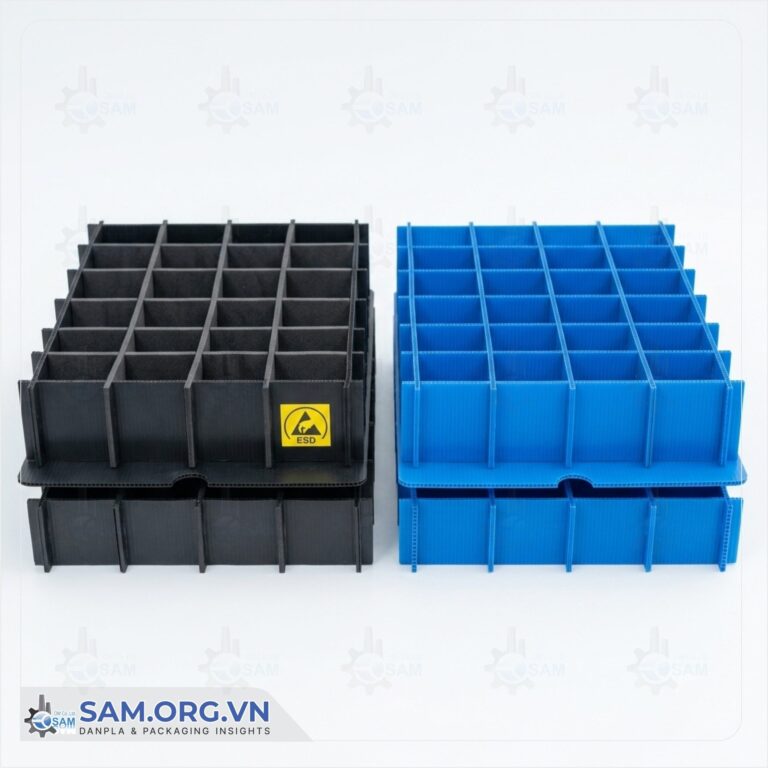
The flat faces of Danpla print and take labels easily. Moreover, the hollow ribs let the sheet cut, crease, and fold. As a result, one sheet becomes boxes, partitions, or trays. Therefore, a single structure serves many packaging formats.
Furthermore, the fold-ability opens many packaging designs. For example, one flat blank folds into a box with a hinged lid. In addition, multi-tier partitions cut from the same sheet. As a result, a company manages fewer separate materials.
Choosing the Right Corrugated Plastic Structure From a Maker
At the same labeled thickness, two Danpla sheets can still differ. For example, rib count, wall thickness, and resin all shape real stiffness. Therefore, controlling these details needs a stable production line.
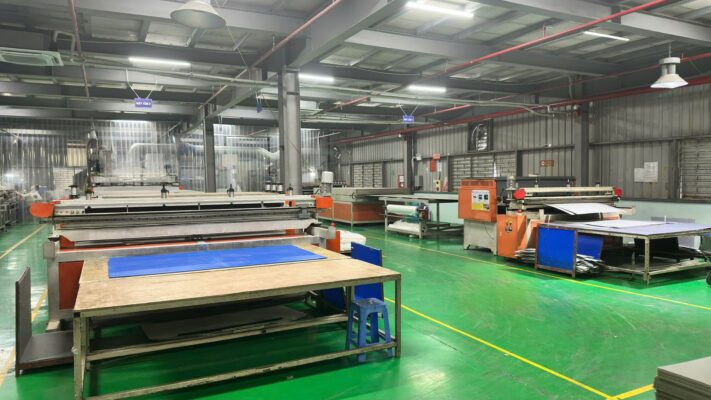
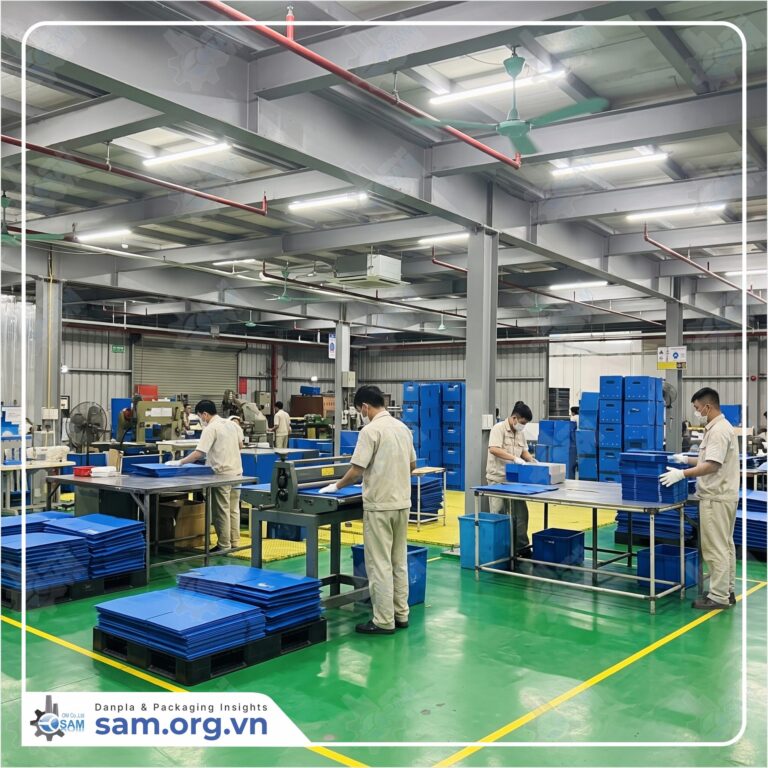
SAM produces Danpla sheets from virgin PP across six lines. In addition, the plant runs above 150 tonnes per month. Its systems follow ISO 9001:2015 and ISO 14001:2015, with SGS testing. As a result, the product serves 300+ customers across 15+ export markets.
In addition, each batch gets checked for thickness, grammage, and flatness. Therefore, the specs stay stable across separate orders. As a result, a repeat order matches the first one closely. In practice, that consistency matters for automated lines.
Furthermore, the plant runs on five thousand square meters of floor. As a result, six lines keep lead times short and predictable. Therefore, large orders ship without long waiting. In practice, steady output supports just-in-time delivery.
Electronics plants such as Canon, LG, and Sumitomo Electric use this format. Moreover, the engineering team advises on thickness, gsm, and flute direction. Therefore, choosing the right structure helps you avoid over or under buying.
Finally, a good supplier shares clear specs before you order. As a result, you can match structure to load with confidence. Therefore, samples and data sheets reduce guesswork. In practice, this shortens the path from spec to delivery.
Frequently Asked Questions About Corrugated Plastic Structure
Is the corrugated plastic fluted core a real honeycomb?
Not exactly. The cross-section holds rectangular hollow cells formed by vertical ribs. Therefore, engineers call it a twin-wall, not a hexagonal honeycomb. However, the load principle still relies on two walls and a ribbed core.
Why is corrugated plastic light yet strong under stacking?
Because the material sits in the two outer walls, away from the center. As a result, this layout raises bending stiffness through the I-beam principle. In addition, the vertical ribs carry compression well along the flute. Therefore, the strength-to-weight ratio stays very high.
How does flute direction affect load?
Vertical ribs resist compression best along their own direction. Therefore, keep the flutes upright when the panel must take stacking loads. However, a wrong orientation can clearly reduce the capacity. For box bases and partitions, match flute direction to the real load.
Which thickness suits heavy goods?
Heavier goods generally call for a greater thickness, often 4 to 10mm. In addition, consider grammage and the number of ribs per meter. For large loads, ask the engineering team to size it by dimension. As a result, the right pick avoids damage during transport.