VI
VI EN
EN
Why Poor Export Packaging Costs More Than You Think
Export shipments face significant mechanical stress throughout international transit. Containers pass through three to four climate zones in a single voyage. Temperature swings range from -5°C to 40°C depending on the route. In addition, stacking pressure at transit warehouses places extra load on bottom cartons throughout the journey.
The real cost of poor packaging is rarely the materials themselves. Instead, losses come from damaged goods, delayed insurance claims, and the risk of losing future orders. Importers in Japan, the United States, and the EU inspect packaging condition immediately upon arrival. Therefore, dented, wet, or mislabeled shipments are legitimate grounds for rejecting an entire lot.
Vietnamese exporters commonly make three mistakes. First, they use corrugated cartons for returnable shipping cycles. Second, they skip impact cushioning for electronics and mechanical parts. Third, they apply labeling that fails to meet the import requirements of the destination market.
Key International Standards to Know Before Choosing Materials
The US market requires compliance with ISTA (International Safe Transit Association) protocols for impact and vibration testing. Japan applies JIS Z 0200 for commercial transport packaging. Moreover, the EU enforces EN 13427 on packaging performance and waste reduction requirements. Identifying the correct standard for your target market is the first step — before selecting any material.
Core Packaging Materials for Safe Export Shipping
No single material protects every type of cargo equally well. However, a reliable export packaging solution combines at least three layers: a rigid outer container, an impact-absorbing cushion, and a surface protection layer. Each layer addresses a distinct risk during the same shipping journey.
Corrugated Plastic Boxes — Reusable Alternatives to Corrugated Cartons
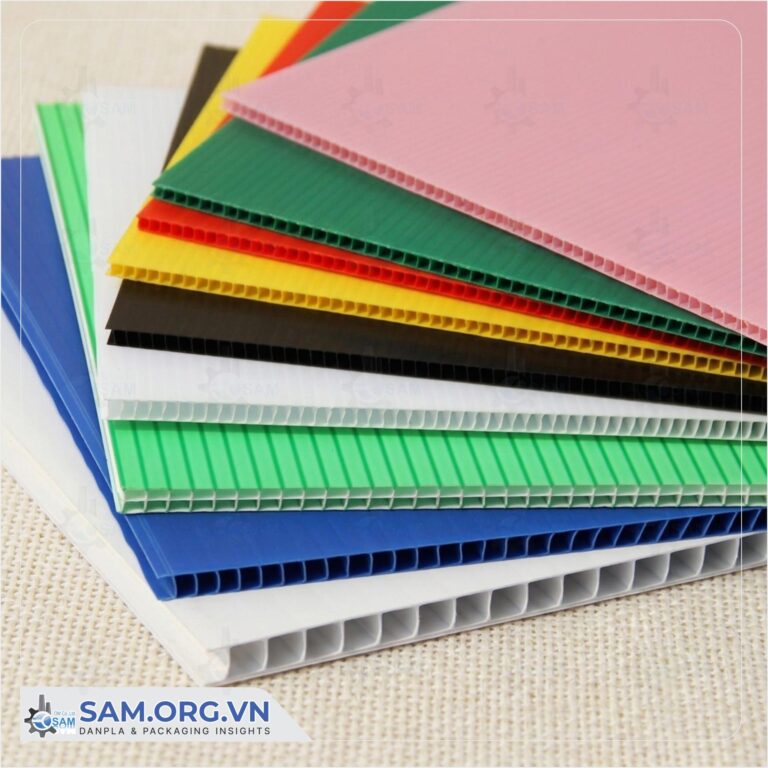
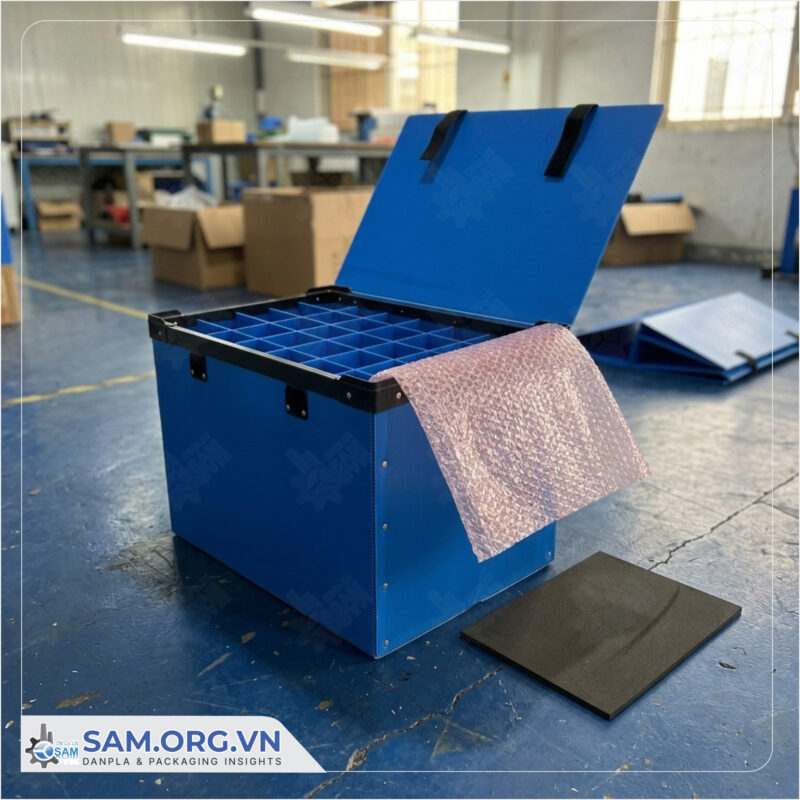
Corrugated plastic boxes are made from 100% virgin polypropylene (PP) sheets. Wall thickness ranges from 2 to 10 mm, and dimensions are custom-made to each customer’s specifications. Unlike corrugated cartons, Danpla does not absorb moisture, does not lose rigidity over time, and is reusable for more than 100 trips.
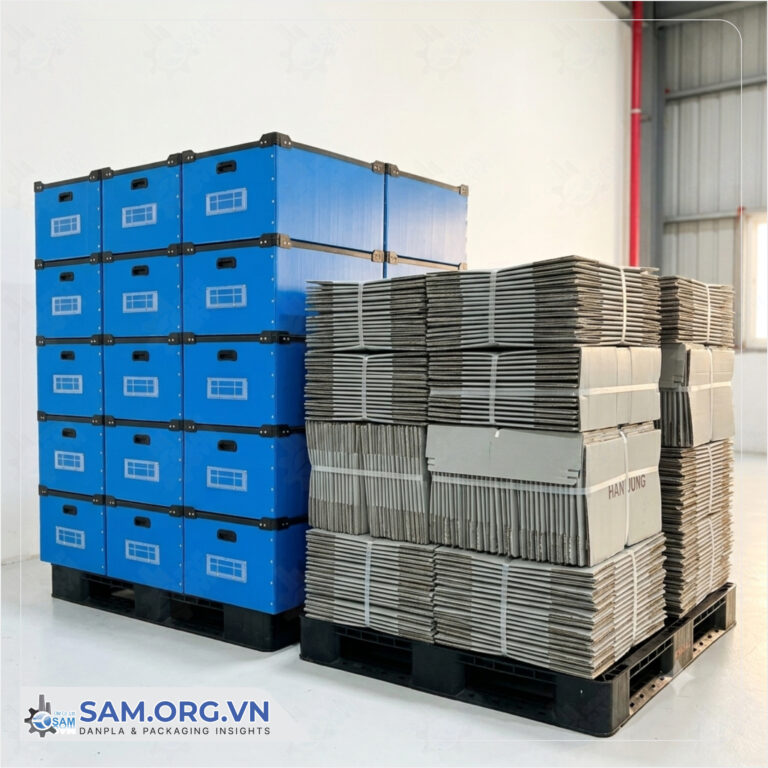
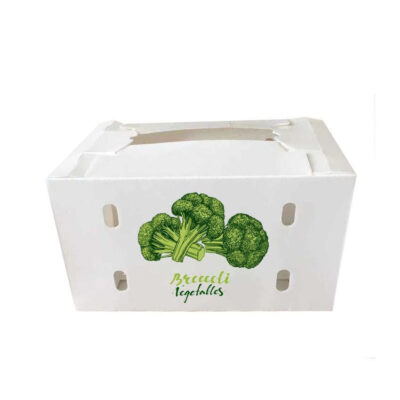
Compared to wooden crates, Danpla is lighter and reduces freight costs. Furthermore, the flat-fold design cuts return volume when shipping containers back empty. Color-coded boxes by product type speed up identification at destination warehouses. As a result, many exporters with returnable packaging loops have replaced cartons with Danpla boxes permanently.
EVA and PE Foam — Cushioning for Electronics and Industrial Parts
EVA and PE Foam are the standard cushioning materials for exporting electronics, optical instruments, and medical equipment. SAM CNC-cuts foam to match each product’s exact dimensions. The custom foam tray holds products firmly in place throughout sea or air shipment with no shifting.
PE Foam is softer and lighter, absorbing impact well for light-to-medium goods. EVA is firmer and more resilient, making it ideal for CNC-cut trays that hold heavier equipment. Both materials are chemically inert and do not corrode metal surfaces. In practice, most export kits combine both: EVA for the structural tray and PE Foam for surface wrap.
Air Bubble Wrap — Surface Protection and Void Fill
Air bubble wrap fills voids inside boxes and prevents products from shifting when containers roll during transit. Roll format suits high-volume automated packing lines. Sheet and bag formats work well for manual packing of irregular-shaped goods.
Air bubble wrap is commonly paired with Danpla boxes to form a complete protection system. SAM supplies multiple bubble thickness options: 10 mm for lighter goods and 20 mm for higher cushioning requirements. Selecting the right thickness optimizes packaging cost while maintaining full shipping safety.
Industry-Specific Export Packaging Applications
Different product categories have distinct packaging requirements. Therefore, material selection must account for the product type, the shipping route, and the technical requirements of the receiving facility. The same product may need a different packaging configuration when shipping to Japan versus the United States.
Electronics and Semiconductor Components
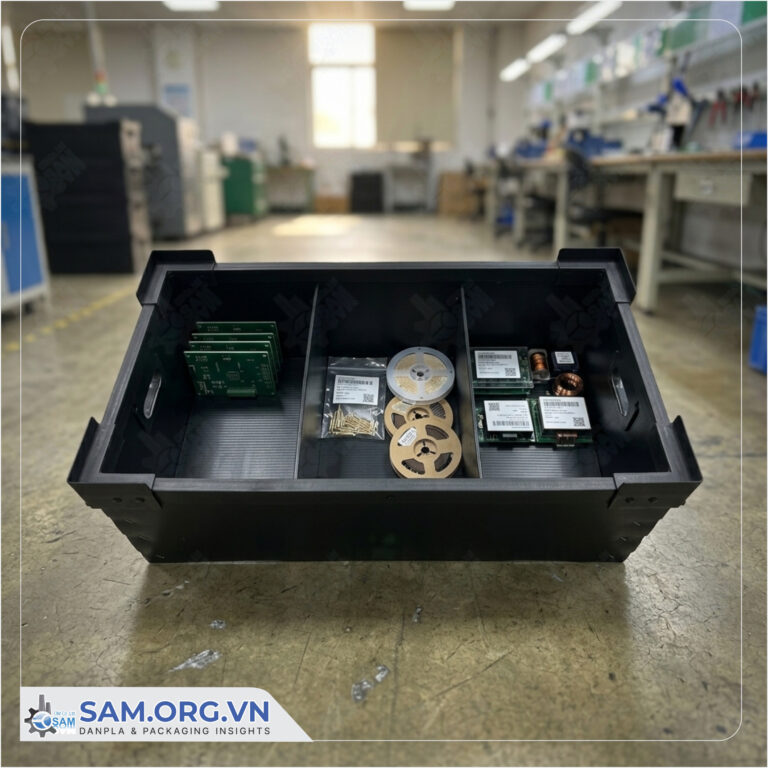
This is the most demanding product category in terms of packaging performance. Static electricity, moisture, and impact are the three primary risks in transit. Consequently, the standard solution includes ESD-rated Danpla boxes, CNC-cut EVA foam trays, and moisture barrier bags inside each packing unit.
SAM has supplied ESD Danpla partitions and EVA foam trays to Vietnamese electronics manufacturers shipping to Japan and South Korea. Technical specifications are typically developed from customer engineering drawings. New sample development takes five to seven business days from drawing submission.
Precision Machinery and Industrial Equipment
Heavy mechanical parts require high-load-bearing boxes with stable dimensions under stacking. Danpla boxes in 6–10 mm thickness withstand three to five stacking layers inside a container without deformation. In addition, sharp-edged metal parts need EVA foam of sufficient thickness to prevent puncturing the box wall from inside.
Corner guards and edge protector accessories reinforce box corners under prolonged stacking pressure. SAM supplies boxes, internal partitions, and reinforcement accessories as a complete set from one source. This eliminates supplier coordination time and removes the risk of incompatible materials causing fit issues.
Consumer Goods and Branded Products
This category requires flawless product surfaces upon arrival at the importer’s warehouse. Air bubble wrap protects each individual unit from surface scratches and minor impacts. Rigid Danpla boxes then shield the entire lot from external forces. Together, these three elements — individual wrap, rigid outer box, and accurate labeling — satisfy most consumer goods import requirements.
Label stickers and decals printed to the importer’s barcode or QR code specifications speed up scanning at destination warehouses. SAM prints to GS1 standards and customer-specific requirements. Accurate labeling reduces inventory counting time and minimizes misidentification risk at transit hubs.
Need technical specifications matched to your production line? Contact SAM’s engineering team — free consultation, no commitment: 02203.851.833
Why Exporters Choose SAM for Packaging
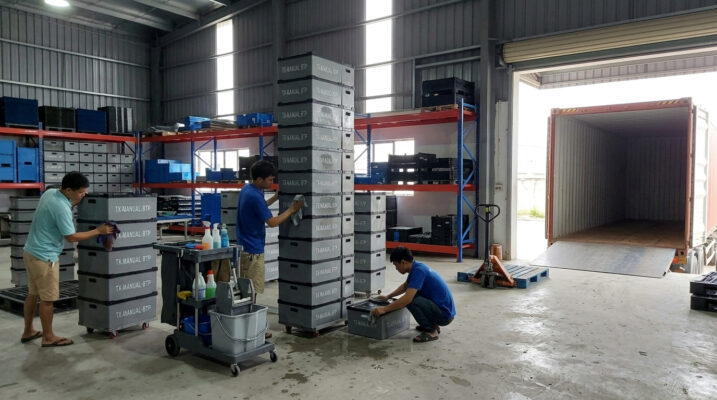
SAM was founded in 2010 and currently serves more than 300 customers across 15+ export markets. SAM packaging products ship alongside Vietnamese goods to the United States, Japan, Australia, the United Kingdom, and Russia. Over 16 years of operation have built a stable technical base and consistent process for every production order.
Production Capacity for Large-Volume Orders
SAM operates six production lines across 5,000 m², with monthly output exceeding 150 tonnes. Multiple large orders run simultaneously without affecting individual customer delivery schedules. Moreover, every production batch goes through quality inspection before leaving the factory floor.
ISO 9001:2015 and ISO 14001:2015 certification (TQC, valid until January 14, 2028) ensures consistent production processes and full traceability. SGS certification and the VPA Top 100 recognition confirm SAM’s export capability to international partners. These credentials provide a reliable foundation for exporters sourcing internationally compliant packaging.
One-Stop Packaging Solution
Danpla boxes, EVA and PE Foam, air bubble wrap, label stickers, and reinforcement accessories are all available from SAM. Consequently, businesses do not need to coordinate with multiple suppliers for a single packaging kit. Shorter lead times and simpler quality control follow naturally when all materials come from one source.
SAM provides free technical consultation for each product type and specific shipping route. The team has developed export packaging solutions for more than 15 different industries over 16 years. Customers receive support from initial packaging design through quality verification of the first production batch.
Frequently Asked Questions
Can corrugated plastic boxes withstand conditions inside sea freight containers?
Danpla boxes are made from virgin PP, which neither absorbs moisture nor corrodes under saltwater exposure. Mechanical strength remains stable at temperatures from -20°C to +60°C. Therefore, they are suitable for virtually all sea freight routes, including tropical and sub-polar corridors. Boxes can be reused across multiple consecutive export shipments without performance loss.
What is the difference between EVA and PE Foam for export packaging?
PE Foam is soft, lightweight, and absorbs impact well — it is commonly used to wrap product surfaces directly. EVA is firmer and more resilient — it is ideal for CNC-cut insert trays that fix products inside the box. In most export packaging kits, both materials work together: EVA holds the structural position and PE Foam protects all contact surfaces.
Does SAM support scheduled deliveries aligned with customer export timelines?
SAM supports regular scheduled deliveries based on each customer’s production and export calendar. For recurring orders, SAM maintains semi-finished inventory to shorten delivery lead times significantly. Contact SAM’s technical team to discuss a delivery arrangement that fits your specific export schedule and shipment frequency.