VI
VI EN
EN
What GSM Means for Corrugated Plastic Sheets and Why It Sets Stiffness
GSM stands for grams per square meter. In short, it measures how much material a Danpla sheet holds per unit area. Therefore, it tells you whether a sheet is light or heavy. Moreover, GSM ties directly to stiffness and load resistance. For example, two sheets of the same thickness can still differ in GSM.
Many purchase orders list only thickness, such as 3mm or 5mm. However, thickness alone does not reveal load capacity. A 4mm sheet with low GSM can feel softer than a 3mm sheet with high GSM. As a result, understanding Danpla sheet GSM helps buyers compare quotes fairly. This guide shows how to match GSM to each application of our Corrugated plastic sheets.
A wrong GSM hurts you in two ways. On one hand, a low value lets the sheet dent, so the goods inside get damaged. On the other hand, an excess value drives up cost for no real gain. Therefore, reading GSM is the first step toward buying right and saving money. In practice, this single figure shapes both quality and price.
How to Read GSM and Its Link to Thickness
Where GSM Appears on a Spec Sheet
On a spec sheet, GSM usually sits next to thickness and color. For instance, one line may show 4mm together with a GSM figure. In general, a higher GSM means a heavier and stiffer sheet. Also, at the same thickness, higher GSM gives thicker flute walls and less sag. So the number is more than a label; it predicts real behavior.
Therefore, buyers should record both thickness and GSM in the contract. Listing thickness alone often causes misunderstanding between two sides. Moreover, GSM is a value you can measure and verify. For example, weighing one square meter gives the real GSM. As a result, a clear spec protects both buyer and maker if a dispute arises.
Why Thickness Alone Cannot Define Stiffness
Danpla thickness ranges from 2mm to 10mm. However, within one thickness band, a maker can adjust the amount of plastic. A lighter sheet cuts cost, but it dents more easily under load. In contrast, a heavier sheet stays stiff, yet it uses more material. So thickness sets the height, while GSM sets the substance.
This is why two 5mm quotes can differ clearly in price. As a rule, the cheaper option often uses lower GSM. Therefore, to compare fairly, check GSM instead of thickness alone. You can also review how to choose Corrugated plastic thickness to pair both specs. Together, the two numbers describe a sheet far better than either one alone.
GSM Reflects the Flute Structure Inside
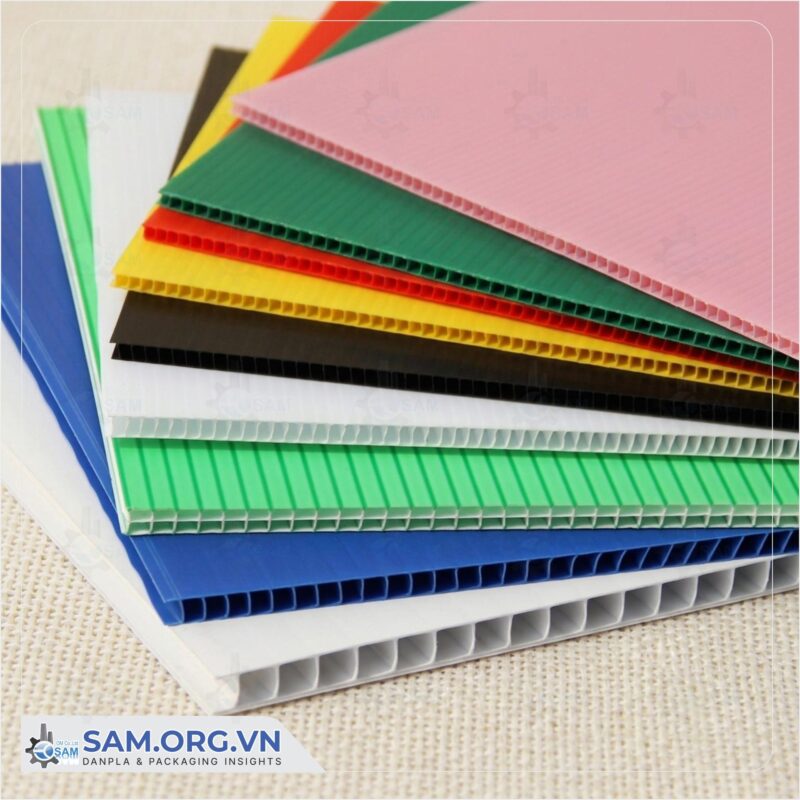
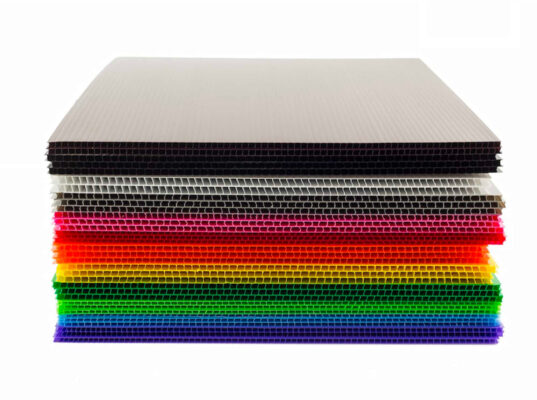
A Danpla sheet has three layers: two flat faces and a fluted core between them. In effect, GSM reflects the total plastic across all three layers. Thicker faces and thicker flutes both push GSM up. As a result, the sheet resists bending and crushing better. So a higher figure usually signals a more rigid panel.
Still, two sheets at the same GSM can spread the plastic differently. For example, one design favors the faces, while another favors the core. Therefore, if you need a smooth, flat surface, say so up front. Then the maker can tune the structure to your goal. This short exchange helps you avoid a sheet that misses expectations.
Choosing GSM by Application Group
The right GSM depends on load and reuse cycles. Below are three common application groups in a factory. Accordingly, match your needs to a sensible GSM range.
The general rule is simple. In short, heavier loads and more trips call for higher GSM. Meanwhile, light single-use parts do fine with lower GSM. The three sections below describe each group in detail.
Light Duty: Partitions, Liners, and Trays
This group covers box partitions, layer pads, and small component trays. In general, these parts carry little load and must stay light. Therefore, a lower GSM is usually enough and saves cost. Typical thickness falls between 2mm and 3mm. As a result, lighter sheets reduce the total weight of each shipment.
For example, the electronics sector often uses thin dividers and trays. Because they hold light components, they do not need high GSM. In addition, lighter sheets speed up handling on the assembly line. So operators lift and stack them easily through a full shift.
Medium Duty: Reusable Corrugated Plastic Boxes
Boxes that circulate many times need medium to high GSM. Because the walls must hold shape after repeated folding, stiffness matters. Typical thickness runs from 4mm to 5mm. Moreover, higher GSM keeps box edges from creasing early. For our Corrugated plastic boxes, choose GSM based on expected trip counts.
For example, boxes that shuttle between plants may run hundreds of trips. Each trip means one fold and one open. Therefore, a medium to high GSM keeps the box sound for many months. In contrast, a value that is too low forces early replacement and higher long-run cost.
Heavy Duty: Pallet Layers and Metal Parts
Heavy goods and sharp edges demand the highest GSM. For example, pallet layer pads and dividers for metal parts fall here. Typical thickness ranges from 6mm to 10mm. Therefore, high GSM helps the sheet resist crushing and puncture. In this group, picking low GSM to save money is risky.
For example, machining and automotive lines slip sheets between metal parts. Sharp metal edges easily cut a thin panel. Therefore, a high GSM lowers tearing and protects the part surface. In addition, a stiff enough sheet keeps the load from shifting during handling.
Need advice on the right GSM for your line and goods? Contact our engineering team for a specific GSM range, free and with no obligation: +84 363 939 228 (Mr. Đạt)
Is Higher GSM Always Better?
Balancing Stiffness Against Cost
Higher GSM means more plastic in every sheet. As a result, the price rises with it. Choosing GSM beyond real need wastes money. On the other hand, choosing too low makes sheets fail early. Therefore, the sweet spot is just enough stiffness for your load.
A safe method is to test a sample before a large order. For example, let the sheet carry its real load for a few days. If it keeps shape, then that GSM meets the need. Consequently, this method avoids both excess and shortage. In practice, a short trial like this pays for itself on the first large order.
Moreover, judge cost across the whole life, not just the first price. Because a durable sheet serves many trips, its cost per use drops. In contrast, a cheap sheet that fails early ends up dearer over time. Therefore, a sensible GSM often saves more than the lowest value.
State the GSM When You Request a Quote
When you ask for a price, state three things: thickness, target GSM, and load. If you do not know the GSM, describe the product and the packing method instead. Then the seller can suggest a range close to your need. As a result, all quotes share one basis for comparison.
You should also ask about the GSM tolerance between batches. A small tolerance points to a stable process. For long-term orders, this stability matters more than the lowest one-off price. Moreover, consistent sheets cause fewer errors in the packing step downstream.
Weight and Its Effect on Logistics
Higher GSM makes each package heavier. For large lots, the extra weight adds up fast. Moreover, shipping cost can rise with weight. Therefore, light-duty goods should favor just-enough GSM. In addition, a lighter package is easier and safer for staff to move by hand. As a result, you trim both freight cost and handling strain at once.
Sheet size also shapes this equation. Choosing the right size cuts waste and reduces joints. In addition, you can review standard corrugated plastic sheet sizes to optimize both GSM and format.
GSM Control at the SAM Factory
SAM produces Danpla sheets from 100% virgin PP resin. Because the input stays stable, GSM varies little between batches. The plant runs 6 lines with over 150 tonnes per month. As a result, large orders still keep a consistent GSM.
Each order confirms three specs: thickness, GSM, and color. Therefore, customers receive the exact stiffness agreed at the start. The process holds ISO 9001:2015 and ISO 14001:2015 certificates. In addition, sheets cut up to 2100mm wide in more than 20 colors.
With over 300 customers and 15+ export markets, the team knows many load types. For example, you describe the product and packing method, and engineers suggest a GSM range. Consequently, this approach helps you avoid a wrong pick from the first sample. Moreover, agreeing on GSM early shortens the sample approval cycle.
Frequently Asked Questions About Corrugated Plastic Sheet GSM
How does GSM differ from thickness in mm?
Thickness in mm tells you how tall the sheet is. In contrast, GSM tells you how heavy the sheet is per square meter. The same thickness can still carry a different GSM. Therefore, read both specs when you compare quotes.
How do I verify the GSM of a delivered sheet?
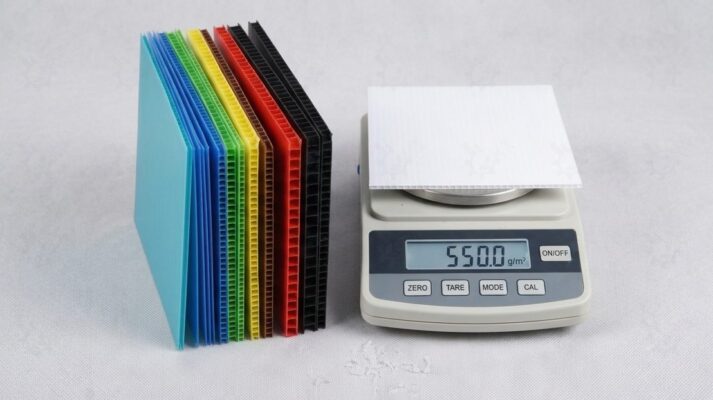
The simplest way is to cut exactly one square meter and weigh it. As a result, you get the real GSM. Then compare it with the figure in the contract. If the gap is large, raise it with the maker.
Should I pick the highest GSM to be safe?
Not necessarily. Higher GSM raises cost and package weight. Instead, choose just enough stiffness for the real load. Moreover, test a sample before a large order to stay safe.
Can high-GSM corrugated plastic still be recycled?
Yes. The sheet is made from PP, so it is recyclable regardless of GSM. A high-GSM sheet simply holds more plastic over the same area. After its service life, you can still recover and recycle it.