VI
VI EN
EN
Why brands print on Danpla sheets
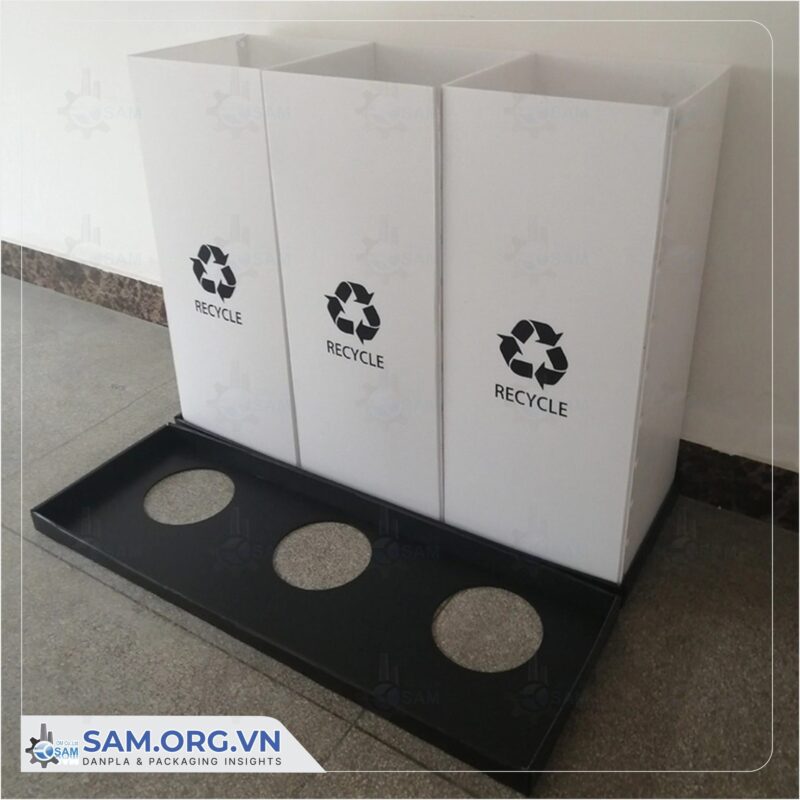
Printing on Danpla sheets gives packaging and signage a clear brand identity. For reusable packaging, a printed logo reduces mix-ups during circulation. In addition, printed codes speed up sorting in the warehouse. As a result, many companies now print directly on Danpla sheets instead of adding loose labels.
This article covers two common methods. First, screen printing suits large runs with few colors. In contrast, UV inkjet suits digital, full-color, short-run work. Therefore, the right choice controls both cost and quality. The sections below explain the surface, the two methods, a comparison, and real applications.
PP surface and ink adhesion
Why PP resists ink
Danpla sheets use virgin PP. However, the PP surface is non-polar and has low surface energy. For this reason, ink does not stick well on a raw sheet. Moreover, this trait applies to every polypropylene material.
Therefore, the surface needs treatment before printing. Corona discharge and flame treatment are the two common options. Both raise the surface energy of the sheet. As a result, ink bonds firmly and resists peeling, folding, and rubbing.
Preparing the sheet before printing
First, the surface must be clean and free of dust or oil. After corona treatment, printing should follow soon, because the effect fades over time. For outdoor signage, UV ink plus corona treatment gives strong color durability. Also, a simple tape test checks adhesion quickly.
Choosing ink and adhesion coatings
The ink type sets how long the print lasts. UV ink cures instantly under UV lamps and bonds well on treated PP. Solvent ink dries more slowly, yet it gives a dense, solid layer. In addition, both resist water and sunlight when printed correctly.
On dark base sheets, printers usually lay a white ink underbase first. As a result, the top colors appear true and bright. When fine details need strong adhesion, an adhesion promoter can replace corona treatment. The choice depends on the use environment and the target lifespan.
Screen printing and UV inkjet: two core methods
The two printing methods differ in how they lay ink and in their cost model. Screen printing is the traditional route for large volumes. In contrast, UV inkjet is the digital route for flexible work. Understanding each one helps you match the method to the order.
Screen printing
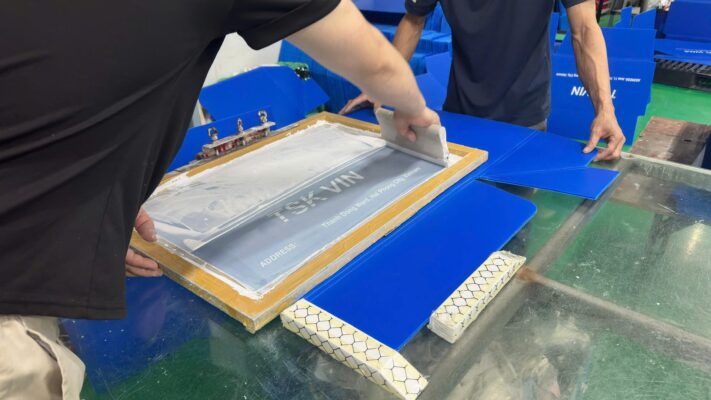
Screen printing pushes ink through a mesh stencil onto the sheet. As a result, it lays down a thick, solid, opaque layer. Moreover, it suits one to three color logos in large volumes. Because the stencil cost spreads across the run, the unit price drops at higher quantities.
The mesh count on the frame sets how fine the detail is. A fine mesh holds small detail, while a coarse mesh lays a thick ink film. For multi-color jobs, the frames must line up precisely. After printing, a dryer or UV lamp cures the ink so it locks down.
UV or solvent inks bond well on treated PP. Therefore, the print resists abrasion and weather. However, each color needs its own stencil. For this reason, full-color gradient images are not its strength.
Need advice matched to your volume and budget? Contact SAM engineering team, free and with no obligation: +84 363 939 228 (Mr. Đạt)
UV digital inkjet
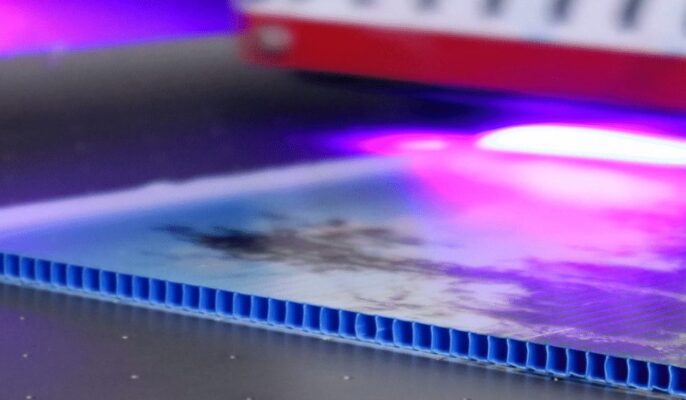
UV inkjet jets ink straight onto the sheet, then cures it under UV lamps. A large flatbed printer handles rigid Danpla sheets. In addition, it prints full CMYK color, photos, and smooth gradients. Because it needs no stencil, it fits short runs well.
Inkjet also supports variable data, such as QR codes, serial numbers, or batch names. Setup is fast, and design changes take little time. As a result, the unit price barely depends on quantity. For small, multi-version orders, inkjet costs less than screen printing.
The inkjet resolution is high enough for crisp logos and scannable barcodes. On colored sheets, a white underbase keeps the image on-color. Because it prints full CMYK, one run can output many different designs. Therefore, it shortens the time to launch new packaging.
Color consistency is another benefit. A digital color profile keeps the same brand color across runs. Therefore, a reorder next year still matches the first batch. This matters for large accounts with strict brand rules.
Comparison and how to choose
The table below sums up the differences by the criteria buyers care about. Neither method is better in every case. Instead, the choice depends on color count, volume, and the need to code each sheet.
| Criteria | Screen printing | UV inkjet |
|---|---|---|
| Colors | 1 to 3 spot colors | Full CMYK and images |
| Best volume | Medium to large | Small to medium |
| Stencil cost | Yes, shared by the run | None |
| Variable data | No | Yes (QR, serial) |
| Setup time | Longer | Short |
| Ink durability | High | High (UV ink) |
Cost is the main trade-off. Screen printing needs an upfront stencil fee, yet the unit price drops at high volume. In contrast, inkjet needs no stencil, so it wins at low volume. As a result, there is a break-even quantity where the two costs meet. Above that point, screen printing gives a lower unit price.
Lead time also differs between the methods. Because inkjet skips stencil making, it ships proofs and short runs fast. Screen printing needs stencil setup first, so it starts more slowly. For a tight deadline, inkjet usually wins.
Quick selection checklist
- For large runs with few colors and a low unit cost, choose screen printing.
- For small runs with many colors and per-sheet codes, choose UV inkjet.
- For outdoor use, prefer UV ink in both methods.
- For frequent design changes, inkjet stays more flexible.
If you need exact brand colors, review the Danpla sheet color options first, so the base color works with the ink.
Real applications and printing capability
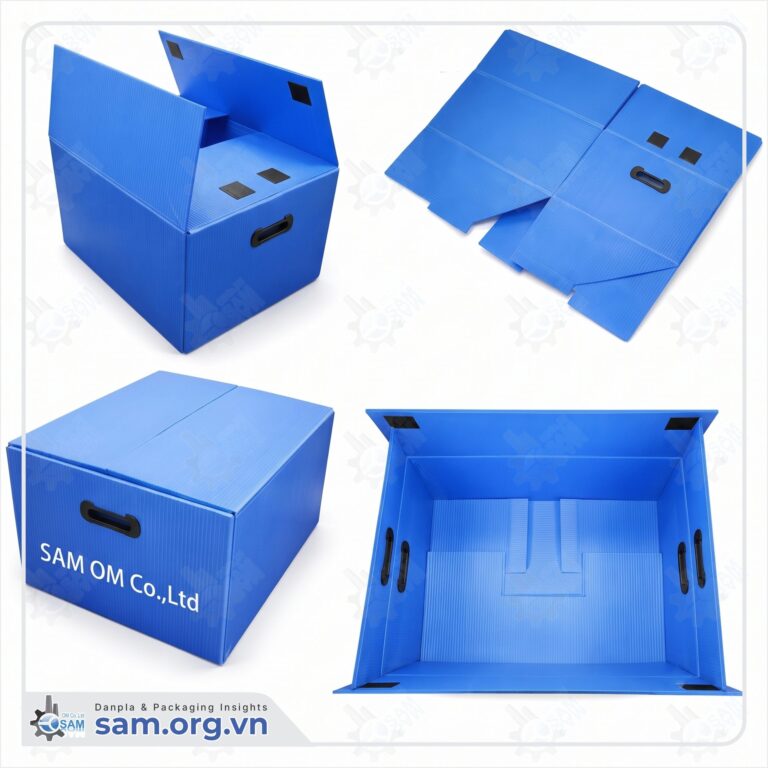
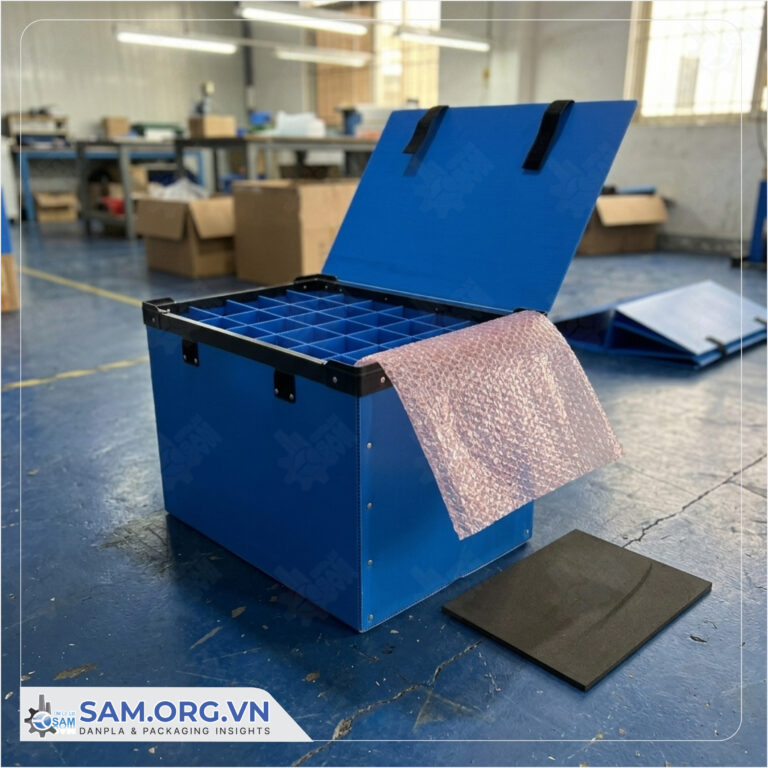
Branded packaging is the most common use. For example, boxes and partitions with a printed logo speed up identification. In addition, layer pads carry stacking marks. Printed QR codes also replace loose label stickers for batch tracing.
Signage and POSM form the second group. Because Danpla sheets are light, flat, and water resistant, they suit trade-show boards and directional signs. Moreover, UV ink holds color outdoors. Sheet widths up to 2100mm allow large formats.
The list of uses spans many industries. For example, real-estate boards, event wayfinding, and retail standees all use inkjet sheets. In addition, plant tags and farm labels need moisture-resistant ink. Construction hoarding needs large formats that hold up outdoors.
A protective finish can extend outdoor life. For example, a laminate or a clear UV coat guards against scratches and fading. As a result, signage stays readable through more seasons. The trade-off is a small added cost per sheet.
Printed sheets also stay easy to handle at end of life. Because Danpla is a single PP material, printed panels still go into the PP recycling stream. Therefore, branding does not block reuse or recycling.
Design tips for printing on Danpla
The flute direction affects print sharpness. Therefore, place fine details along the flutes to avoid ripples. Also, avoid solid ink right on a fold line, because the ink can crack when folded. Finally, keep a safe margin around the cut edge.
The base color shifts the printed color without a white underbase. For multi-color art, choose a light base sheet. In addition, keep text large enough to scan and read from a distance. First, check a proof before the full run.
SAM offers screen and UV inkjet printing on Danpla sheets to order, with over 20 base colors and 2 to 10mm thickness. The plant holds ISO 9001:2015 and ISO 14001:2015, with output above 150 tonnes per month. In addition, its engineers advise on surface treatment and ink choice by use environment. Electronics and logistics customers have relied on printed packaging for years.
Frequently asked questions
Can you print directly on Danpla without surface treatment?
You can, but adhesion stays weak. Because PP has low surface energy, ink peels easily when folded or rubbed. Therefore, corona or flame treatment before printing is recommended for a durable result.
Which lasts longer outdoors, screen or inkjet?
Both last well with UV ink. Screen printing gives a thick layer, while inkjet gives full-color images. For outdoor signs, the ink type matters more than the printing method.
Which method suits small quantities?
UV inkjet suits them better, because it needs no stencil cost. As a result, the unit price stays stable even for a few dozen sheets. In contrast, screen printing pays off only at large volumes.
Can each sheet carry a unique QR code or serial?
Yes, digital inkjet supports variable data. Therefore, every sheet can hold a different QR code or serial number. This helps batch tracing and reusable-packaging management.
Is there a minimum order for printing on Danpla?
Screen printing usually sets a minimum, because of the stencil fee. In contrast, inkjet accepts small orders, even a few sample sheets. The exact number depends on the design and sheet size.