VI
VI EN
EN
Why Hai Phong factories need a steady Danpla supply
Hai Phong is the largest manufacturing and logistics hub in northern Vietnam. Moreover, the city hosts dozens of industrial zones, a deep-water port and an international airport. As a result, its electronics, mechanical and warehousing plants consume large volumes of packaging every month.
For this reason, Danpla plastic sheets in Hai Phong have become a familiar material on packing lines. In addition, the material is light, durable and reusable many times. Therefore it replaces carton across cushioning and product separation steps.
This article reviews the technical specs, the industry applications and the supplier criteria for the Hai Phong area. In short, it targets the purchasing and engineering teams at each plant.
In addition, many plants here follow an export model with steady shipments. Consequently, the demand for reusable, transport-ready packaging runs high. Therefore fluted PP sheet meets this need well.
Technical specs that suit a production environment
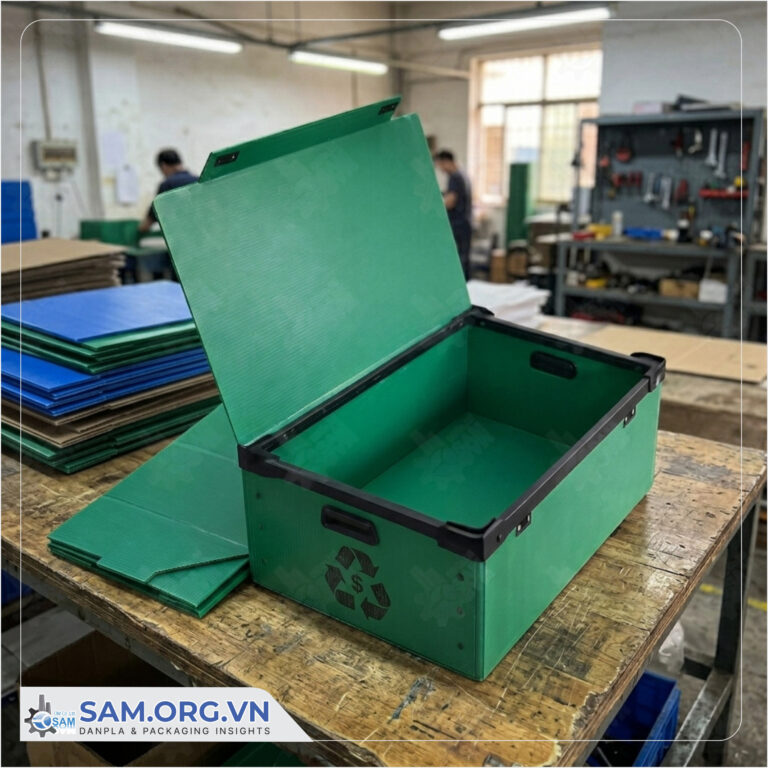
Danpla is a PP plastic sheet with a hollow fluted core in the middle. In effect, this core creates high stiffness while the weight stays low. Consequently, the material carries load well and still handles easily in the workshop.
Furthermore, makers press the sheet from 100% virgin PP resin. Because of this, the surface stays clean, sheds no fiber dust and blocks water. Indeed, this matters a lot for humid coastal electronics assembly.
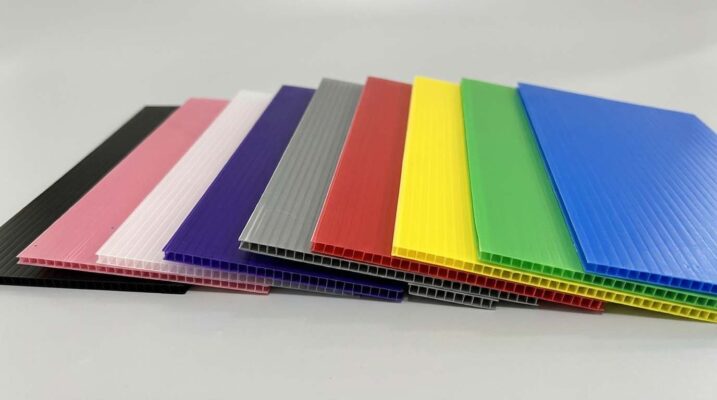
Common thickness and sheet sizes
Sheet thickness ranges from 2mm to 10mm. For instance, thin grades work as liners and layer pads. Meanwhile, thicker grades form partitions and load-bearing box walls.
The common standard size is 1220x2440mm. Additionally, the width reaches up to 2100mm, and the length is cut to order. So choosing the right Danpla thickness balances cost against load strength.
As a rough guide, thin liners often run 2mm to 4mm. Meanwhile, structural walls and heavy partitions use 5mm and above. A quick sample test usually settles the final pick.
Colors and functional variants
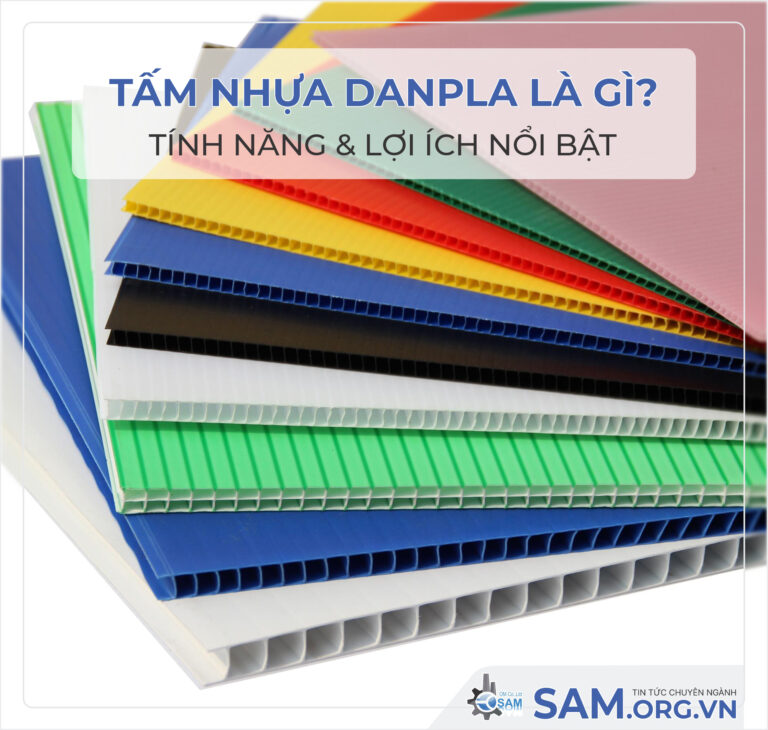
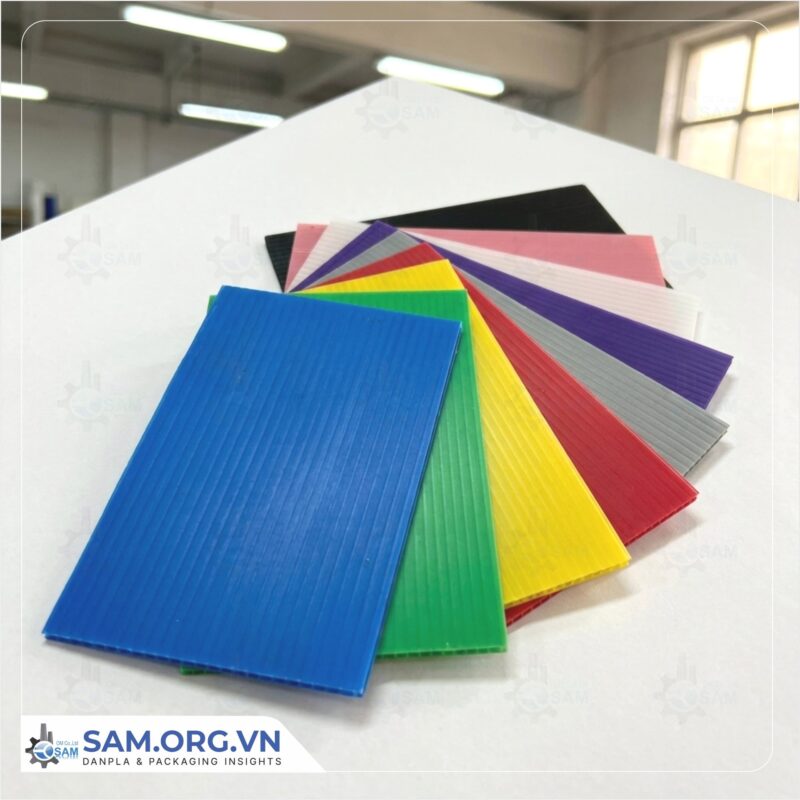
The material comes in more than 20 colors for line or SKU sorting. In particular, the antistatic (ESD) grade serves the electronics sector. Besides, makers can add flame-retardant, UV-resistant or printed finishes.
Therefore buyers should define the functional need before they order. Otherwise a sheet with the wrong finish will miss the end-customer standard. For details, see the Danpla sheets page.
Fluted core and basis weight
The basis weight of the sheet is measured in gsm, that is grams per square meter. Generally, a higher gsm means a stiffer sheet with better load strength. So a plant picks the gsm by load and by the planned reuse cycles.
Moreover, the inner flute sets the bending stiffness. At the same thickness, two gsm levels give different stiffness. Therefore you should discuss both gsm and thickness when you order.
Durability, heat and cleaning
The sheet keeps its shape through many fold and assembly cycles. Moreover, the smooth surface wipes clean with a damp cloth or a mild solution. As a result, it cycles many times without fast wear.
The PP material handles the usual temperature range in a warehouse and shop. Notably, it stays flexible in cold and barely warps in moderate heat. For goods that need washing, furthermore, the water block is a big plus.
A quick comparison with carton and EPP foam
Carton is cheap at first purchase, yet it fails fast under moisture. In addition, it is hard to reuse after a few trips. Over the life cycle, therefore, the real cost of carton often runs higher than it looks.
EPP foam is light and it cushions fragile goods well. However, it is bulky and it eats warehouse space. In contrast, Danpla sits between the two: stiff enough, foldable and reusable many times.
For a plant that runs repeat delivery routes, reuse becomes the deciding factor. For example, one Danpla partition set can cycle dozens of times before replacement. As a result, the cost per use drops clearly.
Danpla applications across Hai Phong key industries
The industrial mix in Hai Phong is quite distinct. Specifically, electronics, port logistics and mechanics form the three biggest packaging users. Moreover, each group uses Danpla sheets in a different way.
Electronics and components
Zones such as Trang Due and VSIP hold many electronics plants. In turn, these plants need clean packaging and static control. Thus ESD Danpla partitions and trays protect boards and sensitive parts.
The surface resistance of the ESD grade stays within a safe band for SMT parts. As a result, ESD Danpla partitions see wide use across the area. In addition, the sheet cleans easily, so it suits clean rooms.
Furthermore, trays and partitions are die-cut to the part shape. In this way, the design fixes the product and cuts impact between steps. Consequently, the plant lowers its drop-and-break defect rate.
Need technical advice tailored to your production line? Contact SAM’s engineering team, free and with no obligation: +84 363 939 228 (Mr. Đạt)
Port logistics and exports
Port-side zones such as DEEP C and Nam Dinh Vu lead in warehousing. Typically, goods here pack for long journeys. Therefore Danpla boxes and partitions protect cargo during sea transport.
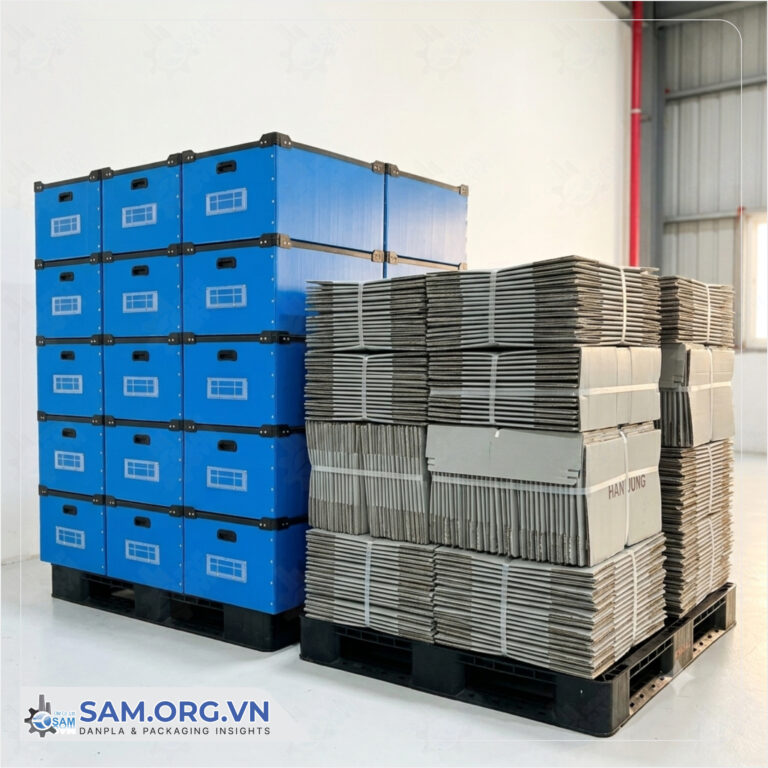
Because the sheet resists moisture, it will not sag like carton in a coastal climate. Hence it fits well as an export packaging solution. In addition, reusable packaging cuts cost on repeat delivery routes.
Mechanics, textiles and consumer goods
Beyond electronics and the port, Hai Phong also holds many mechanical and textile plants. Typically, mechanics use thick sheet to seat and separate heavy metal parts. In turn, the plastic layer prevents scratches on machined surfaces.
Meanwhile, textiles and consumer goods use thin sheet for lining and layering. Because the surface stays clean, fabric and products avoid fiber dust. In addition, printed color sheet speeds up sorting by order.
Furthermore, returnable Danpla systems suit closed-loop shipping between sites. In practice, empty units fold flat for the return leg. Therefore they save space and cut the return freight bill.
Port-side plants also value packaging that survives handling shocks. During loading and stacking, sturdy partitions hold products in place. As a result, fewer units arrive dented or scratched.
How to choose a Danpla supplier for the Hai Phong area
Choosing the right supplier matters as much as choosing the right material. Notably, plants in Hai Phong often run on tight delivery schedules. So a single packaging hiccup can delay a whole export lot.
Delivery capacity and stability
Buyers should weigh the capacity and the stability of the source. For example, a workshop with several lines keeps pace when orders spike. Moreover, output of hundreds of tons per month suits a large plant.
Additionally, the delivery distance to the zone deserves thought. A domestic source shortens the refill time against imports. In turn, that trims the safety stock a plant must hold.
Besides capacity, schedule flexibility also counts. Ideally, a supplier serves both steady bulk orders and urgent top-ups. In turn, this flexibility helps a plant handle peak season.
Some buyers track a simple cost-per-trip figure over a quarter. This number exposes hidden losses from damage and downtime. Over time, it guides a smarter packaging budget.
Custom fabrication and certification
Many plants need cutting, die-cutting and folding to their own drawings. Therefore a supplier with a fabrication shop delivers the exact fit parts. As a result, plants save rework labor on site.
System certification is a point to check for export buyers. Specifically, ISO 9001:2015 and ISO 14001:2015 show a controlled process. In addition, clear material records make the end-customer audit smoother.
Cost across the service life
Comparing price per single sheet can mislead. Instead, buyers should compute the cost per use cycle. Consequently, reusable packaging works out cheaper even when the unit price starts higher.
The math should include cycle count, damage rate and storage cost. Because foldable packaging shrinks warehouse space, it also cuts empty-haul freight. For domestic routes around Hai Phong, therefore, these items add up over a year.
Another point is the refill time when stock runs low. A nearby source shortens the reorder cycle and lowers the line-stop risk. As a result, a plant holds lower stock yet stays safe.
Finally, a short sample run helps confirm fit before a full order. In this step, the plant checks stacking, cleaning and reuse in real conditions. Thus the final spec rests on evidence, not on guesswork.
Why Hai Phong businesses choose SAM
SAM is a Danpla sheet and packaging maker founded in 2010. Today the company runs 6 lines across a 5,000 m2 site. Furthermore, output tops 150 tons per month, enough for large-scale plants.
More than 300 customers across 15 export markets use its products. Notably, the customer base includes many electronics and mechanical plants. In addition, the system holds ISO 9001:2015, ISO 14001:2015 and a passed SGS assessment.
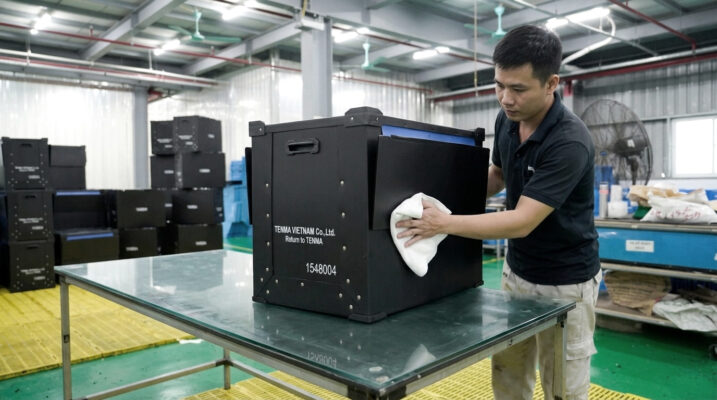
The shop cuts, die-cuts and prints to drawing, then delivers straight to Hai Phong zones. Meanwhile, the engineering team helps pick thickness and finish per application. In effect, this shortens the sampling time for a plant.
Moreover, long work with export buyers helps the team read strict audit needs. Specifically, material records and process files stay ready for each lot. As a result, response time drops when an end customer asks for a check.
Its export markets span the United States, Japan, Australia and Europe. Because of this reach, the team knows varied packaging standards. Buyers gain from that cross-market experience.
Frequently asked questions
Do you deliver Danpla sheets to industrial zones in Hai Phong?
Yes. A domestic source delivers to zones such as Trang Due, VSIP, DEEP C and Nam Dinh Vu. Moreover, the schedule adjusts to the plant volume and order frequency.
Which Danpla sheet suits an electronics plant?
An electronics plant should use the antistatic (ESD) grade. Specifically, it controls surface resistance to protect sensitive parts. Typically, buyers pick 3mm to 5mm for partitions and trays.
Is Danpla tougher than carton in a coastal climate?
Yes. Because PP sheet blocks water, it will not sag under high humidity. In addition, the material keeps its shape over many reuse cycles. Therefore it wins clearly in a port area like Hai Phong.
Can I order a small quantity to test a sample?
Yes, in most cases. Usually a plant orders a sample before it locks a batch order. Meanwhile, the engineering team advises on specs and builds a sample to your drawing.
Can Danpla be printed with a logo and custom color?
Yes. The sheet takes screen or inkjet print to a brand template. Moreover, the base color is chosen from more than 20 options for sorting. For a print job, please send the design file with the order.