VI
VI EN
EN
Why Businesses Order Custom Corrugated Plastic Boxes
Corrugated plastic, also known as Danpla, coroplast, correx or corflute, is a hollow-core fluted PP sheet. It is light, and yet it holds heavy loads well. However, a standard box rarely fits a product exactly. As a result, empty space lets goods shift during transit.
Therefore many manufacturers move to custom boxes. A custom box matches the product, the pallet and the line. In addition, partitions split it into the exact number of cells. Because of this, packing density rises and damage rates fall.
This article walks through the custom corrugated plastic box manufacturing process. First it covers spec intake. Then it moves to design, prototyping, mass production and inspection. So a B2B buyer can see what each stage needs and where final quality is decided.
Cost is a buyer’s first concern. A custom box carries an up-front design and prototype fee. In return, however, it cuts damage and saves void-fill material. For goods that cycle many times, therefore, this investment pays back fast. This article also flags the factors that drive cost and lead time.
The Steps in a Custom Box Manufacturing Process
Custom box production is a closed loop. Each stage follows the one before it. Therefore an error early on carries through to the finished box. For that reason, a good process splits the work into clear steps with their own checks.
Spec Intake and Material Advice
First, the team collects specs from the customer. The three key inputs are product size, load weight and use conditions. For example, use conditions include storage temperature, humidity and the number of reuse cycles.
Next, engineers suggest a sheet thickness and grammage. Light boxes use 3 to 4mm sheet. Heavy or stacked boxes need 5mm or more. Moreover, an antistatic job calls for ESD sheet. Getting the box size right early, and choosing the right box size from the start, avoids repeated prototypes.
Designing the Dieline
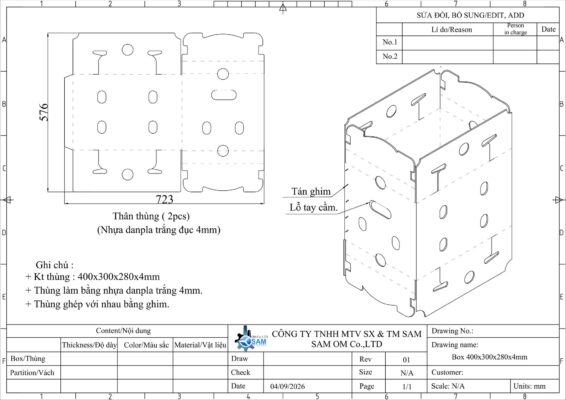
Once the material is set, engineers draw the dieline. This drawing shows cut lines, fold lines, rib positions and the lid. Therefore it becomes the source file for both cutting and folding.
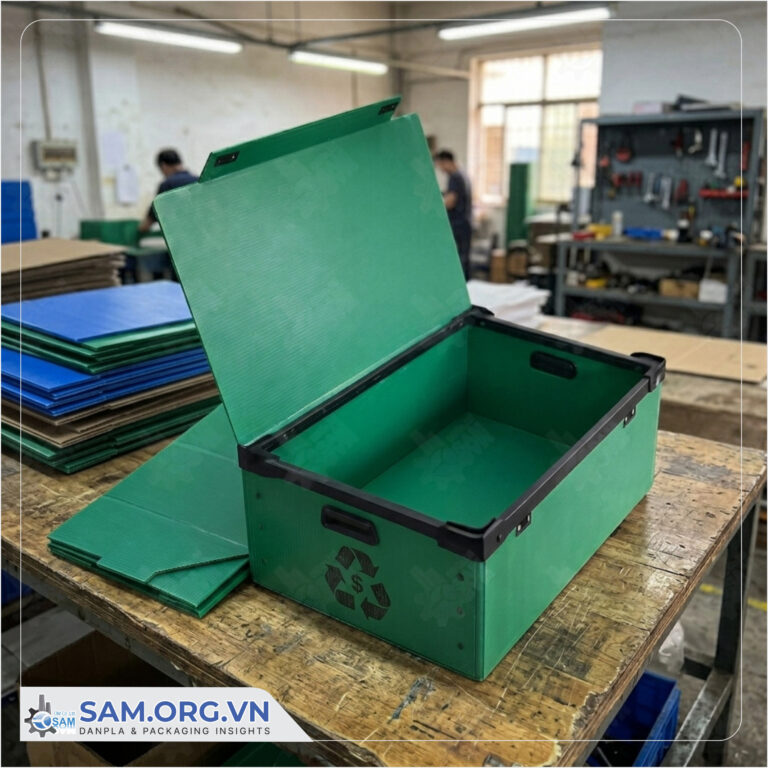
A good dieline also allows for how the sheet shrinks at each fold. If it does not, the box warps or gaps at the corners. In addition, the corrugated plastic box structure of base, walls, ribs and lid is all placed on this drawing. So the customer approves it before any prototype is made.
Mass Production and Finishing
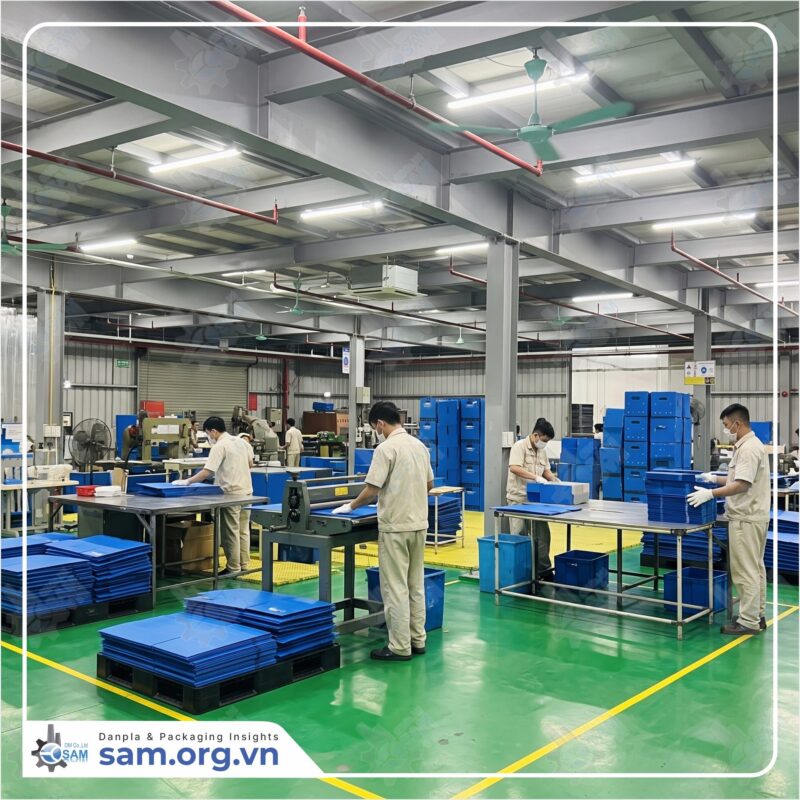
Once the customer approves the sample, mass production begins. The shop cuts the sheet with the die it built. At this point, speed and even quality drive output. Workers then fold and join the parts in the sample’s exact order.
Moreover, a die run keeps every box the same. So the last box matches the first. This consistency matters most for automated packing lines. Machines then handle each box without jams.
Finishing covers gluing, riveting or welding the joints. Each method suits a different load level. For example, rivets carry heavy boxes well. In contrast, glue and welds give a clean surface with few raised edges. Finally, the team folds the boxes flat to save room.
Printing and Accessories
Many orders also need a printed logo, batch code or handling mark. Corrugated plastic sheet takes screen and inkjet ink well. Therefore the shop prints on the flat sheet before folding. As a result, the print stays sharp and even.
In addition, long-life boxes can carry extra parts. Customers can add edge trims, corner braces and handles for strength and ease of use. So the team chooses the right box accessories by load and turnover rate.
From Technical Drawing to First Prototype
After the drawing is approved, the job moves to prototyping. A prototype confirms that the design works in real use. So one sample box costs little, yet it prevents faults across a run of thousands.
Prototyping also builds a shared reference. The customer sees the real box, not just a drawing. As a result, both sides agree on fit, feel and strength early. This step removes doubt before the shop commits to a full run.
Moreover, the sample sets the visual and dimensional baseline. The team measures every later box against it. So quality stays consistent from the first unit to the last. In addition, a signed sample protects both sides if a dispute arises.
Cutting, Creasing and Folding
First, the sheet is cut to the dieline. Then the shop creases the fold lines. Creasing lets the walls stand square and hold their shape. Finally, corners and edges are glued, riveted or welded, depending on the design.
For small orders, a prototype can be cut by hand with a special knife. For large orders, however, the shop builds a cutting die. A die costs more up front. In return, it gives speed and even quality across a big run.
Load Testing and Adjustment
Next, the finished prototype is tested with the customer’s own product. The team loads it, stacks it and simulates vibration. If a wall bulges or the base sags, then the dieline gains a rib or more thickness.
As a result, the prototype and test loop may repeat a few times. The goal is a box that is stiff enough, with no wasted material. Finally, the customer signs off on the last sample. That approved sample then becomes the acceptance standard for the whole run.
Prototype and Die Costs
Prototyping carries its own cost, apart from the unit price. A hand-cut sample stays cheap and fast for small orders. However, a cutting die costs more, and it suits large or repeat runs. Because the die cost spreads over the volume, a bigger order lowers the price per box.
Therefore, discuss your target volume early. First, this guides the right cutting method. Then the quote matches your real demand. As a result, fewer surprises appear later.
Need technical advice tailored to your production line? Contact SAM’s engineering team — free, no obligation: +84 363 939 228 (Mr. Đạt)
Quality Control at Every Stage
Box quality does not sit at the final step. Instead, it is checked along the whole process. Therefore this approach catches faults early and cuts scrap. The two key points are incoming material and finished goods.
Checking Incoming Material
Sheet for boxes should use virgin PP resin. Recycled resin makes brittle sheet that cracks at the folds. Therefore each batch is measured for real thickness and grammage. If it drifts past the limit, then it is returned and never cut.
In addition, color and additives are checked. For outdoor use, the sheet needs UV protection. For electronics, its surface must meet the ESD range. Good corrugated plastic sheets are the foundation of a durable box.
Finished-Goods Inspection
Next, finished boxes are compared to the approved sample. The team measures size, checks square corners and tests joint strength. Then each box is folded to confirm it sets up and lies flat with ease. Only a passing batch is packed and shipped.
Moreover, an inspection record travels with each batch. So the customer has proof the box meets the signed spec. For export goods, this record also serves customs and traceability.
Tolerances and Acceptance Criteria
Each order has its own tolerance table. Size usually allows a few millimeters of drift. In addition, square corners and a flat base carry their own limits. The sample record lists these criteria, so both sides check the same standard.
Moreover, inspection samples a share of every batch. If defects pass the limit, the shop holds the whole batch for review. Therefore this keeps faulty boxes out of a good batch. The data also helps the shop correct production in time.
Finally, the customer receives the inspection summary. So they can trace any issue back to a specific batch. This record also speeds up the next order. Because the data sits on file, a repeat run needs less setup.
The Advantage of an In-House Production Line
A shop that runs from sheet to box has real advantages. For example, prototype turnaround is faster. In addition, there are fewer middleman costs. So when a spec changes mid-project, coordination stays simple.
SAM extrudes the sheet and fabricates the boxes on one system. The factory runs 6 lines with over 150 tons of capacity per month. Therefore this scale handles both small prototype orders and large seasonal runs.
The process runs under ISO 9001:2015 and ISO 14001:2015 certification, and each batch carries its own inspection record. In addition, custom reusable corrugated plastic boxes have served electronics and logistics customers, including orders certified to SGS for export markets.
Owning the sheet stage also keeps input quality stable. The shop knows which sheet batch goes to which order. Therefore, when a customer changes thickness or color, response time stays short. A fabricator without its own extrusion finds this hard.
In addition, this scale supports steady long-term orders. Seasonal customers keep the same spec across every wave. The shop stores the drawing and the approved sample, so reproduction stays fast. As a result, later batches match the first one exactly.
In short, a single-supplier route shortens the loop from idea to shipment. Fewer handoffs mean fewer errors. Because one team owns the whole chain, accountability stays clear. So a buyer gets one point of contact for design, production and quality. For a first custom order, this lowers risk. For a repeat order, it protects the spec you already approved.
Frequently Asked Questions
How long does a custom corrugated plastic box take?
The time depends on complexity and volume. Prototyping usually takes a few working days after the dieline is approved. Then mass production scales with the order size. So a repeat order with an existing die runs faster than a new design. In addition, printing and accessories can add a little time. Therefore it helps to confirm every option up front.
What is the minimum order quantity?
The minimum depends on box size and sheet thickness. Small orders are still possible, however the unit price is higher. In contrast, large orders share the die cost, so the price improves. Therefore it helps to share your target volume when you ask for a quote. Moreover, a small trial run is often possible before a larger commitment. This lets you check the box in real use first.
What information do I need to provide?
You need the product size, load weight and use conditions. In addition, send any existing drawing or old box sample. Pallet data and stacking method also help. The clearer the data, the more accurate the material advice. For example, a photo of your current packing setup helps a lot. In addition, note any stacking height or transport mode.
Is a corrugated plastic box the same as Danpla or coroplast?
Yes. These are regional names for the same fluted PP material. Therefore a custom box made from it reuses well over many fold-and-set cycles. The exact number depends on thickness and care, so a box built to the right load spec holds its shape longer.