VI
VI EN
EN
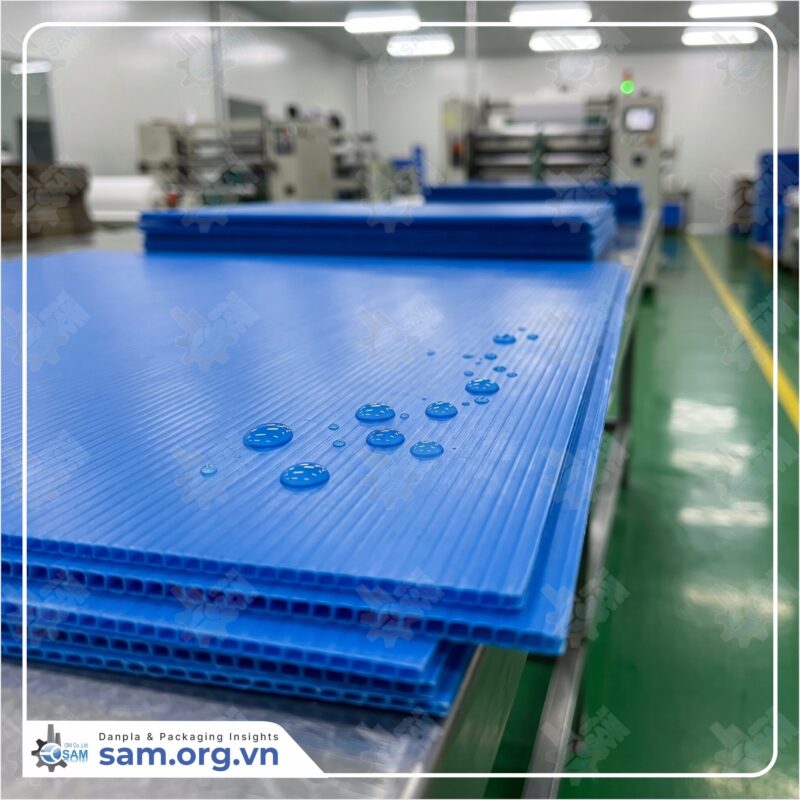
Moisture-Prone Packaging: A Problem for Cold Storage and Wet Areas
Cold rooms, wash-down areas, and outdoor yards share one common issue. High humidity and standing water ruin packaging quickly. For example, cardboard boxes soften within hours inside a freezer. Similarly, fiberboard warps when moisture condenses on its surface.
As a result, the goods inside lose their protection. Moreover, replacement costs rise with every production shift. Food and seafood plants feel this pressure the most.
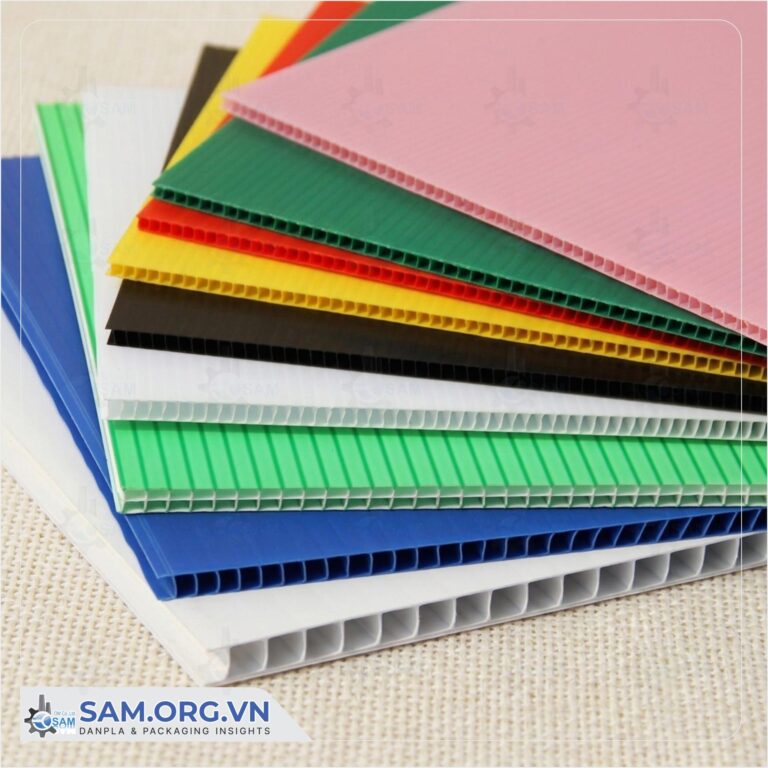
Therefore, many facilities switch to a material that simply does not absorb water. Corrugated plastic, also known as Danpla, coroplast, correx, or corflute, is a hollow-core fluted PP sheet. It does not soak up water, it never rots, and it washes clean under a pressure hose. In this article, we explain the technical reasons behind its water resistance. In addition, we cover how to choose the right sheet for cold storage, outdoor use, and humid environments.
This article speaks to packaging buyers in food, seafood, and logistics. After all, these sectors work with humidity and low temperatures every day. Therefore, the content focuses on the material mechanism, real uses, and buying criteria. The goal is simple: help you pick the right sheet on the very first order.
Why Corrugated Plastic Sheets Do Not Absorb Water
The Nature of Virgin PP Resin
These sheets are made from 100% virgin polypropylene (PP). PP is a naturally hydrophobic plastic. Consequently, its surface has no capillaries for water to seep into, unlike paper or fiberboard. In fact, the water absorption of PP is close to zero by material standards.
For this reason, the sheet does not swell when wet. It also stays firm and keeps its stiffness. This behavior differs sharply from cardboard. Paper fibers draw in water through capillary action. Therefore, after long exposure to high humidity, corrugated cardboard loses most of its compression strength. By contrast, a PP sheet holds its shape and load even after hours in a cold room.
In addition, PP resists many industrial cleaning chemicals. For instance, chlorine solutions and industrial soaps do not corrode the surface. As a result, the sheet handles the strict cleaning routines of the food industry. Moreover, its service life does not drop after repeated washing.
The Sealed Fluted Core
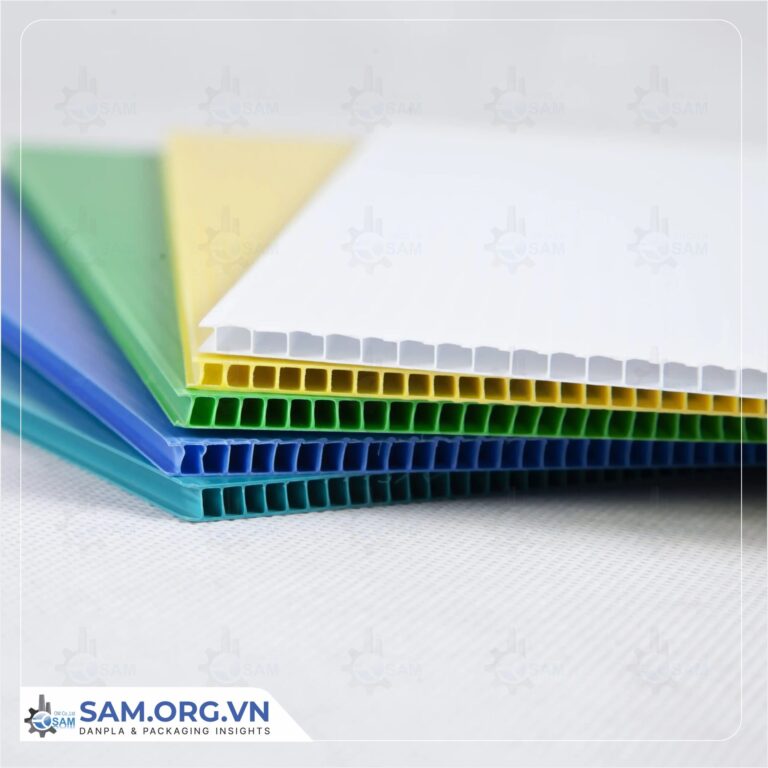
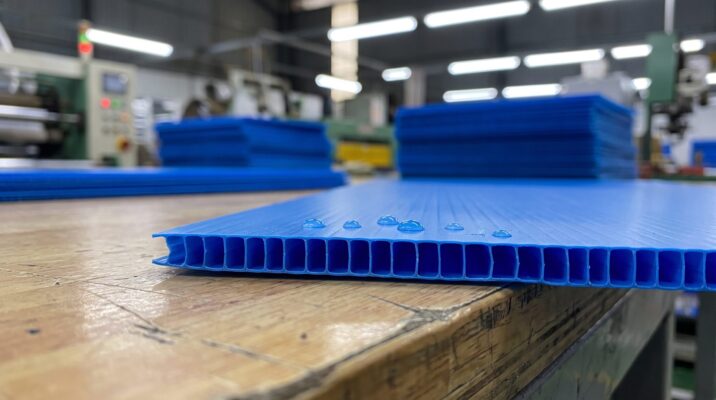
Inside the sheet, parallel flutes run between two flat outer layers. As a result, water cannot easily reach the core through the face of the sheet. However, the flute ends stay open unless treated. For wet or outdoor use, therefore, the ends are heat-sealed or capped with an edge trim. Consequently, water does not run into the flutes or pool inside.
Moreover, the hollow core keeps the sheet light yet rigid. We explain this load behavior in detail in our guide to the fluted core structure. In humid settings, this sealed geometry is the key to long-term durability.
Furthermore, the hollow flutes create an air gap between the two faces. This air layer slows heat transfer through the sheet. Therefore, in a cold room, it helps reduce condensation on the side that touches the goods. Admittedly, this is a small gain, yet it helps during long storage.
Uses in Cold Storage, Outdoor, and Humid Settings
The same water resistance pays off across several tough settings. In each case, the driver is the same: water that would destroy paper simply runs off. Below, we look at three common groups where buyers switch away from paper first. For each one, moreover, we note the single detail that matters most in practice.
Cold Storage and Freezer Chains
In a blast freezer, temperatures can drop below minus 20 degrees Celsius. Fortunately, PP does not become brittle across this range. As a result, it serves as floor liners, tray dividers, and seafood bins. Furthermore, condensation on the surface does not cause the sheet to rot or delaminate.
In practice, freezer racks cycle stock in and out all day. Therefore, liners take constant abrasion and moisture at once. Because PP shrugs off both, the same liner lasts far longer than a paper one. Moreover, workers can wipe frost off it quickly between batches.
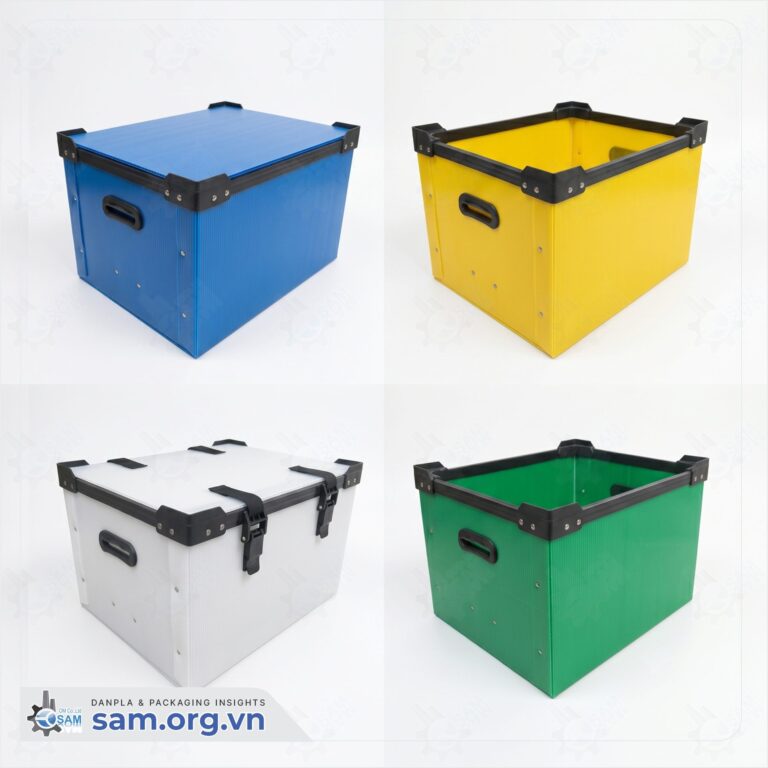
When you need airflow for frozen produce, consider ventilated corrugated plastic boxes. This type resists water while still letting cold air pass through evenly.
In addition, frozen seafood often ships through long cold chains. Therefore, the packaging must stay intact across the whole journey. Because PP does not soak up water, its weight does not rise in transit. As a result, freight costs by weight stay more stable than with damp cardboard.
Wash-Down and Wet Processing Areas
Food plants wash their equipment several times per shift. Paper packaging cannot survive this routine. Therefore, corrugated plastic works well as dividers, trays, and machine guards here. Because the surface is smooth and holds no water, mold does not grow on it. Moreover, staff can rinse it directly with a pressure hose without damage.
Hygiene also matters for food safety. Because the surface is sealed and smooth, bacteria find no gaps to settle in. Therefore, the sheet passes routine hygiene checks with ease. Furthermore, if one panel fails, you can replace it alone without touching the whole set.
Outdoor Use and Signage
Outdoors, rain, sun, and shifting humidity all act on the material. For instance, the sheets serve as signage, temporary covers, and pallet liners in open yards. However, for long sun exposure, you should choose a grade with a UV additive. Without it, standard PP will slowly grow brittle over time.
In addition, the sheet color affects how it holds up in the sun. For example, light colors reflect heat better than dark ones. Therefore, for covers that sit outdoors for a long time, you should weigh this factor. With more than 20 standard colors, you can pick by both function and branding.
In addition, outdoor covers often face wind as well as rain. Therefore, thicker grades hold their shape better under gusts. For semi-permanent signage, moreover, a UV grade keeps colors from fading fast. As a result, the sign stays readable through several seasons rather than months.
Need technical advice tailored to your production line? Contact SAM’s engineering team — free, no obligation: +84 363 939 228 (Mr. Đạt)
How to Choose the Right Waterproof Sheet
Thickness and Weight by Load
Corrugated plastic sheets range from 2mm to 10mm thick. For example, thin 2-3mm sheets suit light dividers and signage. Meanwhile, 4-6mm grades work for boxes and load-bearing liners. Finally, 7-10mm sheets serve pallets and heavy structural parts.
In a cold room, moreover, you should pick a slightly thicker grade than at room temperature. PP stiffens at sub-zero temperatures, yet fast handling also raises impact. Therefore, a thicker sheet keeps a safety margin for repeated loads. This detail is worth discussing with the technical team before you confirm the order.
In addition, the weight (gsm) sets the stiffness at a given thickness. A humid setting does not change how you pick thickness. However, load and reuse cycles do. You can browse the full corrugated plastic sheets range, which covers every thickness and color option.
Comparison with Cardboard and Solid Plastic
Three materials dominate warehousing: cardboard, solid plastic, and corrugated plastic. Each one has its own strength in high humidity. Therefore, the table below sums up the differences across four common buying criteria.
| Criteria | Cardboard | Solid plastic | Corrugated plastic |
|---|---|---|---|
| Water resistance | Poor, absorbs | Good | Good, sealed face |
| Weight | Light | Heavy | Light |
| Reusability | Few cycles | Many cycles | Many cycles |
| Cost | Low upfront | High | Moderate |
Solid plastic lasts well, yet it is heavy and costly. Cardboard is cheap at first, but it fails fast in wet settings. Corrugated plastic sits in the middle: light, water-resistant, and reusable many times. For cold storage and wash-down areas, therefore, this balance is often the best fit.
Furthermore, you should count cost over the life cycle, not just the purchase price. Cardboard is cheap, yet it needs constant replacement in humid settings. Because corrugated plastic serves many trips, it spreads its cost across each cycle. Consequently, after a number of cycles, the total cost often falls below single-use cardboard.
UV Additive and Edge Treatment
Outdoor use calls for two extra steps. First, a UV additive is blended into the resin pellets. Second, the two flute ends need treatment. Otherwise, rainwater still enters the flutes even though the face repels water.
Fortunately, the fix is simple: heat-seal the ends or cap them with a plastic trim. As a result, the flutes stay dry through many rainy seasons. When you order, therefore, state the use environment clearly so the maker picks the correct configuration.
In some cases, drainage matters more than a full seal. For a wash-down floor liner, for example, small drilled holes let water run off fast. Therefore, the sheet stays usable even where water pools daily. In short, the right edge and hole pattern depends on how water behaves at the site.
Waterproof Sheet Production Capacity at SAM
SAM produces corrugated plastic sheets from virgin PP on 6 lines, with a capacity above 150 tons per month. The sheets come in 2-10mm thickness, up to 2100mm wide, with more than 20 standard colors. For wet applications, moreover, the plant handles edge sealing and UV compounding on a per-order basis.
Material quality is controlled under ISO 9001:2015 and ISO 14001:2015. In addition, export products meet SGS inspection for markets in Japan, the USA, and Europe. Domestic food and electronics clients also use the sheets for wash-down and cold storage areas. Finally, the engineering team helps select thickness, weight, and edge treatment before production begins.
For large orders, moreover, the plant makes samples first so clients can test them in real conditions. In practice, clients try the samples in the actual humid or cold area of their own facility. Therefore, this step confirms the thickness and edge sealing before full production. As a result, the order carries less risk of a wrong configuration from the start.
Beyond production, the team also advises on stacking and reuse habits. For instance, flat storage between trips keeps sheets true and prevents warping. Moreover, a simple wash-and-dry routine extends the life of each unit. In this way, buyers get more cycles from the same batch.
Frequently Asked Questions
Is corrugated plastic the same as Danpla or coroplast?
Yes. Corrugated plastic, Danpla, coroplast, correx, and corflute all name the same hollow-core PP sheet. The name simply changes by region and brand. In each case, however, the material and its water resistance stay the same.
Are corrugated plastic sheets fully waterproof?
The face is fully waterproof because PP is hydrophobic, with near-zero water absorption. However, water can enter the flutes through open ends if left untreated. Sealing the edges or capping them solves this for standing-water settings.
Do the sheets become brittle in deep-freeze storage?
No. PP keeps good flexibility at the sub-zero temperatures of a blast freezer. Therefore, the sheet does not crack when handlers move goods in the cold room. As a result, many seafood plants pick it over cardboard for this area.
Can you wash the sheets with a pressure hose?
Yes. Because the surface is smooth and absorbs no water, direct pressure washing is easy. Moreover, the sheet does not grow mold and dries fast after a rinse. This trait suits food processing areas that need frequent cleaning.