VI
 EN
Why the wrong supplier costs you for years
A corrugated plastic box is a reusable asset, not a one-time purchase. Therefore, choosing the wrong corrugated plastic box manufacturer creates hidden costs for years. For example, lids fatigue after dozens of fold cycles. In addition, mismatched partitions scratch the parts inside.
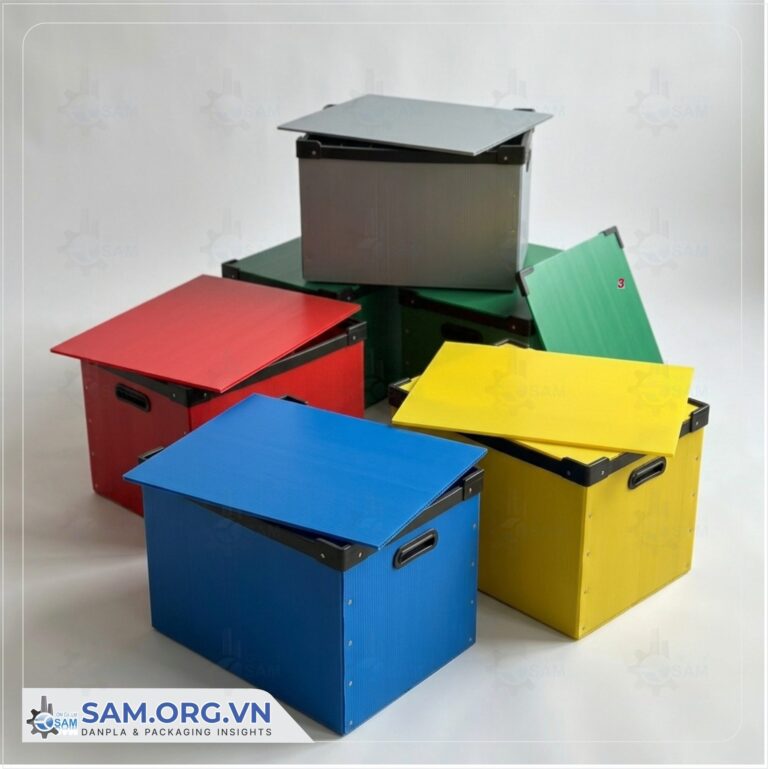
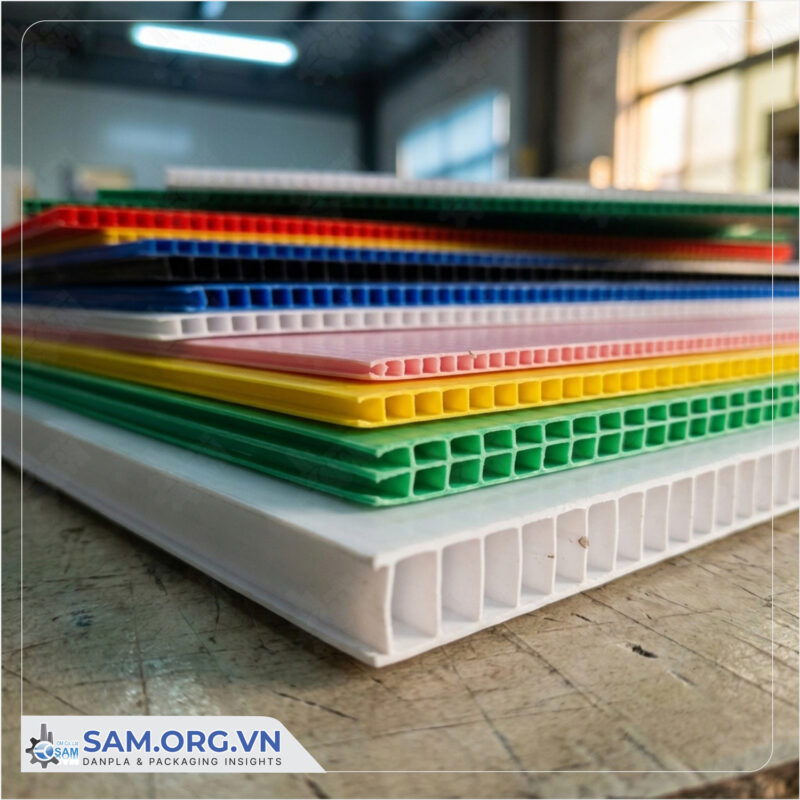
Corrugated plastic, also known as Danpla, coroplast, correx or corflute, is a hollow-core fluted PP sheet used to build these boxes. Many B2B buyers compare only the unit price on a first order. However, the unit price rarely reflects total cost of ownership. As a result, a stable supplier matters more than the lowest quote.
This guide sets out clear evaluation criteria. Moreover, each criterion comes with a question you should ask first. In short, the goal is a partner for the long run, not a one-time bargain.
First, we look at production capacity. Then we cover certification and quality control. Finally, we turn the criteria into a short checklist you can reuse. Because the stakes are long-term, a careful choice pays off quickly.
Production capacity drives box consistency
Box quality starts with raw material and machines. Because these two factors set batch-to-batch consistency, you should check them first. Therefore, verify real capacity instead of trusting a brochure. In fact, a short plant visit often tells you more than any sales deck.
Capacity and incoming material
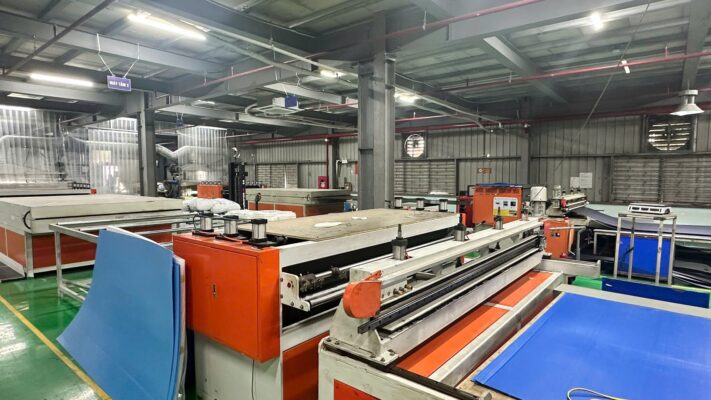
Capacity reflects how a plant handles large or rushed orders. For example, a line running 150 tons per month covers several thousand boxes easily. In addition, multiple lines reduce risk when one machine stops for maintenance. Therefore, ask about the number of extrusion lines and the floor area.
Material matters as much as machines. Virgin PP gives better fold strength and more stable color than recycled resin. So you should ask the supplier to state the virgin PP ratio clearly. Because a long service life needs consistent material, this question is worth repeating on every order.
Equipment condition also signals stability. For example, a well-maintained extruder gives even flutes and a flat surface. Therefore, ask about equipment age and the maintenance schedule. Because old machines break down often, they tend to delay orders and shift quality.
Material traceability helps too. For example, a lot number on each batch lets you track a defect back to its source. Therefore, ask whether the supplier records resin lots and production dates. In addition, this habit speeds up any root-cause review later.
Custom fabrication ability
Every industry has its own size and structure needs. Therefore, a good plant builds boxes from your drawing, not only stock samples. In addition, die-cutting, stiffening ribs and corner bonding affect load directly. For details, review the custom corrugated plastic box manufacturing process to see which steps need control.
Sheet thickness usually ranges from 2 to 10mm by load. Moreover, sizes are cut to order rather than fixed. Because needs differ, a flexible supplier will advise on thickness and structure. They also suggest the lid and handle that suit your handling.
Tooling and cutting dies also affect the minimum order. For example, an order with a custom die needs enough volume to spread the tool cost. Therefore, ask about the tooling fee and who owns the die later. In addition, this information helps you price each box correctly.
Printing and branding options also belong in this check. For example, screen or digital print lets you add logos and handling marks. Therefore, confirm the print method, color limits and durability. Because branded boxes reinforce quality control, many buyers value this feature.
Certification and quality control
The certificates you should require
Certification gives objective proof of management capability. For example, ISO 9001:2015 shows a structured quality system. In addition, ISO 14001:2015 reflects an environmental commitment. For export goods, an SGS certificate also helps clear inspection in the US, Japan and Europe.
Therefore, ask for a scan of each valid certificate. Then check the expiry date and the scope. Some suppliers reuse a parent company certificate or an expired one. So cross-check the number on the issuing body portal to stay safe.
In addition, ask whether the scope covers the exact product you buy. For example, a certificate may list sheets but not finished boxes. Therefore, confirm that boxes and partitions fall within the audited scope.
Inspection before dispatch
In practice, floor control matters more than a framed certificate. Therefore, ask how they inspect each batch before shipping. A good routine checks size, flatness and bond strength. Moreover, a reference sample should be kept for traceability if a claim arises.
For electronics, surface resistance testing also applies to antistatic material. In addition, heavy-duty boxes need a real load test. So you can review how to set load capacity standards and write the right requirement. Because clarity prevents disputes, put this value directly in the order.
Documentation with each shipment deserves attention too. For example, an inspection report or quality record lets you cross-check on arrival. Moreover, a professional supplier provides these papers without a reminder. Therefore, this habit signals a well-run system.
Need technical advice tailored to your production line? Contact the SAM Packaging engineering team, free and no obligation: +84 363 939 228 (Mr. Đạt)
A B2B supplier evaluation checklist
Once capacity and certification check out, compare suppliers on one shared checklist. Because a shared frame is fair, it keeps competing quotes comparable. Below are the criteria that matter most to B2B buyers.
First, score each supplier on the same points. Then weight the points by what your line needs most. For example, a non-stop line values lead time over a small price gap. As a result, the ranking reflects real priorities, not just headline cost.
References are worth asking for as well. For example, a supplier serving similar industries understands your needs faster. Therefore, request case history or sample clients in your sector. However, respect that some details stay confidential under customer agreements.
Price, lead time and delivery
Price should be read as total lifecycle cost, not unit cost alone. For example, a cheap box that fails early raises replacement cost. Moreover, a stable lead time matters for a line that runs non-stop. Therefore, ask for both the sample time and the batch time.
Delivery capability also includes safe buffer stock. In addition, a supplier near a port and industrial zone cuts freight. When you pick the right size through choosing corrugated plastic box size, you also fit more boxes per pallet. As a result, you save on every trip.
Payment terms form part of the cost as well. For example, full prepayment raises risk on a large order. Therefore, agree on a payment schedule tied to delivery milestones. Because a clear contract protects both sides, it prevents disputes later.
Technical support and samples
A good supplier advises on material and structure from the start. Therefore, they build a test sample before any large run. The sample lets you check load and fold handling in real conditions. Moreover, this step cuts risk at a low cost.
After-sales support should be clear as well. For example, the return policy for defects belongs in the contract. In addition, the ability to supply corrugated plastic boxes and partitions repeatedly at even quality is a strong plus. So favor a partner that commits to this in writing.
Response speed is also an important signal. For example, a technical contact who replies fast helps you fix issues in time. Therefore, watch how they respond during the quoting stage. In addition, their attitude now often predicts long-term support.
Sustainability and reuse
Many supply chains now require packaging that reduces waste. Because these boxes are reusable many times, they fit this goal. Therefore, ask about average service life and end-of-life recycling. Moreover, uniform PP material makes recovery and recycling easier.
A partner who understands lifecycle will advise on recovery too. For example, they may propose a foldable design to save space when empty. As a result, you lower storage cost and return-trip freight.
Some customers also ask for a recycled-content report. Therefore, the supplier should be transparent about resin origin. Moreover, reuse changes how you budget packaging, because a box used many times spreads its cost across many trips. As a result, a slightly higher unit price can still win on total cost.
Why companies choose SAM Packaging
SAM has produced corrugated plastic since 2010. After more than 16 years, the plant now runs 150 tons per month across 6 lines. In addition, the 5,000 m2 factory sits in Viet Hoa Industrial Zone, Hai Phong. Because the site is near a port, it serves both local and export customers.
Moreover, the system holds ISO 9001:2015 and ISO 14001:2015, plus an SGS certificate for export goods. Every batch is inspected before dispatch. For example, more than 300 customers across 15 markets use these products. Among them are electronics makers such as Canon, LG and Sumitomo Electric.
In addition, the engineering team supports buyers from drawing to sample and batch. Therefore, boxes, partitions and layer pads are made to custom sizes. The products use virgin PP with over 20 standard colors. As a result, companies gain a reliable long-term source.
For export customers, the products already meet international inspection needs. For example, quality files are prepared by market. As a result, companies cut clearance time and return risk. In addition, this capability suits the electronics and logistics sectors well.
The engineering team can also help convert existing carton packs. For example, they translate a carton spec into a durable reusable design. As a result, buyers move to reusable packaging with less trial and error. Moreover, this support shortens the switch-over timeline.
Scale also deserves a direct question. For example, a seasonal spike can strain a small plant and delay your line. Therefore, ask whether the supplier can raise output without missing quality. In addition, check their buffer stock policy for fast-moving items. Moreover, a supplier with several lines absorbs peaks more smoothly than a single-line workshop. Because peaks are common in retail and export, a clear answer here protects your delivery schedule.
Frequently asked questions
How do I verify a corrugated plastic box manufacturer’s real capacity?
The surest way is a plant visit where you watch the lines run. For example, look at the number of extrusion lines, the material store and the inspection area. However, if a visit is not possible, ask for a process video and samples. Then compare the stated capacity against the real factory scale.
Which certificates should I require from a supplier?
At minimum, you should require ISO 9001:2015 for quality management. In addition, export goods need an SGS certificate to clear international inspection. Moreover, ISO 14001:2015 is a plus for buyers who value the environment. Therefore, always check the validity date and the scope on each certificate.
Is corrugated plastic the same as Danpla or coroplast?
Yes, these are different trade names for the same fluted PP sheet. For example, the term is common in Vietnam and Asia, while coroplast, correx and corflute appear in other markets. Therefore, a supplier may use several of these names. However, the material and the box structure stay the same.
How long does a custom box order take to deliver?
Lead time covers a sample stage and a batch stage. For example, the sample often takes a few days, while the batch depends on quantity and machine schedule. Moreover, a supplier with several lines shortens the wait. Therefore, confirm the lead time in writing so you can plan ahead.