VI
VI EN
EN
Why load capacity is the number that really matters
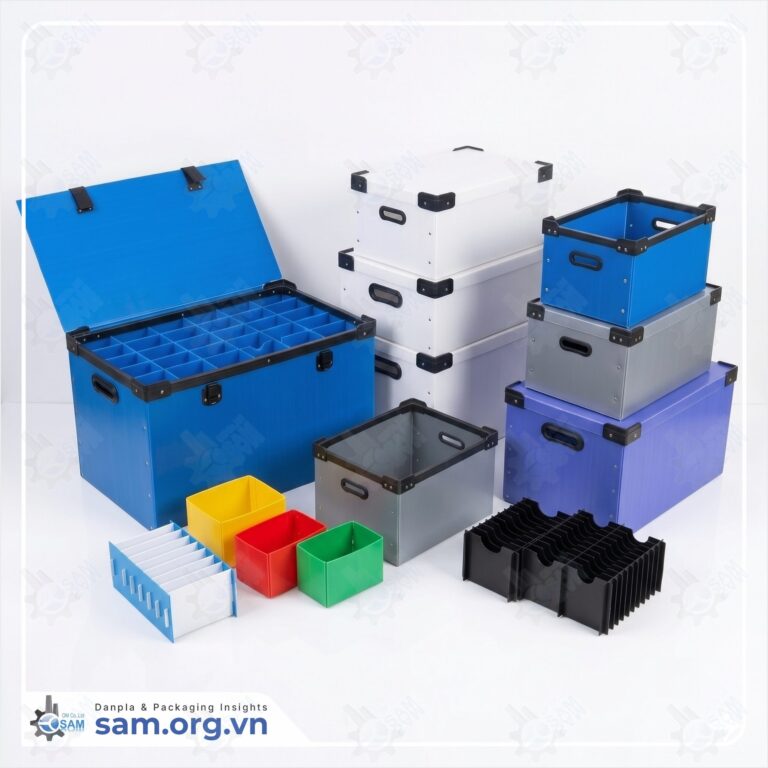
Corrugated plastic, also known as Danpla, coroplast, correx or corflute, is a hollow-core fluted PP sheet. In warehousing, the look of an empty box tells you little. Instead, the figure that matters is corrugated plastic box load capacity once the box is filled and stacked. Pick the wrong grade, and the box crushes mid-line. As a result, goods are damaged and claims quickly exceed any packaging savings.
Buyers often ask one simple question: how many kilos can this box hold? However, the correct answer is not a single number. Load capacity depends on sheet weight, rib design, stacking pattern and storage time. Therefore this article breaks each factor apart. The goal is practical: help you read the spec correctly and order neither too much nor too little.
The stakes are concrete. A crushed stack can write off a full pallet of goods in seconds. Meanwhile, an over-built box wastes material and weight on every single trip. Therefore the right load sits at a balance point, and this guide helps you find it.
What determines the load capacity of a corrugated plastic box
Load capacity does not sit in one detail. Instead, it is the result of material, thickness and how the structure is built. For that reason, understanding the factors below lets you compare quotes on the same scale.
Keep one more point in mind. A load figure is only as good as the test behind it. For example, a value from a quick press differs from one held for days. Therefore, ask whether the number reflects short-term strength or long-term storage before you compare suppliers.
Sheet GSM and wall thickness
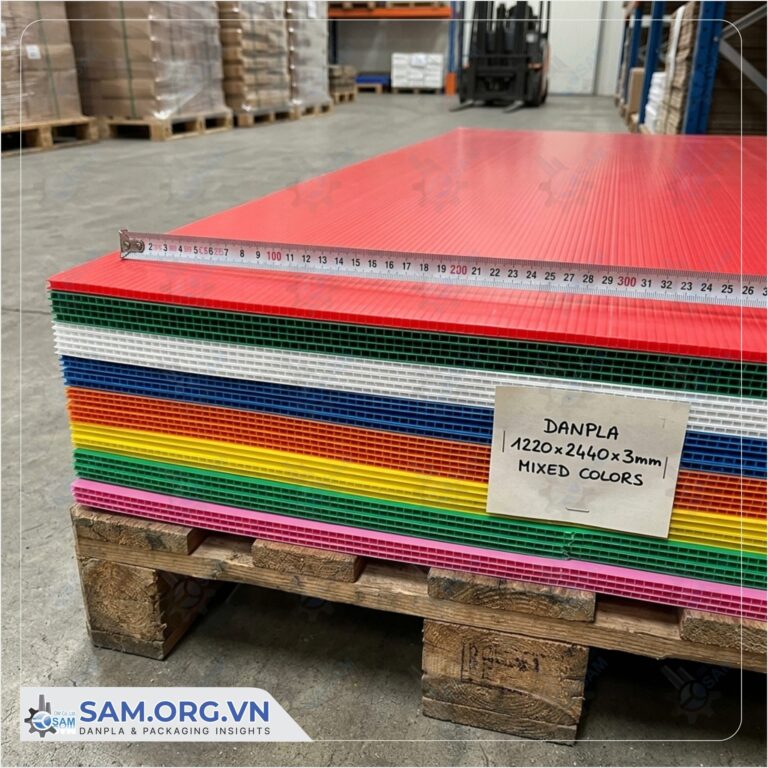
Corrugated plastic sheet runs from 2 to 10mm, with several GSM grades at each thickness. At the same thickness, a higher GSM sheet is stiffer and resists compression better. Therefore this is the first variable to lock down. For example, a box built from a low-GSM 4mm sheet buckles far sooner than one made from a high-GSM 5mm sheet of the same size.
When you compare quotes, do not look at the millimetre figure alone. In addition, ask for the sheet GSM. Two boxes both marked 5mm can still differ sharply in load capacity if their GSM is not the same.
Reinforcing ribs, double base and corner joints
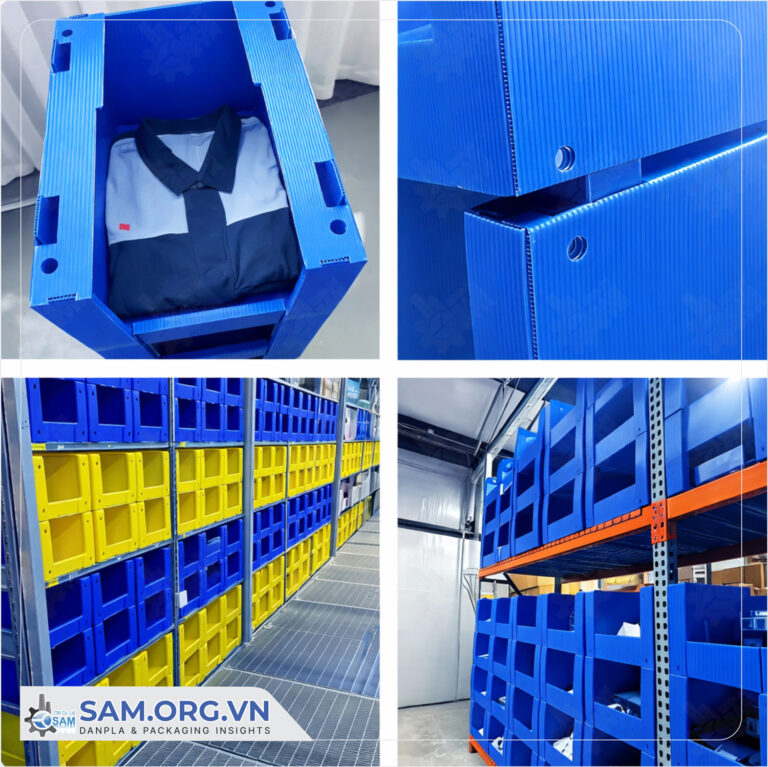
The main load-bearing parts are the walls and the base. Vertical ribs keep the walls from bulging when the box is full. Meanwhile, a double base or a battened base spreads the force across the pallet contact area. Corners are a familiar weak point, so the joint method and corner accessories affect stacking load directly.
The ribs, base, walls and lid are described in our guide to corrugated plastic box structure. For custom orders, moreover, you can add ribs or reinforce the base to hit the exact load you need.
Resin quality and box dimensions
Resin quality also affects the load. For example, sheet made from virgin PP gives more consistent stiffness and impact strength than sheet blended with heavy recycled content. Therefore, for boxes that need high load and a long service life, virgin resin is worth considering despite the higher price.
At the same sheet grade, moreover, a larger box offers less compression strength per metre of wall. Long walls bulge at mid-span more easily than short ones. As a result, a wide box needs more ribs to hold the same load. The height-to-base ratio matters too, because tall narrow boxes are less stable than low square ones when stacked.
Static load, dynamic load and stacking load
A load figure only means something when it is tied to a use condition. However, these three terms are often merged into one, which leads to the wrong box.
Three load types to keep apart
Static load is the weight held inside while the box stands still. Dynamic load, in contrast, is the force from lifting, vibration on trucks and movement on conveyors. For that reason, dynamic force is often several times the static figure at the moment of impact.
Stacking load is the total weight of the boxes above pressing on the bottom box. Consequently, it is the strictest number in high-bay storage. For example, a box may hold 20kg of goods well, yet still collapse when four full boxes sit on top without rack support.
Therefore, when you brief a supplier, state which number you need. In-box load and stacking load are two separate technical requirements.
Dynamic force is the biggest worry with forklifts and fast conveyors. For instance, a hard drop onto the floor can create several times the static weight in an instant. However, handles and corner profiles spread this force and reduce the risk of torn walls at the edge.
Reusable boxes add a fourth factor, namely the number of trip cycles. After many fold-and-open cycles and knocks, the working load drops compared with a new box. Therefore, when you plan the life cycle, choose a higher initial load so the box stays safe in the final cycles.
Need technical advice tailored to your production line? Contact SAM’s engineering team, free and no obligation: +84 363 939 228 (Mr. Đạt)
How to set a safe load for your own line
The load printed on a datasheet is an ideal-condition value. In practice, the warehouse is always harsher. Therefore you should apply a safety factor and derate for real conditions.
Safety factor, time and humidity derating
The general rule in packaging is to set the working load well below the failure load. For instance, a safety factor of three to five is common, depending on the risk of the goods. Moreover, high-value cargo takes the larger factor.
Two things cut compression strength over time. First, long storage matters, because material under constant load slowly deforms. Second, high humidity in cold rooms or damp seasons adds stress. However, PP does not absorb water the way carton does, so its humidity derating stays much lower than paper boxes.
High temperature is the third factor. When the store is hot, the plastic softens and compression strength falls with it. In cold storage, by contrast, the plastic turns more brittle, so sharp impacts need attention. Therefore, stating the working temperature range helps select the right sheet.
Spreading the load evenly on the pallet
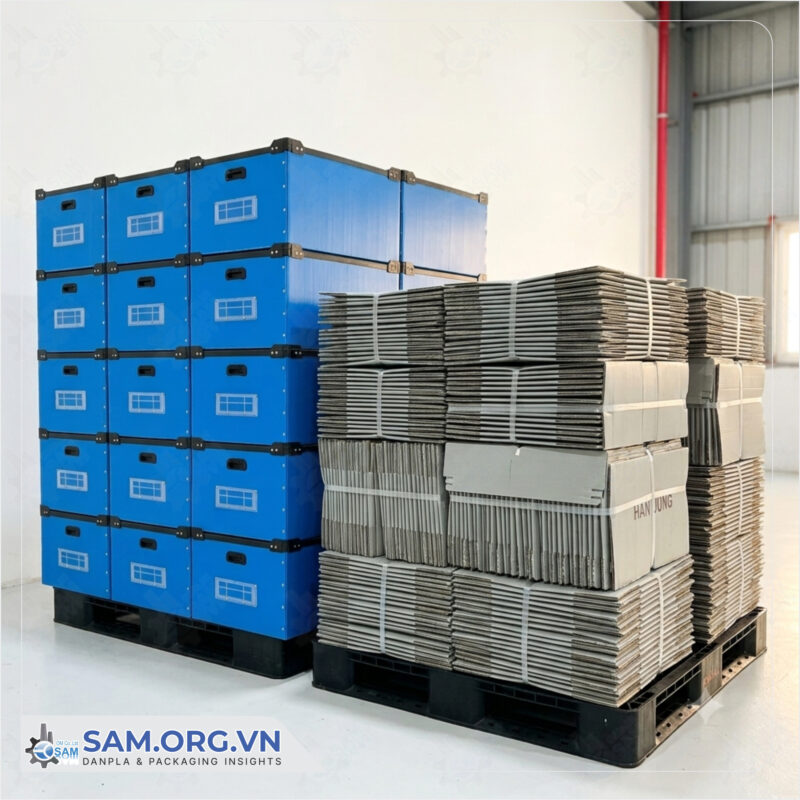
A box reaches its rated load only when it is stacked correctly. Off-centre stacking drives force into one corner and causes local collapse. Therefore the box size should divide the pallet face cleanly, so boxes lean on each other and pass force to walls and corners rather than the lid.
Sizing boxes to fit the pallet is the foundation step. Our guide on choosing box size by pallet shows how to work out the stacking module. As a result, when layers lock together, stacking load is shared and warehouse height rises safely.
A simple example shows the method. Suppose the store stacks five layers, with each full box weighing 15kg. The bottom box then carries four boxes above, roughly 60kg of stacking load. With a safety factor of four, therefore, the target failure load should reach about 240kg. That figure drives the sheet thickness and rib count you order.
For sea-freight exports, moreover, transit time is long and container humidity runs high. Both wear down stacking load. In that case, raise the safety factor and recheck the allowed stack height before you seal the container.
Specifying the right load from a Vietnam factory
A reliable load does not come from an off-the-shelf box. Instead, it comes from a design matched to your goods and storage layout. SAM manufactures custom corrugated plastic boxes to order, selecting sheet thickness and GSM for the target load, then reinforcing ribs and base for the stacking condition. In addition, every batch is inspected before dispatch under an ISO 9001:2015 system.
Before the tooling is fixed, a sample box can be stacked to the target load to confirm it does not deform past the limit. As a result, this avoids the risk of finding faults after goods reach the warehouse. The final figures sit on the technical drawing, shared across every repeat order.
Inspection capacity runs alongside ISO 9001:2015 and ISO 14001:2015 systems. In addition, the products have passed SGS assessment for demanding markets such as Japan, the United States and Europe. For cargo that needs a clear quality file, therefore, this is the basis to request load figures in writing.
With output above 150 tons per month and more than 300 clients, including electronics plants and export logistics operators, the engineering team handles the trade-off between load, box weight and cost daily. Therefore you can send your cargo weight, stacking layers and pallet type to receive a suggested configuration. For a full range, see our corrugated plastic boxes and partitions before the detailed brief.
Frequently asked questions about box load capacity
How much weight can a corrugated plastic box hold?
There is no fixed figure for every box. Instead, load capacity depends on sheet thickness from 2 to 10mm, GSM, rib count and box size. Because boxes are built to a target load, you should supply the cargo weight and stacking layers to get the right configuration.
How does stacking load differ from in-box load?
In-box load is the weight of goods inside a single box. Stacking load, however, is the force from boxes above pressing down on the bottom box. In high-bay storage, therefore, stacking load is the strictest number and must be stated separately when ordering.
Does a corrugated plastic box lose capacity in cold storage?
Yes, every material deforms slowly under constant load. However, PP does not absorb water, so these boxes lose far less capacity to humidity than carton. As a result, they stay more stable in cold rooms and damp seasons.
What safety factor should I use when choosing a box?
Packaging practice sets the working load three to five times below the failure load. Moreover, high-value goods or long storage should take the upper end. In practice, the engineering team helps you lock a factor that suits your cargo and storage time.