VI
VI EN
EN
Standard Danpla Sheet Sizes You Need to Know
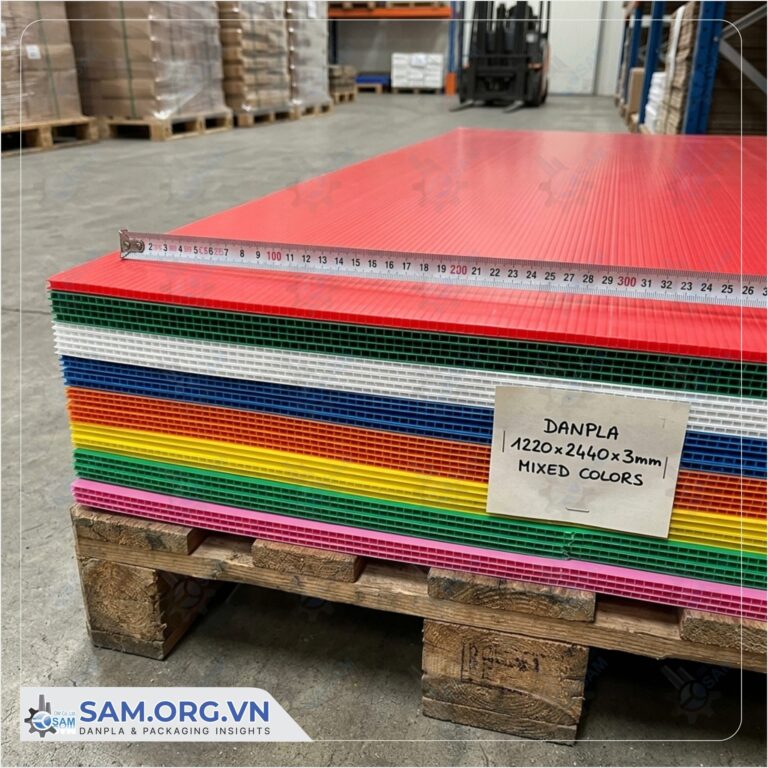
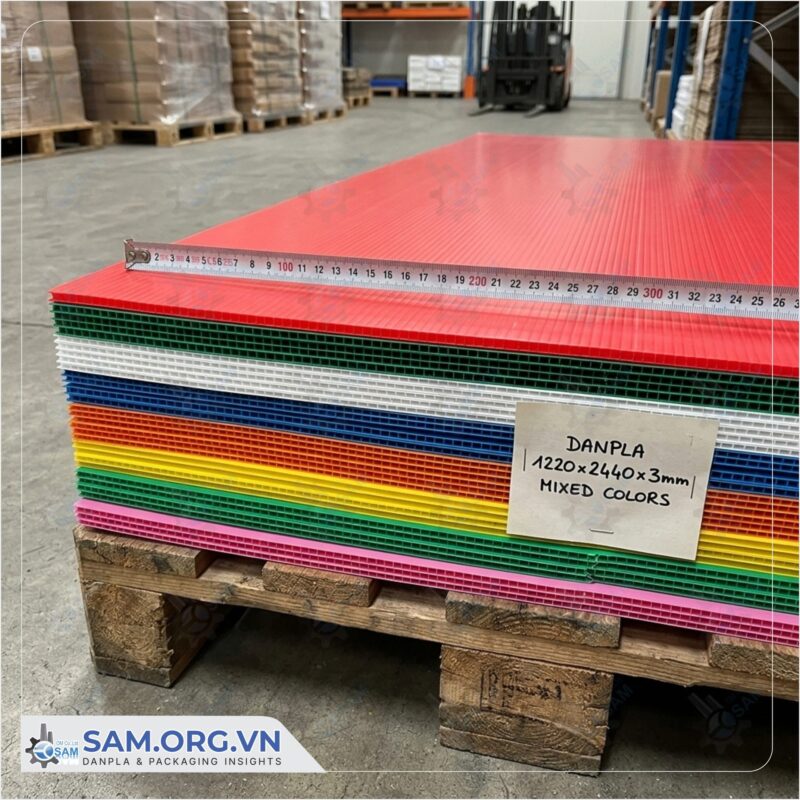
Danpla sheet size directly affects cutting cost, material waste, and how well the sheet fits your packaging line. Choosing the wrong width, however, often forces a plant to recut sheets, adding waste to the schedule. In the market, the common Danpla sheet width sits around 1.2 meters. Length, in contrast, usually depends on the order and its intended use.
As a result, many purchasing teams confirm sheet dimensions early in the planning stage. This step avoids extra tooling cost or unexpected lead time later. For example, a plant ordering component trays typically needs a smaller, precisely cut sheet, while a plant building bulk containers needs a wider one.
SAM produces Danpla sheets with a maximum width of 2100mm and thicknesses from 2mm to 10mm. The sheets are extruded from 100% virgin PP resin, with no recycled filler. In addition, customers can choose from more than 20 colors for identification or component sorting.
Sheet size and thickness, together, determine how many trays or partitions a single sheet yields. Planning both figures before ordering, therefore, helps a factory estimate material use more accurately.
This article covers standard Danpla sheet dimensions, how to match thickness to your application, and why many factories order custom-cut sheets. Purchasing teams, packaging engineers, and production managers can therefore use it as a quick reference before placing an order.
Sheet Width and Thickness Options
Two decisions matter before placing a bulk order: sheet width and thickness. Each choice, moreover, affects cost and durability directly. A mismatched width, for example, often means paying for material that never gets used, while a mismatched thickness risks product damage during transport.
Standard Width vs. Custom-Cut Sheets
A width of 2100mm covers most orders for partitions, liners, and mid-size folding boxes. This is the most common production size, so it adds no extra tooling cost. For orders that need a larger surface, the plant joins multiple sheets using heat welding or industrial stapling.
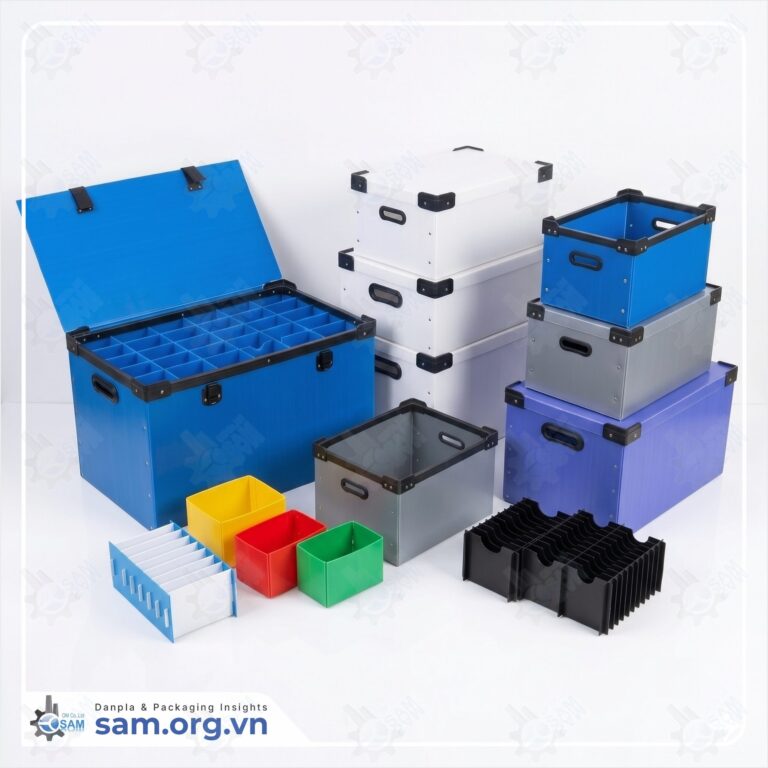
For small or specialized parts, such as component trays or box partitions, sheets are cut to the customer’s technical drawing. CNC cutting tolerance is controlled closely so the sheet fits the packaging mold. Customers can therefore send a CAD file or physical sample so the plant can plan the cut before mass production.
Joining sheets, however, extends production time compared with a full-size sheet. For this reason, the purchasing team should confirm the actual dimensions needed before placing the order. For export orders, sheet size must also match the buyer’s standard container or pallet layout.
Furthermore, sheets ordered below the standard width usually cost about the same per square meter as a full sheet, since cutting itself adds limited expense. Above the standard width, however, joining sheets adds labor and inspection time, which can affect the final quote.
Lead time for a standard 2100mm sheet, moreover, is typically shorter than for a joined or heavily customized size, since no extra assembly step is required. Buyers working to a tight production schedule should factor this difference into their order timeline.
Thickness Guide for Common Applications
A thickness of 2-3mm suits light partitions, temporary liners, or single-use packaging. Thickness of 4-6mm, meanwhile, works well for reusable folding boxes under medium warehouse loads. For heavier loads, 8-10mm suits load-bearing trays or applications that need extra rigidity.
For instance, a plant packing lightweight electronic parts rarely needs anything above 3mm. A plant shipping heavy machinery components, on the other hand, should look toward the 8-10mm range instead.
Choosing the wrong thickness can warp boxes when stacked or crack corners during transport. Our guide on choosing the right Danpla thickness breaks down each thickness level by real load conditions. Matching width and thickness correctly, therefore, reduces the number of recuts at the packing line.
Sheet color also affects which widths are kept in stock. Common colors are typically produced in the 1200mm width, while custom colors are usually made to order in batches. Consequently, confirming color and width together helps avoid delivery delays.
Combining thickness with the right width, in the end, is what determines total material cost per unit. A slightly thicker sheet at a smaller width, for example, can sometimes cost less overall than a thin sheet cut from a larger, wasteful format.
Real-World Applications by Sheet Size
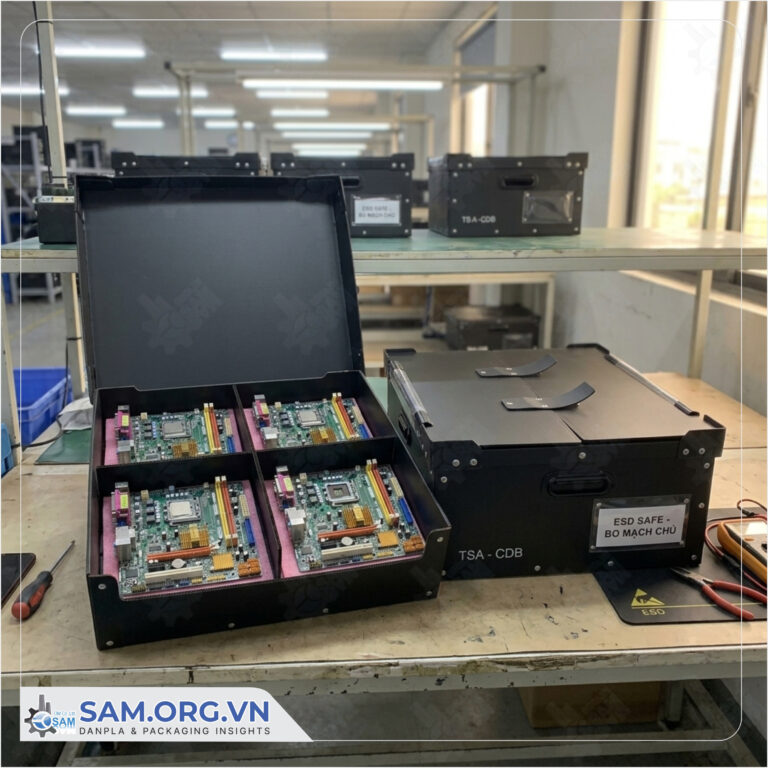
Electronics manufacturers usually order small-format sheets, cut into component trays or SMT box partitions. Accurate sizing keeps components from shifting during internal transport. Our article on SMT component packaging solutions covers sizing requirements for this segment in detail.
Logistics operators, in contrast, prefer large-format sheets joined together for container partitions or warehouse floor liners. Sheet size needs to match standard container dimensions to avoid excess cutting waste. Custom-sized Danpla boxes, as a result, make better use of loading space.
For example, a furniture exporter and an electronics assembler rarely order the same sheet configuration, even though both rely on Danpla for protective packaging. Understanding this difference, therefore, helps a buyer avoid over-specifying a project and paying for dimensions that add no real value.
A single production run, in many cases, includes more than one sheet configuration, since a plant may need both trays and outer packaging in the same batch. Grouping these requirements into one order, consequently, can reduce total setup time at the cutting stage.
Exporters, similarly, prioritize sheet dimensions that match the packaging specifications required by the importing country. Danpla sheets certified to ISO 9001:2015 and verified by SGS, moreover, make it easier for businesses to meet inspection requirements when shipping abroad.
More Danpla Types by Application
Each industry requires a different combination of width, thickness, and color depending on the product it protects. Our guide on types of PP corrugated plastic sheets summarizes these variations by use case. For orders that mix several specifications in one batch, the plant can schedule cuts in sequence to reduce tooling changeover time.
Need technical advice tailored to your production line? Contact SAM’s engineering team — free, no obligation: +84 363 939 228 (Mr. Đạt)
Why Choose SAM for Custom-Sized Danpla Orders
Custom-cut orders require stable production capacity and a clear quality control process. SAM meets both requirements for domestic and export B2B orders. A buyer comparing suppliers, therefore, should ask about both cutting tolerance and certification before signing a contract.
Production Capacity and Quality Control
SAM operates 6 production lines across a 5,000 m2 facility, with capacity of over 150 tons of Danpla sheet per month. This scale supports custom-cut orders without extending lead times. The plant holds ISO 9001:2015 and ISO 14001:2015 certification, verified by SGS. As a result, custom-sized orders are still processed within the standard production schedule.
Founded in 2010, SAM serves more than 300 customers across 15 export markets, including the US, Japan, Australia, the UK, and Russia. Every batch is inspected for width and thickness before packing. This process, consequently, reduces the risk of size mismatch during mass assembly. In addition, the plant keeps cutting templates on file, which shortens lead time for repeat orders.
Technical Support Based on Your Drawings
SAM’s technical team reviews drawings or physical samples to confirm the correct cutting width before mass production. For large orders, the CNC cutting template is saved for accurate reproduction in future batches. For example, a customer ordering both trays and partitions in one shipment can request separate cutting templates for each item, which reduces coordination work on future orders.
Both Danpla sheets and Danpla boxes follow the same size control process. Customers can therefore request a sample before confirming a bulk order to verify the actual fit.
Frequently Asked Questions About Danpla Sheet Sizes
What is the largest Danpla sheet width SAM produces?
SAM produces Danpla sheets with a maximum width of 2100mm, in thicknesses from 2mm to 10mm. Sheet length, however, depends on the specific order.
Does SAM offer custom-cut Danpla sheets?
Yes. The technical team reviews drawings or physical samples to cut sheets to the exact size requested, matching your packaging mold or production line. Lead time for custom sizes, however, is typically longer than for the standard 1200mm width.
Which thickness suits partitions for electronic component boxes?
A thickness of 2-3mm suits light partitions inside electronic component boxes. For heavier loads, however, 4-6mm works better. See our guide on choosing Danpla thickness for more detail.
How many colors are available for standard-width Danpla sheets?
SAM offers more than 20 colors for Danpla sheets. Common colors, moreover, are typically kept in stock at the 2100mm width, while custom colors are usually made to order in batches. Businesses ordering large volumes, moreover, can request a fixed color-width combination to keep future reorders consistent.
Confirming the right Danpla sheet width and thickness upfront reduces waste and recutting. SAM supplies Danpla sheets meeting ISO 9001:2015 standards, with reliable lead times and in-depth technical support.
Request a quote: Mr. Đạt — +84 363 939 228 — Email: datnt@sam.org.vn