VI
VI EN
EN
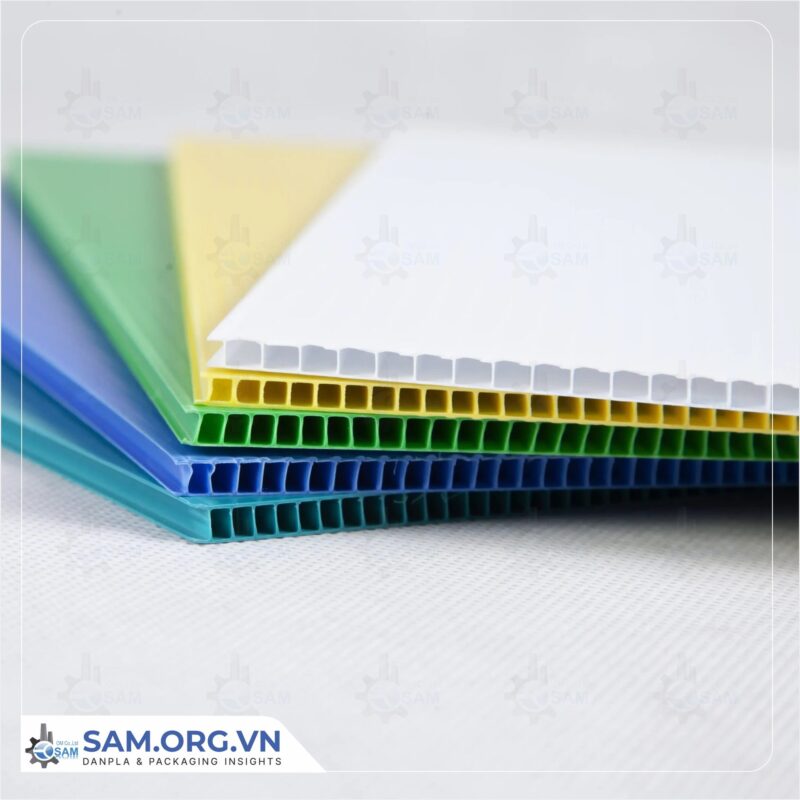
Why one plastic sheet has so many names
Vietnamese exporters often face a confusing situation. For example, a buyer in the US asks for “coroplast”. Meanwhile, a UK partner calls it “correx”. In Australia, the purchase order says “corflute”. However, in Vietnam and Japan the same product is simply Danpla.
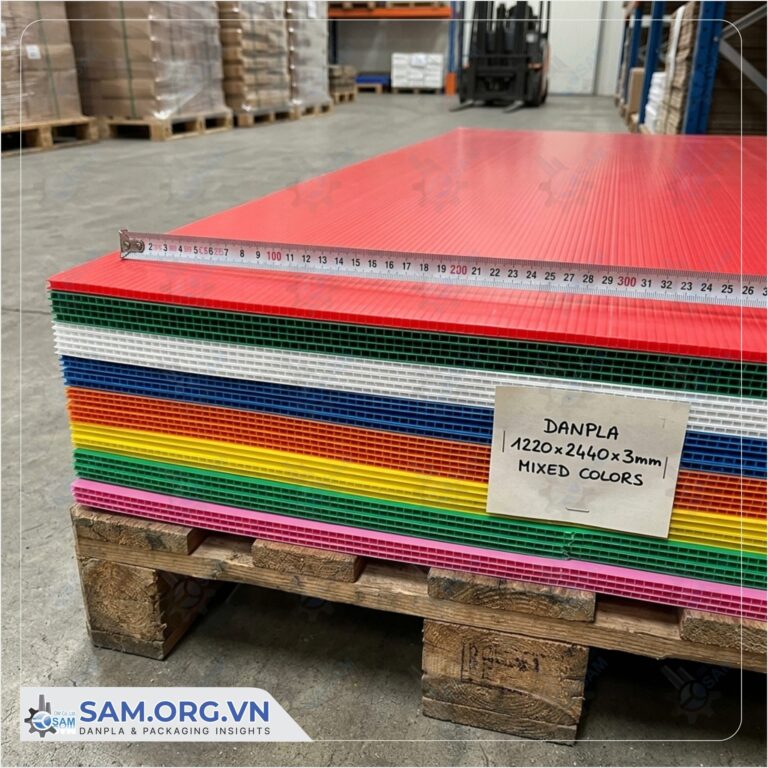
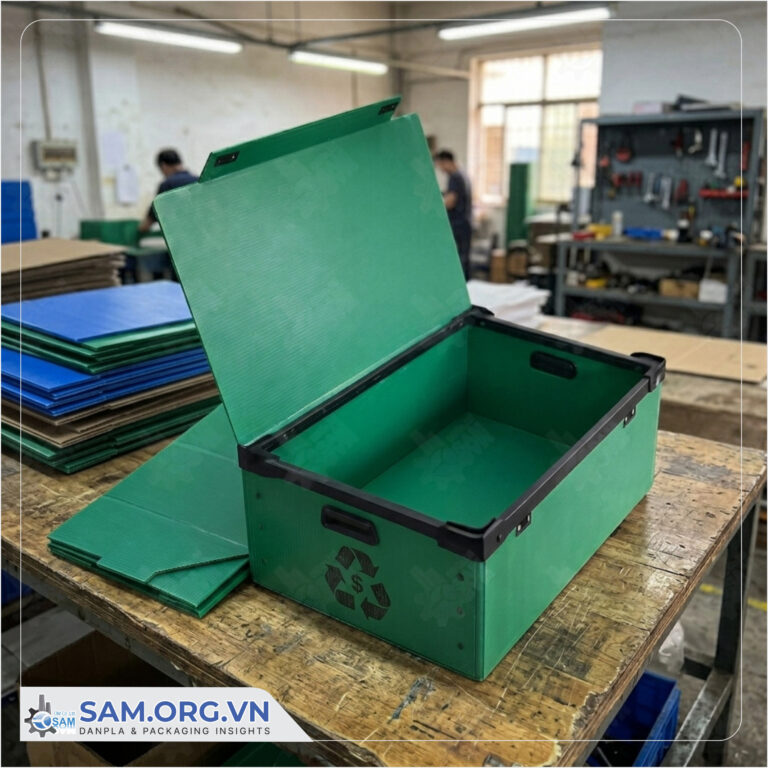
Corrugated plastic, also known as Danpla, coroplast, correx or corflute, is a hollow-core fluted PP sheet. In other words, all four names describe one material. The difference is regional and brand-based, not technical. Therefore the specifications stay identical no matter which word appears on the order.
Understanding these corrugated plastic sheet names helps your purchasing team avoid wrong orders and quotes. In addition, it makes communication with overseas customers much smoother. The sections below explain where each name comes from. As a result, you can describe the product clearly in any market. In turn, that clarity protects your margin by preventing costly re-orders and returns.
The product itself: one hollow PP sheet
Before we discuss names, we should agree on the material. Every name above points to the same structure. Therefore, whatever word the order uses, the technical spec remains the shared language. In practice, this is what keeps two parties on the same page.
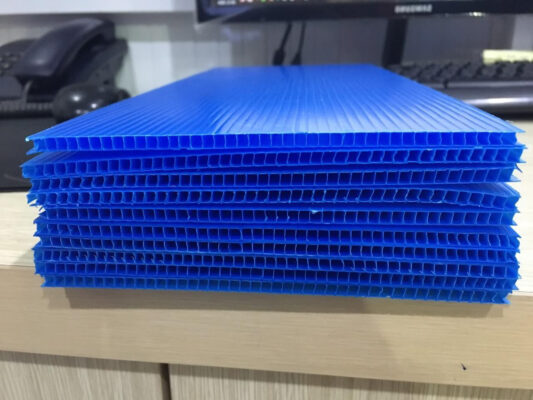
The signature twin-wall structure
The sheet has two parallel flat walls. Between them, vertical ribs connect the walls together. This layout is called twin-wall or fluted. As a result, hollow channels run along the length of the sheet.
Moreover, the hollow core keeps the sheet light yet stiff along the flute direction. The principle mirrors cardboard flutes, but the material here is PP plastic. For a deeper look, our article on the fluted core structure explains the mechanics. In practice, this shared structure is exactly why every market ended up describing the same board, even with different words.
Specs stay the same across names
Whether you call it coroplast or correx, the spec range is identical. For instance, thickness runs from 2mm to 10mm. The maximum width is around 2100mm, and length is cut to order. In addition, the material is 100% virgin PP with more than 20 standard colors.
The weight in grams per square meter (gsm) drives the stiffness. Therefore, when you talk to a supplier, three numbers matter most: thickness, gsm and size. In short, the trade name is only a label wrapped around the same spec set. In addition, the color range covers white, grey, blue, red, yellow and custom shades on request. Because the spec drives performance, two sheets with matching numbers behave the same in use.
Names by export market
Each market is used to its own name. In most cases, an early brand entered the market and became the generic word. Consequently, this is a classic example of a trademark used in place of a product category.
A quick regional reference
For quick recall, it helps to map the names by geography. North America uses coroplast. The UK and Ireland use correx. Meanwhile, Australia and New Zealand use corflute. In addition, Japan, Korea and Vietnam use Danpla.
Therefore, when an order shows an unfamiliar word, first identify the customer’s market. From there, you can predict the name and confirm it with the specs. As a result, this simple step cuts down back-and-forth on international email.
For instance, a Melbourne sign shop and a London packaging buyer may describe the same board differently. However, once both quote a thickness and gsm, the confusion disappears. Therefore, the region tells you the likely name, and the spec confirms the exact product.
Coroplast: North America (US, Canada)
Coroplast is the most familiar name in the US and Canada. Originally, it was a North American brand of corrugated plastic. Over time, users applied the name to every PP fluted sheet. For example, US customers ordering signage or packaging usually write “coroplast sheet”. In some cases, people spell it as cor-o-plast, but it is still one product.
Correx: the UK and Ireland
Correx is the common name in the UK and Ireland. Similarly, it began as a long-standing brand in that market. British buyers often use correx for floor protection and reusable packaging. Therefore, when you receive a “correx sheet” request, you know it means corrugated plastic. Likewise, the phrase correx board points to the same material.
Corflute: Australia and New Zealand
Corflute is the everyday word in Australia and New Zealand. In some places, people write it as corriflute. Moreover, the name is tied to election signs, site boards and protection sheets. As a result, orders from Australia almost always use corflute rather than any other term. Occasionally, the spelling coreflute also appears.
Danpla: Japan and Asia
Danpla is the standard name in Japan, Vietnam and much of Asia. In fact, the word blends “danball” (cardboard) and “plastic”. Therefore it is the term the Vietnamese domestic market knows best. Our overview of the types of PP corrugated plastic sheets lists the common grades under this name. In Korea, similarly, the equivalent term is plastic dan-ball.
Need to confirm exactly which sheet your overseas customer is asking for? Contact our engineering team to match the specs, free and with no obligation: +84 363 939 228 (Mr. Đạt)
Other technical and generic names
Beyond the four trade names, there are several technical terms. For example, these often appear in tenders and international specification sheets. Therefore, knowing them helps you read customer requirements accurately.
Names based on structure
The most common is “corrugated plastic” itself. In addition, you will see “fluted polypropylene” and “twin-wall PP sheet”. Some documents write “PP flute board” or “polyflute”. However, all of them describe the same hollow twin-wall structure.
These technical names are safe for contracts. Because they do not belong to a single brand, they avoid confusion about origin. Therefore, for export paperwork, using “corrugated plastic” with the specs is the clearest choice.
Other regional brand names
Beyond the four main names, each region also has its own brands. For example, in France and parts of Europe, many people say akylux. In addition, the UK market uses polyflute for the same sheet. Meanwhile, North American supplier documents sometimes show proplex or intepro. Each of these belongs to a specific supplier, yet the underlying board matches the same PP fluted spec.
However, these names do not change the material itself. Instead, they simply reflect a popular local maker or distributor. Therefore, whenever an unfamiliar name comes up, ask directly for the thickness and gsm to confirm.
Brand names versus category names
Coroplast, correx and corflute started as registered trademarks in their regions. Consequently, using the category name helps you avoid trademark issues when labeling goods. On packaging and documents, therefore, it is better to write “PP corrugated sheet” with the size. In contrast, a brand name fits casual talk with a customer.
What to check when ordering with overseas partners
The key to global trade is describing by spec, not by name. For example, whether the buyer writes coroplast or correx, confirm the thickness, gsm, size and color. As a result, you remove misunderstanding right at the quoting stage.
A standard description line should carry all the measurable details. For example: PP corrugated sheet, 4mm, 700gsm, size 1220 x 2440mm, opaque white. With this line, a customer in any country understands it exactly. Therefore, the coroplast or corflute name only needs a note in brackets for reference.
On carton labels and customs declarations, moreover, you should stick to one category name. Mixing coroplast in one place and correx in another can raise questions during clearance. In short, one clear category name keeps the paperwork consistent from quote to delivery.
SAM is a corrugated plastic manufacturer in Hai Phong, exporting to more than 15 markets. Because it works with buyers in the US, Japan, Australia, the UK and Russia, the engineering team knows all four names. Therefore, when a request reads “corflute 5mm” or “coroplast 4mm”, the quoting desk converts it to production specs at once.
Moreover, the products carry ISO 9001:2015 certification and SGS testing for export lots. The full range sits in the corrugated plastic sheets catalog, with 20+ colors and thickness from 2 to 10mm. As a result, an order written with a foreign name is still made to the destination market standard.
For long-distance shipments, consistent specs between lots matter a lot. In practice, international buyers reorder often and need sheets identical to the last batch. Therefore, controlling virgin PP material and the extrusion process keeps stiffness and color stable across orders.
For buyers in regulated sectors, this consistency also simplifies audits and supplier approval. Moreover, a single agreed term on the purchase order, packing list and invoice avoids customs queries. As a result, the paperwork stays clean even when the everyday name differs from market to market.
Frequently asked questions
Is corrugated plastic the same as Danpla or coroplast?
Yes, they are the same hollow-core PP fluted sheet. For example, coroplast is the North American name, while Danpla is used in Japan and Asia. Therefore, with the same thickness, gsm and size, both names point to an identical product.
How do correx and corflute differ?
In terms of material, they do not differ at all. Correx is common in the UK, while corflute is used in Australia and New Zealand. However, both are PP corrugated sheets in the same 2 to 10mm range. In short, the difference is only regional habit.
Which name should I use for export?
On documents, therefore, use the category name “PP corrugated sheet” plus the specs. This avoids trademark trouble and does not depend on region. Meanwhile, when talking with a customer, you can use the name their market prefers, for example corflute for an Australian buyer.
Is coroplast a registered trademark?
Coroplast, correx and corflute began as registered trademarks in their regions. However, because they are used so widely, they have become generic terms in daily use. Therefore, for commercial labeling, using the category name is still the safer choice.
Which name is most common worldwide?
In international technical writing, corrugated plastic is the most widely used phrase. Because it carries no brand, it suits contracts and formal documents. In everyday conversation, however, each market still keeps its familiar name.