VI
VI EN
EN
The Hidden Cost of Boxes That Do Not Fold
Companies in warehousing and export usually judge packaging by its purchase price. However, that figure shows only part of the cost. Rigid boxes take up space even when empty. As a result, the warehouse pays for room that holds nothing.
Moreover, this problem grows with volume. For example, 500 empty boxes can fill several pallets. That floor space could instead hold sellable goods. In addition, trucks carrying empty boxes on the return leg burn the same fuel as loaded ones.
Foldable corrugated plastic boxes solve exactly this bottleneck. Corrugated plastic, also known as Danpla, coroplast, correx or corflute, is a hollow-core fluted PP sheet. When not carrying cargo, it can be folded down to save 80% of the cargo space. Therefore, one worker can flatten or set it up in seconds.
This article covers the structure, specs and selection of foldable boxes for warehousing and export. Overall, the focus stays on technical data rather than sales talk.
How Foldable Corrugated Plastic Boxes Work
The fold and set-up mechanism
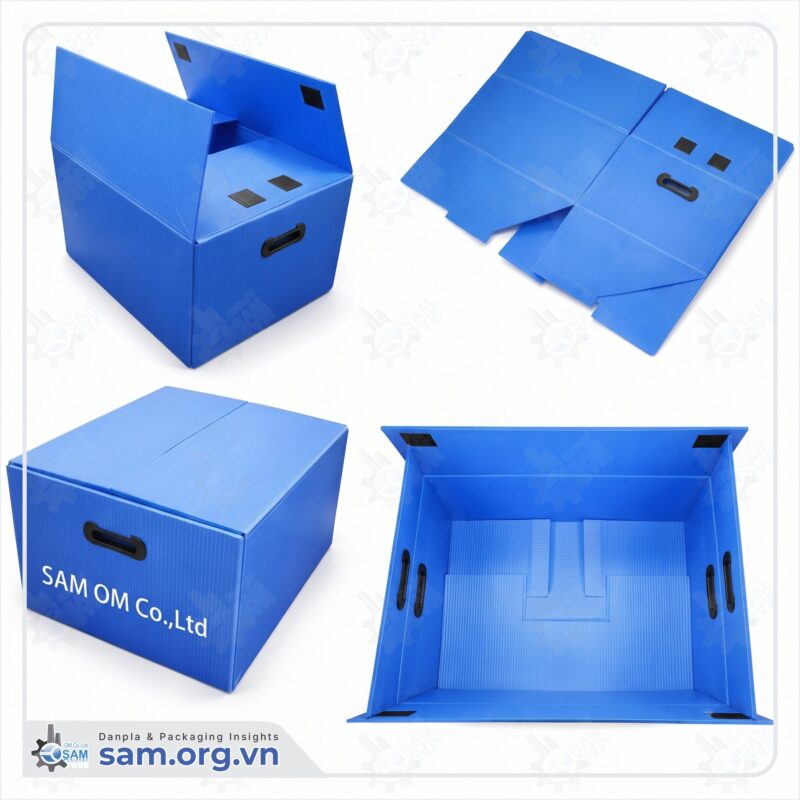
A foldable box is built from fluted PP panels along pre-scored crease lines. Therefore, the four walls fold inward along those creases. Meanwhile, the base uses a cross-fold or a separate insert, depending on the load. Overall, setting up the box takes only seconds and needs no tools.
The difference lies in the crease line itself. For example, the crease is heat-pressed across the flute direction of the sheet. As a result, the fold does not crack after repeated use. In practice, a well-made box survives hundreds of fold cycles without tearing at the crease.
Material specifications
The body uses fluted PP sheet from 2 to 10mm thick. For instance, 4-5mm suits light-component boxes, while 7-10mm handles heavy or high-stacked loads. In addition, sizes are cut to order, so the box matches the product and pallet. You can review the full range on the corrugated plastic boxes and partitions page.
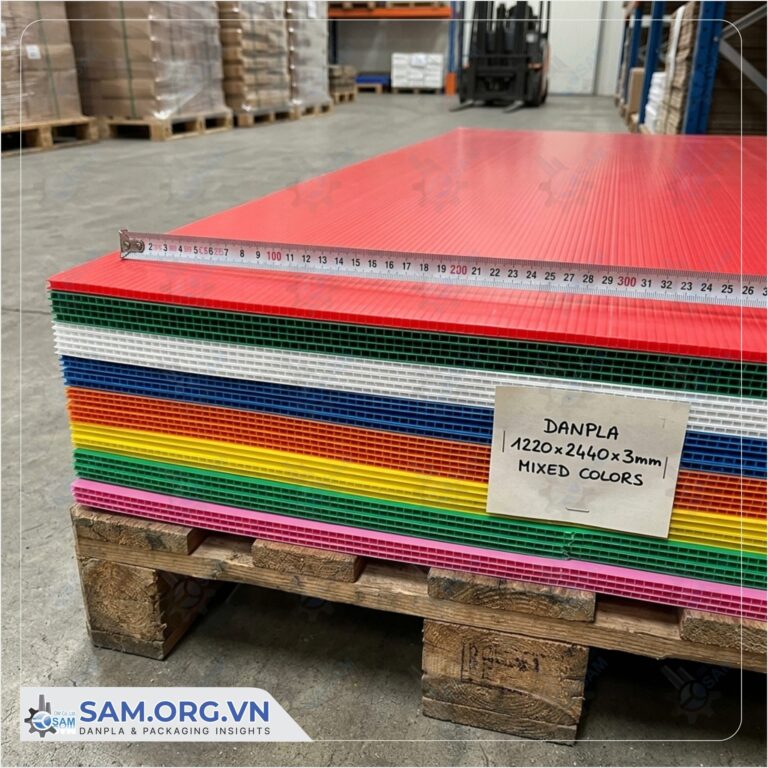
The material is 100% virgin PP, which resists water and humidity well. Moreover, over 20 colors help teams sort loads by route or by product code. The surface prints logos and barcodes for traceability. Therefore, one box format can serve both handling and tracking needs.
Base styles for foldable boxes
The base sets the load rating and the durability. For example, a four-flap cross-fold base suits light to medium loads. Moreover, it sets up fast and needs no extra step. However, it carries less when weight piles toward the center.
For heavy goods, therefore, the box uses a drop-in or a locking base. A drop-in base is a separate fluted panel that spreads the load more evenly. In addition, a locking base holds firm during lifting. As a result, a stronger base folds a little slower, so weigh speed against load.
Direct Benefits for Warehousing and Export
Saving warehouse space
Each box collapses to 15-20% of its height when empty. Therefore, 5 to 6 folded boxes fit the space of a single standing one. As a result, the warehouse frees up most of the room once lost to empty shells. Meanwhile, that floor area returns to goods or to work flow.
A quick example makes the gap clear. For instance, storing 600 spare boxes upright needs about 30 pallets. Folded, the same count drops to 5 or 6 pallets. Therefore, that gap is warehouse area you recover every month. For rented space billed per square meter, this goes straight to operating cost.
This benefit stands out in a closed-loop model. For example, the box travels with the goods, then folds flat to wait for the next run. In short, this is the principle behind reusable corrugated plastic boxes in a circular supply chain.
Cutting return-leg transport cost
Every export and domestic route has an empty return leg. However, rigid boxes still occupy the full cargo volume on the way back. Foldable boxes flatten, so one trip carries many times the count. As a result, return-leg freight falls in line with the volume saved.
Illustrative numbers show the same effect on the road. For example, one truck carries about 200 upright boxes per trip. Folded, the same truck carries over 1,000 boxes. As a result, empty return trips drop sharply. Moreover, this saving repeats on every delivery cycle, not just once.
For export goods, the box must also resist humidity and long-haul impact. Moreover, virgin PP does not absorb sea moisture or grow mold like carton. For a full picture, our export packaging solutions pair boxes with the right cushioning.
Stacking and daily handling
Once set up, the boxes stack thanks to their rim and a flat lid. For example, boxes of the same size align at the edges and keep the load stable on a pallet. Moreover, the printed label faces outward, so staff scan them fast during counts. As a result, picking and putaway both speed up.
In addition, the light fluted PP sheet reduces strain on workers. For instance, cut-out handles let staff lift with both hands safely. Meanwhile, rounded edges limit scratches during repeated handling. Compared with wood or solid plastic, therefore, a foldable box weighs far less at the same volume. Overall, this keeps daily operations both faster and safer.
Need technical advice on foldable box specs tailored to your pallet and routes? Contact SAM’s engineering team, free and with no obligation: +84 363 939 228 (Mr. Đạt)
How to Choose the Right Foldable Box
Size by pallet and product
The box should divide evenly across a standard pallet, so no floor area is wasted. For example, common pallets in Vietnam are 1100x1100mm and 1200x1000mm. In addition, the inner size should track the product with just enough tolerance. For the full method, see our guide on choosing the right box size.
Box height also drives the number of stacked layers. However, a tall box holds more yet loses stability under vibration. Meanwhile, a short box stacks more firmly but raises the unit count. Therefore, balance the two against the real weight of the goods.
Load rating, corner locks and accessories
Load rating sets the sheet thickness and base style. For instance, heavy goods need a reinforced base and stiffening ribs on the walls. In addition, plastic corner locks or edge strips keep the box in shape once set up. Cut-out handles also make manual lifting easier.
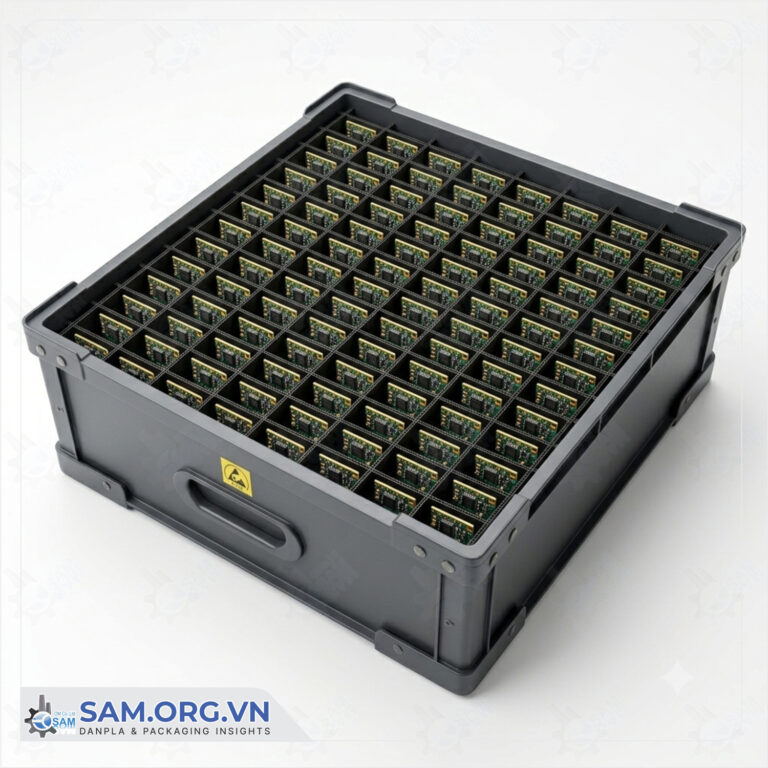
Choose the lid by your dust and stacking needs. For example, an attached lid closes fast, while a separate lid is easy to swap when damaged. Moreover, static-sensitive goods can use an antistatic grade. Therefore, every accessory is fabricated to match the box.
Material grades and operating environment
The operating environment sets the material grade. For general warehouses, standard fluted PP is enough. However, static-sensitive goods need an antistatic grade for electronics. Meanwhile, cold storage and outdoor use call for a grade that resists humidity and temperature swings.
Because PP does not absorb water, it suits damp areas and washes down easily. For long outdoor exposure, moreover, choose a grade with UV additives. In practice, the working temperature stays within the normal logistics range. As a result, the box keeps its shape and finish across many trips. Therefore, state your conditions up front so the right sheet is chosen from the start.
Estimating the break-even by trip count
A foldable box costs more than carton at the first purchase. In return, however, each box serves many trips. Divide the box price by the trip count to get the cost per use. Therefore, that figure usually sits below single-use carton.
The break-even depends on the trip count and the box recovery cost. For example, a closed domestic loop pays back fastest. Meanwhile, a one-way export lane needs a closer look at recovery. Overall, count the space and freight savings too, not just the box price.
Why Manufacturers Choose SAM
SAM has produced fluted PP sheets and boxes since 2010, and now serves over 300 customers across 15+ export markets. In addition, a capacity of 150+ tons per month on 6 lines covers both large orders and custom jobs. The 5,000 m² plant in Hai Phong sits near the port cluster, which suits shipments to Japan, the USA, Australia, the UK and Russia.
Each foldable box is cut and creased to the customer’s drawing. Because the crease line drives fold life, this step stays tightly controlled. Moreover, products carry ISO 9001:2015 and ISO 14001:2015 certification, with 100% inspection before dispatch. As a result, electronics customers such as Canon, LG and Sumitomo Electric fall within the group that runs circular fluted PP packaging.
An order runs from a prototype to the full batch. First, we set up a sample so the customer checks the fold and the load. Then the approved drawing moves to volume cutting and creasing. Moreover, lead time is agreed by quantity and accessory complexity. In addition, the minimum order stays flexible by box type and sheet thickness.
Beyond certification, each design goes through a fit and load check. For example, we test the fold cycle and the stacked load before release. Moreover, the sample confirms that the box clears the pallet footprint and closes cleanly. As a result, the customer sees real performance, not just a drawing. In addition, this step catches sizing issues early, which keeps the volume run on schedule. Meanwhile, any change to the ribs or the base gets fixed on the sample, well before mass cutting begins. Overall, a short round of sample review protects both fold life and delivery time.
Frequently Asked Questions
How many trip cycles can a foldable box handle?
Fold life depends on sheet thickness, load and handling. For light goods with correct handling, a box survives hundreds of fold cycles. Moreover, a heat-pressed crease line is the key factor that keeps the fold from cracking early.
How much space does a folded box save?
When not carrying cargo, it can be folded down to save 80% of the cargo space. In practice, 5 to 6 folded boxes fit the space of a single standing one. However, the exact ratio shifts with the base style and box height.
Is corrugated plastic the same as Danpla or coroplast?
Yes. The material goes by several names across markets, including coroplast, correx and corflute in Western regions. All of them describe the same hollow-core fluted PP sheet used for these foldable boxes.
Can foldable boxes be printed with logos and barcodes?
Yes. The fluted PP surface prints logos, barcodes and QR codes. Moreover, the ink holds well, which supports branding and batch traceability. Therefore, printing happens during production, with no extra outside step.