VI
 EN
Three common printing and packaging materials
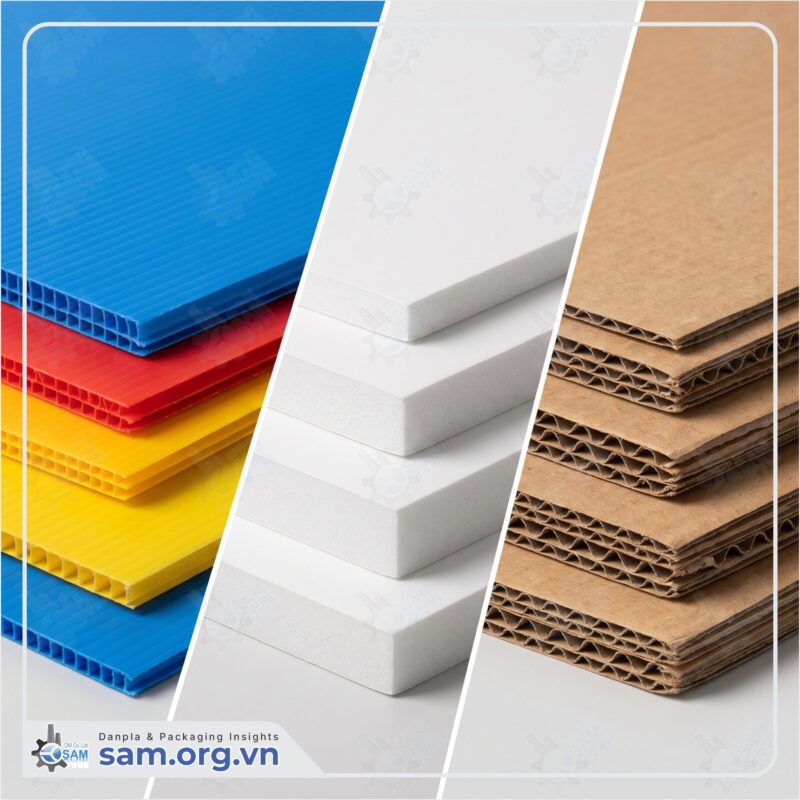
Many buyers hesitate between three flat-sheet materials for packaging, signage or partitions. These are corrugated plastic, Formex and cardboard. Corrugated plastic, also known as Danpla, coroplast, correx or corflute, is a hollow-core fluted PP sheet. All three print well, however their properties differ sharply. As a result, the wrong choice leads to damaged goods and hidden replacement costs.
Therefore this guide compares the three on the criteria B2B buyers care about most. For example, cost, durability, moisture resistance, reuse cycles and print quality all matter. The goal is simple. You should match the material to each real need, instead of defaulting to the familiar option.
This guide helps purchasing, logistics and packaging engineering teams alike. Each role views the material from a different angle. For example, purchasing watches price, logistics watches durability and reuse, while engineering watches specs and fabrication. Therefore the comparison below gathers all three views in one place.
Technical traits of each material
First, you need to understand what each material is made of. Each comes from a different base material. In turn, this decides every strength and weakness that follows. For example, a plastic resin behaves nothing like paper fiber once water enters. Therefore, the base material is the first thing to check.
Corrugated plastic (fluted PP sheet)
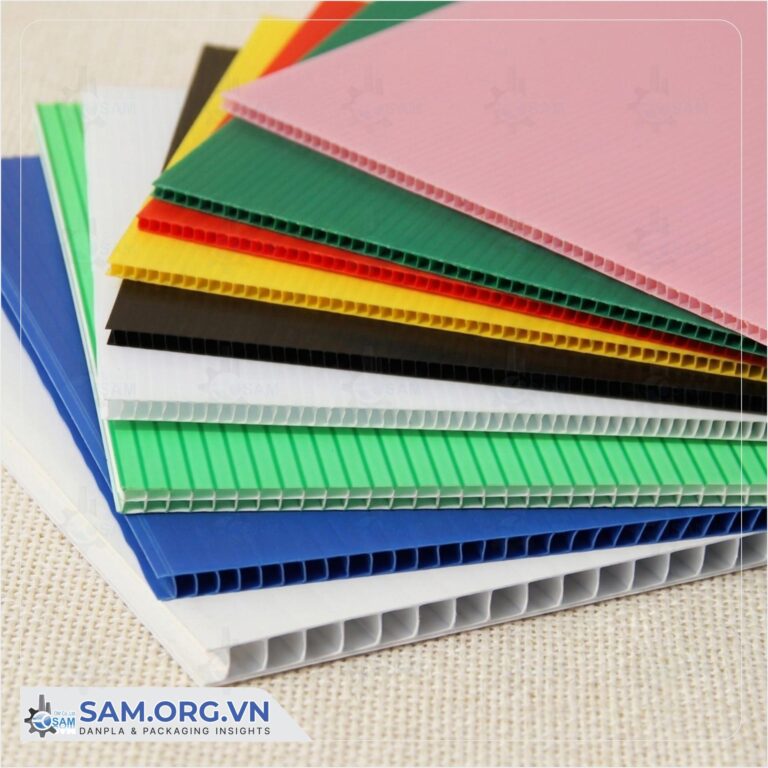
Corrugated plastic uses a hollow fluted core between two flat skins. The material is made of virgin PP. Common thickness runs from 2 to 10mm, with widths up to 2100mm and over 20 colors. Moreover, the sheet is light, fully waterproof, impact resistant and chemical resistant. Because it folds along the flutes, it also forms boxes and partitions. For full specs, see our corrugated plastic sheets page.
Buyers also grade the sheet by GSM, which sets its stiffness. For example, light grades near 300 to 450 GSM suit printing and partitions. In contrast, heavier grades from 600 GSM and up carry load as boxes. Moreover, the 20 plus colors do more than look good, because they sort goods fast in a warehouse. Finally, PP sits in recycling group 5, so it can be reground at end of life.
Formex (PVC foam board)
Formex is a rigid PVC foam board with a flat, smooth surface. That surface prints very sharply. Therefore people often use Formex for signage, standees and display items. The board stays stiff and flat, which helps it hold its shape. However, it weighs more than corrugated plastic at the same thickness and turns brittle under hard impact. In addition, PVC is harder to recycle than PP.
Formex also comes in thicknesses from 2 to 10mm, and 3mm and 5mm are the most common for signage. Because the surface is solid, it takes decals easily and cuts cleanly on a CNC router for lettering. However, thick boards feel heavy, so high mounts need a firm frame. Moreover, long outdoor exposure can yellow and embrittle PVC unless a UV coat protects it.
Cardboard (corrugated paper)
Cardboard is corrugated paper, and it is the cheapest of the three. It prints beautifully by flexo or offset, stays light and recycles easily. However, its biggest weakness is moisture. Once it gets damp, the board softens fast and loses load strength. As a result, cardboard suits dry goods used only a few times, not humid or wet settings.
Cardboard also grades by flute count. For example, three-ply suits light goods, while five-ply handles heavier loads. In addition, strength depends on paper weight and on flute type A, B or C. On the plus side, the board folds flat, stores compactly and needs only low-cost die tooling. However, moisture still unglues the seams and collapses the flutes.
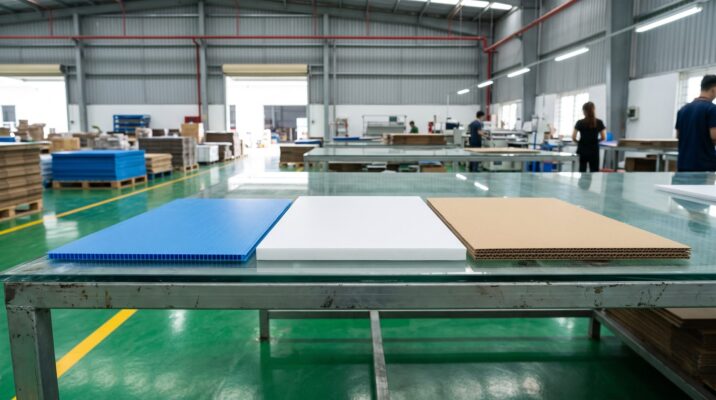
Cost, durability and moisture resistance compared
The table below sums up the main differences. These ratings are relative, so use them for a quick first filter. After the table, each key factor gets a closer look. In particular, cost and moisture deserve more than a single row.
| Criteria | Corrugated plastic | Formex (PVC foam) | Cardboard |
|---|---|---|---|
| Upfront cost | Medium | Medium to high | Low |
| Durability, reuse | High, years | Medium | Low, a few times |
| Water resistance | Full | Good | Poor |
| Impact, load | Good | Medium, brittle | Medium when dry |
| Print quality | Good | Very good, flat | Very good |
| Recycling | Good (PP) | Harder (PVC) | Good (paper) |
| Main use | Boxes, partitions | Signage, display | Single-use boxes |
Cost by lifecycle, not just purchase price
Cardboard has the lowest purchase price. However, that is the cost for one trip only. In reusable logistics, corrugated plastic boxes usually cost less per use because they last for years. For example, one plastic box replaces dozens of cardboard boxes over time. This math explains why many firms are replacing cardboard with corrugated plastic for internal packaging.
Here is a simple example. Suppose an internal route reuses packaging 50 times over two years. Meanwhile, cardboard needs several replacement rounds because it tears and absorbs damp. In contrast, the plastic box runs the whole cycle and keeps going. Therefore, once you divide total cost by the number of trips, the plastic option usually lands lower. In addition, reusable boxes cut waste handling and disposal fees. Over a full year, those savings add up across every route.
Moisture decides a lot
Cold storage, outdoor use and wash-down areas rule cardboard out early. In contrast, both plastic materials handle moisture well. Between them, corrugated plastic leads on impact and stacking load. You can read more in our guide on waterproof corrugated plastic sheets. Therefore, if goods meet water often, cardboard is rarely in the running. Moreover, humidity swings in cold rooms cause condensation, which cardboard soaks up fast. As a result, the walls bow and stacks lean after only a few cycles. Plastic sheets, by contrast, shed that moisture and hold their shape.
Printing and aesthetics
When the printed image is the main point, Formex and cardboard lead thanks to their smooth, flat faces. For example, high-resolution photos and soft color gradients show crisply on both. In contrast, corrugated plastic has a faint fluted texture, so prints look slightly less smooth. However, it still carries logos, barcodes and flat color blocks well. For internal packaging or partitions, that sharpness is enough. You can read more about printing on corrugated plastic. In practice, many buyers reserve Formex for customer-facing displays. Meanwhile, they keep the plastic sheet for working boxes that take daily handling.
Need technical advice tailored to your production line? Contact the SAM Packaging engineering team, free, no obligation: +84 363 939 228 (Mr. Đạt)
Choosing the material by use case
No single material wins every case. Instead, the right pick depends on purpose, environment and reuse cycles. Below is a quick guide by need. For most buyers, two questions settle it fast. Does the item return for reuse, and does it face moisture? Once you answer those, the shortlist usually narrows to one material.
When to choose cardboard
Cardboard suits dry goods, single use and the lowest price. For example, e-commerce shipping boxes, one-way export cartons and high-volume retail packaging all fit. When the box never returns and never meets moisture, cardboard is the most economical choice. In addition, flat-folded cardboard saves warehouse space before use. For seasonal orders, this clearly lowers storage cost.
When to choose Formex
Formex suits jobs that need a flat surface for sharp printed images. For example, signage, trade-show standees, information boards and display models all work well. Moreover, this material excels at looks and flatness. However, it does not target load bearing or heavy reuse, so it rarely serves as a shipping box. At a trade-show booth, for example, its light weight and sharp print help crews set up fast. Moreover, when the campaign ends, replacement cost stays modest.
When to choose corrugated plastic
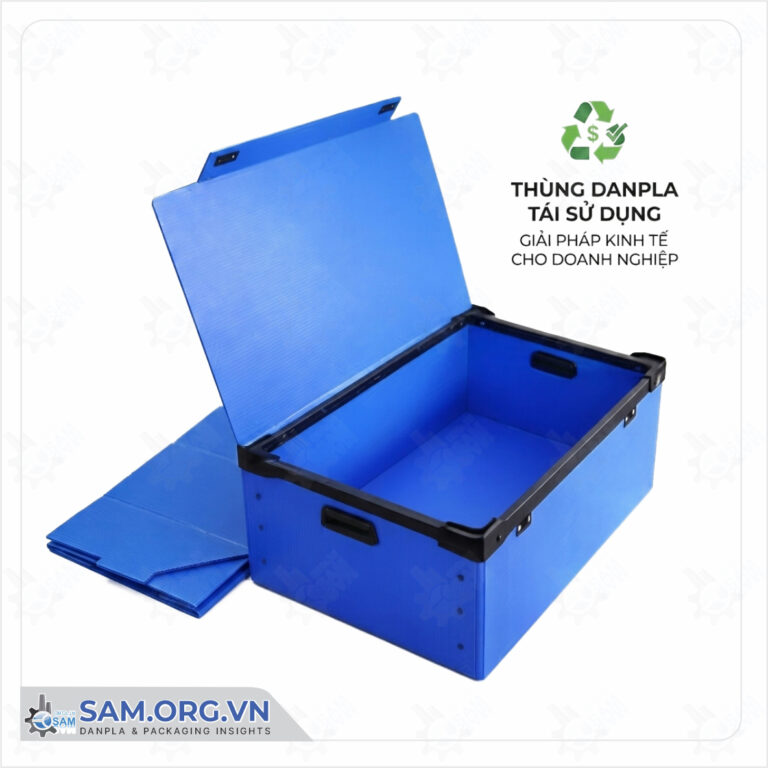
Corrugated plastic suits packaging that must be reused and face harsh conditions. For example, returnable logistics boxes, ESD partitions for electronics, pallet layer pads and cold-storage shipments all fit. In addition, this material balances weight, strength and lifecycle cost well. Therefore it is popular for internal factory packaging. For a deeper paper comparison, see the advantages of corrugated plastic over carton. In addition, the sheet withstands many wash and impact cycles on a line. As a result, the warehouse team rarely has to top up packaging mid-season. Weight matters here too. Because the fluted sheet is light, it keeps freight bills lower than solid plastic on long routes. Therefore it fits export lanes where every kilogram counts.
Custom fabrication and production capacity
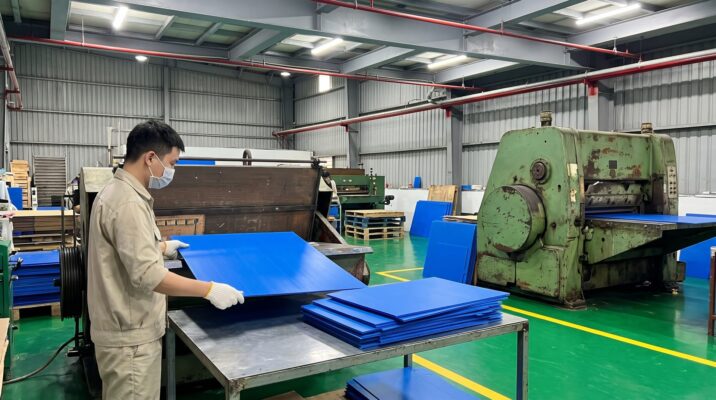
Picking the right material is only the first step. Next, you need a fabricator that matches your size, thickness and print needs. SAM Packaging has produced corrugated plastic since 2010, with more than 16 years in the field. Moreover, the plant runs 6 lines, over 150 tons per month, across a 5,000 m² site. In addition, the color range covers more than 20 options, so brand coding stays consistent across a fleet of boxes.
The sheets are cut, folded, die-cut and printed to each customer drawing. In addition, every batch is checked to ISO 9001:2015 and ISO 14001:2015 standards. The products already reach 15+ export markets and serve more than 300 clients. Therefore, when a buyer wants a real comparison, SAM sends samples in the planned thickness and color for testing before any large order.
When you compare suppliers, you should ask three things. First, does the sheet use virgin or recycled PP, because this drives durability? Second, can the shop cut, fold and print to your own drawing? Third, does each batch come with an inspection record? Together, these criteria quickly screen out shops that fall short on engineering. Finally, ask for lead times and minimum order quantity up front. As a result, you avoid surprises once production starts.
Frequently asked questions
Is corrugated plastic the same as Danpla or coroplast?
Yes. They name the same fluted PP sheet. Different regions simply use different brand names for it. Therefore the material and specs stay identical regardless of the label.
Which material is cheapest for packaging?
Cardboard is cheapest by one-time purchase price. However, if packaging is reused many times in logistics, corrugated plastic costs less per use because it lasts for years. Therefore you should count lifecycle cost, not just the upfront price. For a reusable route, add up replacements, storage and disposal over a year. In most cases, that total favors the plastic sheet.
What should I use in humid environments?
In cold storage or wet areas, you should use corrugated plastic or Formex, because both resist moisture well. In contrast, cardboard absorbs water and fails early. Between the two plastics, corrugated plastic carries load better when stacked. For wash-down zones, it also rinses clean and dries fast. As a result, it suits food and cold-chain lines.
Can I print a logo on corrugated plastic?
Yes. You can print logos, barcodes and brand details by screen or inkjet printing. The result is slightly less crisp than Formex because of the fluted surface. However, it stays clear enough for packaging and internal identification.
Does Formex hold up outdoors?
Formex resists moisture well. However, under strong sun over time, PVC can yellow and turn brittle. Therefore, for outdoor use, you should pick a UV-coated grade or add a protective film. For long-term outdoor signage, many teams choose corrugated plastic because it stays more stable over the years.