VI
VI EN
EN
Why stacked goods get scratched and where layer pads help
Goods stacked on a pallet face a quiet risk. When the load vibrates in transit, product surfaces rub against each other. As a result, you get scratches, dented corners, or peeled coating. For electronics, glass, or powder-coated metal, even one small scratch can reject a whole batch.
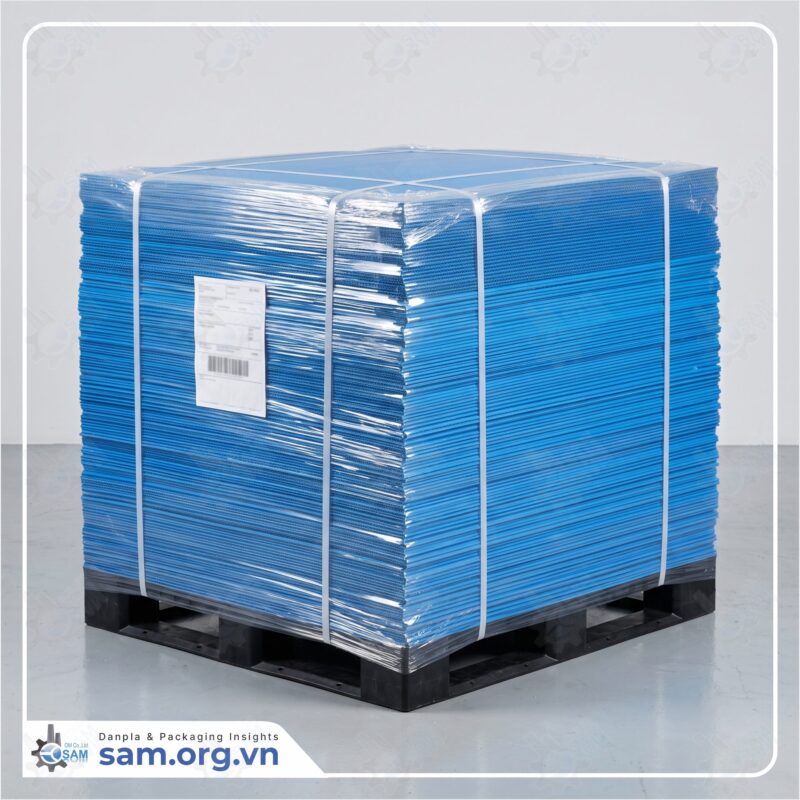
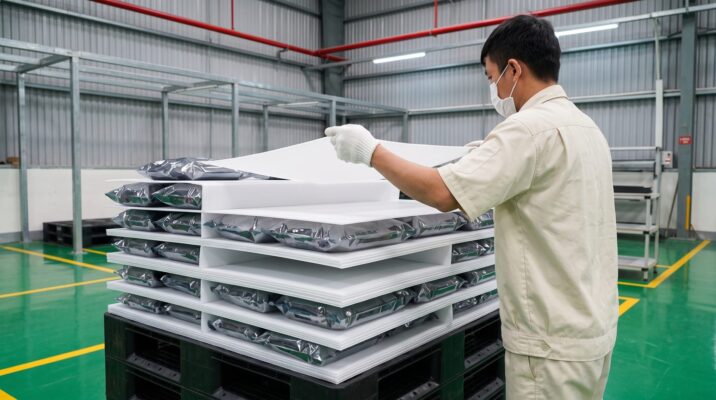
Corrugated plastic, also known as Danpla, coroplast, correx, or corflute, is a hollow-core fluted PP sheet. A corrugated plastic layer pad is a flat sheet placed between the tiers of stacked products. Therefore it spreads the compression load and keeps the contact face level. Moreover it stops two layers from rubbing directly against each other during the trip.
This article covers the structure, how to choose specs, and common mistakes when using layer pads for warehousing. In addition, it helps purchasing and packing teams pick the right pad for each product line. Because the right choice cuts damage and packaging cost over time, it pays to get it right early.
Many teams overlook the layer pad because it looks like a minor detail. In reality, however, the cost of scratched goods and customer claims often dwarfs the price of the pad. Moreover, the right pad lets you stack higher and use container space better. It also keeps the load square, so a forklift handles it fast and safely. Therefore the pad belongs in your total logistics cost, not just the unit price.
Structure and specs of corrugated plastic layer pads
A layer pad is cut from a twin-wall corrugated plastic sheet. This structure, therefore, drives both the compression strength and the flatness of the pad.
The fluted PP core
The sheet has two flat faces joined by vertical flutes in the middle. This hollow core gives stiffness across the pad while staying light. As a result, the pad carries the tier above without sagging. The material is virgin PP, so it resists oil, grease, and most industrial chemicals. In addition, the smooth face does not scratch the product it touches. For a deeper look, see how the fluted core structure stays light yet strong.
Thickness, GSM and cut sizes
Sheets range from 2mm to 10mm thick. For most goods, however, layer pads use the 2mm to 4mm range. GSM sets the stiffness, so a higher GSM carries a heavier load. Pads are cut to the pallet footprint, for example 1000 x 1200mm or 1100 x 1100mm. Because the raw width reaches 2100mm, most pallet sizes cut as one seamless sheet. To match GSM to your use case, see this guide on corrugated plastic sheet GSM.
Pad surface and variants
Layer pads come in several variants by surface and working environment. The plain standard pad, for example, suits most general goods. An antistatic version, however, fits electronics and stops static from harming sensitive parts. In addition, a printed pad lets teams sort product lines fast or read handling notes on the floor. Because the sheet comes in 20+ colours, moreover, you can colour-code pads by route, shift, or client. The surface can also be lightly textured, so the tier above slips less. For food goods, therefore, pick virgin PP without colour additives for safe contact.
Weight and handling on the line
A pad also has to be easy for one worker to place quickly. Because the sheet is light, therefore, a single person lifts and drops it between tiers with no strain. Paper of the same stiffness, by contrast, weighs more and bends in the hand. Moreover, a rigid pad stays flat as it lands, so it does not fold or trap a corner. As a result, the packing line keeps its pace even at high tier counts. For semi-automated lines, in addition, the consistent thickness helps feeders pick one pad at a time.
Corrugated plastic versus paper, foam and cardboard pads
Each pad material has its own strength. Therefore the section below focuses on the three factors that matter most for warehousing: weight, service life, and moisture resistance.
Weight and reusability
Paper and cardboard absorb moisture, so they soften after a few uses. Foam is light, however it tears easily and takes up storage volume. Corrugated plastic, by contrast, keeps its stiffness across hundreds of cycles. As a result, one pad can circulate for months inside an internal pallet pool. Therefore the cost per use drops sharply against single-use paper pads. For a returnable packaging model, this factor often decides the business case.
Moisture resistance and hygiene
PP does not absorb water, so pads do not mould in cold rooms or humid areas. Moreover the face wipes clean fast with a damp cloth, which suits food and pharma lines. Paper fails once it gets wet, while foam holds moisture and dust. You can read more in this note on waterproof corrugated plastic sheets. For sea-freight exports, in addition, container humidity is a constant risk.
Lifecycle cost versus single-use pads
A plastic pad costs more than a paper one of the same size at first purchase. However, the right sum divides that price across the real number of uses. Paper fails after a few trips, whereas a plastic pad cycles hundreds of times. As a result, the cost per use drops well below single-use paper. Moreover, fewer scratches mean lower claims and rework costs. Because the pad is light, in addition, it barely adds to the parcel weight for freight. Therefore, on a fixed in-plant route, a reusable pad usually pays back within a few months.
Need technical advice tailored to your production line? Contact SAM’s engineering team — free, no obligation: +84 363 939 228 (Mr. Đạt)
How to choose layer pad specs by load
The wrong thickness leads to two extremes: a sagging pad that scratches, or an over-stiff pad that wastes money. Layer pads are cut from large corrugated plastic sheets to match your exact load.
By product type
Light, flat goods such as printed packaging or thin glass need only 2mm to 3mm. Heavier goods such as metal cans or glass bottles need 4mm or more. For painted or plated surfaces, therefore, pick a higher GSM for a perfectly flat face. Because a sensitive surface demands more, the pad flatness matters more too. For fragile goods, in addition, you can add a thin foam layer on top of the pad.
By pallet size and stacking
The pad should cover the full pallet face, so it supports the whole tier evenly. Cut it equal to the pallet, or a few millimetres smaller. For staggered stacks, moreover, the pad builds a fresh flat base for the tier above. As a result, the load stays stable and tips less during handling. The more tiers you stack, therefore, the higher the GSM the bottom pad needs. Rounded corners also let workers handle each pad faster and more safely.
Common mistakes when using layer pads
The most common mistake is picking a pad too thin to save money, which then sags and scratches. The second mistake, meanwhile, is cutting the pad far smaller than the pallet, so the load edges lose support. Some sites also reuse badly warped pads, so the tier loses balance during handling. In addition, many teams skip the bottom pad between goods and the wooden pallet, so the base scratches and picks up splinters. Furthermore, stacking beyond the rated tier count pushes the bottom pad past its design load. Therefore, regular checks and retiring damaged pads keep quality steady across the whole service life.
Edge protection for stacked loads
Beyond the flat pad, the edges also need care on tall stacks. Corner pieces or L-profiles, for example, stop the strapping from cutting into the top tier. In addition, a rigid top cap spreads the pressure of stretch wrap across the whole surface. Because the top layer takes the most strapping force, it scratches first without protection. Therefore, pairing a layer pad with edge boards gives the load a complete scratch-free system. For fragile faces, moreover, a slightly oversized pad shields the product corners during handling.
Real-world uses and layer pad
Layer pads appear across many industries that stack high-value goods. Electronics lines, for example, use pads between component trays to prevent static and scratches. Beverage plants place them between tiers of cans and bottles on tall pallets. In addition, produce and food lines use easy-clean pads between trays.
Logistics operators, in particular, rely on layer pads inside returnable pallet pools. Because the same load travels between sites many times, a durable pad protects goods on every leg. For example, an automotive parts route may reuse the same pads for years without change. In addition, third-party warehouses use printed pads to keep client stock clearly separated on shared racks. Retailers also slide pads between display units, so printed faces stay clean in transit. Meanwhile, cold-chain lines value a pad that shrugs off condensation without warping. As a result, one flat sheet supports product protection, stock control, and hygiene at once.
Pharma and cosmetics lines, moreover, choose easy-wipe pads to keep hygiene between layers of vials and blisters. Engineering shops use high-GSM pads between heavy machined parts. In cold rooms, because PP does not mould, the same pads last across many seasons without replacement. As a result, one pad type can serve several different routes within the same plant.
SAM has produced corrugated plastic and fabricated layer pads to pallet size since 2010. The plant runs 6 lines with a capacity above 150 tons per month. Moreover pads are CNC-cut to size and corner-rounded on request. All material is virgin PP, tested under ISO 9001:2015 and ISO 14001:2015. Because the team serves 300+ clients across 15+ markets, it advises on GSM and thickness that match your real load.
The team also advises on the full pad program, not just a single size. For example, it can standardise two or three pad specs across your product range. As a result, purchasing stays simple and stock turns faster. Moreover, samples ship for a fit check before any volume order, so you confirm the spec on your own line first.
Frequently asked questions about corrugated plastic layer pads
Is corrugated plastic the same as Danpla or coroplast?
Yes. These names all refer to the same fluted PP sheet. Therefore a layer pad made from any of them is identical in structure. The name simply varies by region and market.
How is a layer pad different from a paper pad?
Paper absorbs moisture and softens, so it usually works only once. A corrugated plastic pad is virgin PP, however, so it stays waterproof and stiff for hundreds of cycles. As a result, the cost per use is far lower over the long run.
What thickness should I choose for a layer pad?
Light, flat goods use 2mm to 3mm. Heavier goods such as cans or glass bottles need 4mm or more. Moreover the higher you stack, the higher the GSM the bottom pad needs so it does not sag.
Can layer pads be cut to a custom pallet size?
Yes. Pads are CNC-cut to your exact pallet, for example 1000 x 1200mm or 1100 x 1100mm. Because the raw width reaches 2100mm, most pallet sizes cut as one seamless sheet. In addition, the corners can be rounded on request.
Do layer pads come in an antistatic version?
Yes. For electronics, pads come in an antistatic grade that protects sensitive parts. Therefore you should state the ESD requirement when ordering, so the team picks the right material and colour. These grades usually come in black or pink to the standard ESD colour code.