VI
 EN

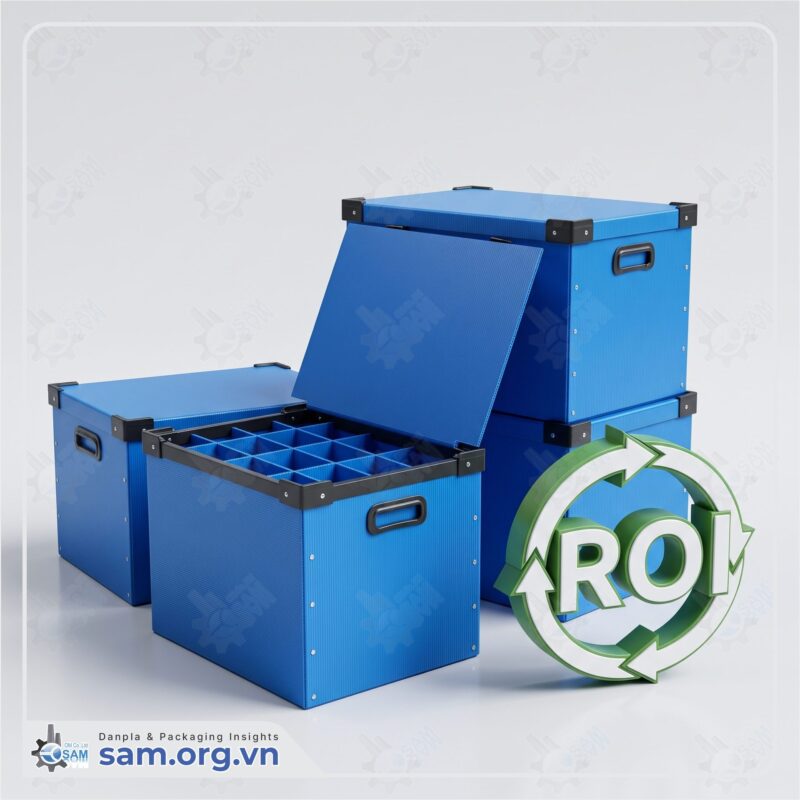
The cost question behind returnable packaging
Every time you ship with a one-way carton, you pay for the box and then throw it away. As a result, that cost repeats on each trip. With returnable packaging, however, you pay more up front and reuse the box dozens of times. Therefore the real question is not which box is cheaper per unit. Instead, it is how many trips it takes to break even.
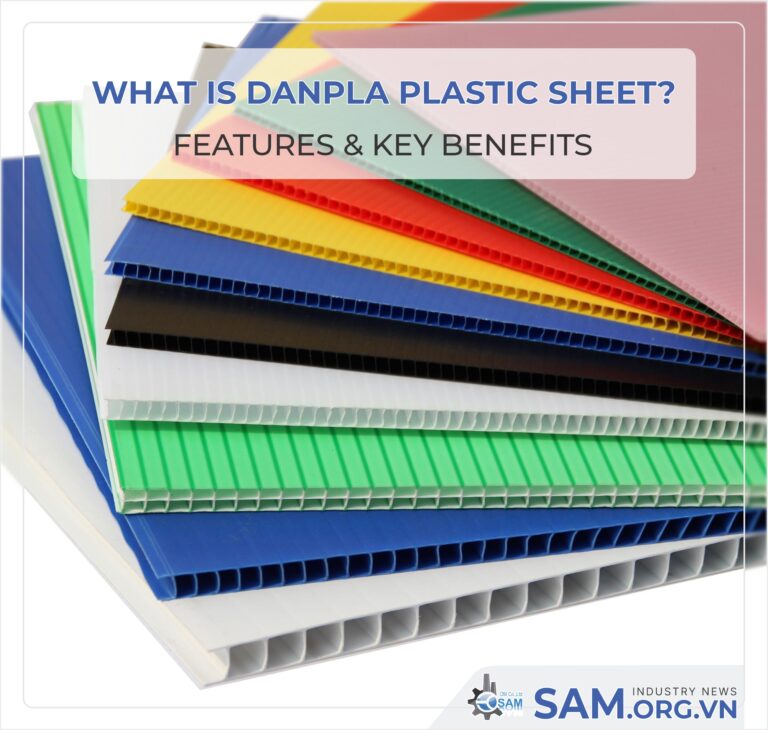
Corrugated plastic, also known as Danpla, coroplast, correx or corflute, is a hollow-core fluted PP sheet used to build reusable boxes. Moreover, it is light, folds flat and survives many return trips. For these reasons, it suits returnable models well. Still, the actual return on investment depends on rotation, reverse logistics distance and loss rate.
This article gives you the formula, a way to estimate real reuse cycles, and the variables that distort the result. In short, the goal is to help procurement and logistics teams decide with data rather than guesswork. The sections below work through the numbers step by step.
How to calculate returnable packaging ROI
The principle is simple. In practice, you divide the investment by the number of uses. A carton charges its full price on every trip. By contrast, a reusable box spreads its purchase price across all trips, and then adds a small operating cost per cycle.
Cost per trip formula
The true cost of a reusable box has two parts. First, there is depreciation. Second, there is the operating cost. The four items below are enough for a quick estimate in most cases.
- Depreciation per trip equals the box purchase price divided by its total usable trips.
- Operating cost per trip covers reverse logistics, cleaning and a share of storage.
- Total returnable cost per trip equals depreciation plus operating cost.
- For comparison, carton cost per trip equals the carton price plus disposal.
Here is an illustrative example. Suppose a corrugated plastic box costs 120,000 VND and lasts 30 trips. Depreciation is therefore 4,000 VND per trip. In addition, reverse logistics and cleaning add about 3,500 VND, so the total is 7,500 VND per trip. Meanwhile, an equivalent carton costs 15,000 VND per trip. As a result, the gap is your saving.
Notice how sensitive the result is to the trip count. For example, if the same box lasted only 15 trips, depreciation would double to 8,000 VND. Therefore the total per trip would climb and the saving would shrink. In short, the life estimate matters as much as the price you negotiate. For this reason, it pays to be conservative when you first model a new loop.
Break-even point and payback
The break-even point tells you how many trips recover the upfront investment. The formula divides the box purchase price by the saving per trip. Here, the saving equals the carton cost minus the returnable operating cost, before depreciation.
Applied to the example above, the saving is 15,000 minus 3,500, or 11,500 VND per trip. Therefore 120,000 divided by 11,500 gives about 11 trips. From the eleventh trip onward, the model turns profitable. Moreover, by the thirtieth trip the returnable total is 225,000 VND against 450,000 VND for cartons. As a result, the saving is almost double the original purchase price.
Think in total cost of ownership
ROI only holds up when you measure total cost of ownership, not just the purchase price. In addition, this figure includes capital, operating cost, loss and recovery value. A pricier box that is durable and rarely lost often shows a lower total cost. Therefore you should compare on one common unit, usually the cost per trip.
Cartons also carry hidden costs that teams tend to miss. For example, assembling, taping and labeling each box takes labor. Moreover, disposal cost rises with waste fees. As a result, once you add these items, the gap between cartons and returnables grows wider than the sticker price suggests.
When you present the case to management, the per-trip number persuades better than a lump sum. In addition, finance teams rely on it to approve capital budgets. Therefore framing ROI per trip keeps the discussion anchored to operations. Overall, it also makes supplier quotes easier to compare on equal terms.
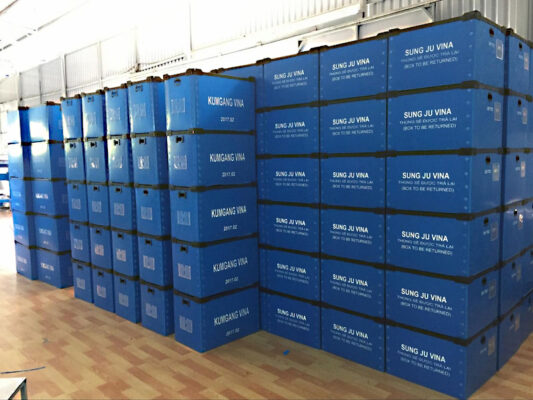
Real reuse cycles of corrugated plastic boxes
The trip count is the most important variable in the whole calculation. For instance, doubling the number of trips nearly halves depreciation per trip. Therefore real box life drives the result more than the purchase price does. In short, a cheap box that fails early can cost more than a durable one.
What extends box life
Boxes made from virgin PP survive many dozens of trips under normal handling. However, the figure shifts with sheet thickness, reinforcement ribs and handling habits. The points below extend service life in a clear way.
- Choose 4 to 5mm thickness for heavy loads and high rotation.
- Reinforce ribs, base and hinges at stress points.
- Train staff to fold and open correctly, and avoid throwing or dragging.
- Match box load rating to real content weight, so nothing is overloaded.
Overloading is a common cause of early failure. For guidance, see our note on corrugated plastic box load capacity. In addition, boxes that fold flat on return cut reverse logistics cost, a topic covered in foldable corrugated plastic boxes.
Design choices also compound over time. For example, rounded corners and welded ribs resist repeated impacts better than plain folds. In addition, a lid that clips securely protects edges during stacking. As a result, small structural upgrades at the design stage often add several trips to the service life. Therefore it helps to involve the manufacturer early, before the first order ships.
When a box reaches end of life
End-of-life signs include cracked ribs, crushed load-bearing corners and broken hinges. At that point, the box no longer protects goods reliably. Still, the PP material remains recyclable. Therefore the scrap recovery value should be subtracted from the lifecycle cost. As a result, real ROI runs higher than the rough first estimate.
Before disposal, moreover, many boxes can be repaired. For example, replacing a hinge, re-gluing a rib or patching a corner adds several more trips. In addition, repair usually costs far less than a new box. Therefore a periodic inspection routine squeezes full value from each box before recycling. Overall, it is a small saving that compounds across a whole fleet.
Need technical advice tailored to your production line? Contact the SAM Packaging engineering team, free and with no obligation: +84 363 939 228 (Mr. Đạt)
Variables that distort your ROI
The basic calculation assumes every box returns and uses its full trip count. In practice, reality is rarely that clean. Therefore the three groups of variables below decide whether ROI meets expectations.
Reverse logistics and shrinkage
A returnable model only profits when boxes come back steadily. However, the longer the return leg, the more it eats into savings. For example, boxes that fold flat carry more per truck, so this cost drops. As a result, a closed loop within a short radius usually delivers the best ROI.
Shrinkage is a bigger risk than many expect. Each box that never returns is capital that was not yet recovered. Moreover, a 5% loss per cycle can wipe out the benefit after a few rounds. Therefore you should number boxes, count them and write return duties into the contract.
Besides distance, handling discipline on the return leg matters too. For instance, workers should fold and bundle boxes rather than leave them loose. As a result, trucks carry more boxes per trip and damage drops. In addition, a quick scan at each handover keeps the count honest and exposes losses early.
Rotation, cleaning and storage
The number of boxes you buy depends on shipping rhythm and cycle time. The longer the cycle, the more boxes you hold at once. In addition, that is tied-up capital, so it belongs in the initial investment. Therefore shortening the turnaround lowers the fleet size and lifts utilization.
Cleaning and repair are costs that teams often forget. For instance, food and electronics lines demand thorough cleaning after each cycle. Meanwhile, boxes that fold flat save storage space against rigid ones. In addition, warehouse space is money, so this item also belongs in the model.
Two rotation scenarios, two different ROIs
Consider two companies that buy the same 120,000 VND box. Company A runs a closed city loop, rotates each box 40 times a year, and loses under 2%. By contrast, company B ships between provinces, rotates each box only 12 times, and loses nearly 10%. For the same product, A earns a far higher ROI than B.
The difference lies in the operating model, not the box. Because A recovers boxes quickly, depreciation spreads over many trips. Meanwhile B loses boxes midway and carries the unrecovered capital. In short, ROI must reflect your real routes, so do not copy another company’s numbers.
Put rough numbers on it. Over a year, company A logs 40 trips, so depreciation falls to about 3,000 VND per box. By contrast, company B logs only 12 trips, so depreciation climbs above 10,000 VND. On top of that, B carries more unrecovered capital from lost boxes. As a result, the very same box is a clear win for one buyer and a marginal call for the other.
Rolling out returnable packaging with SAM Packaging
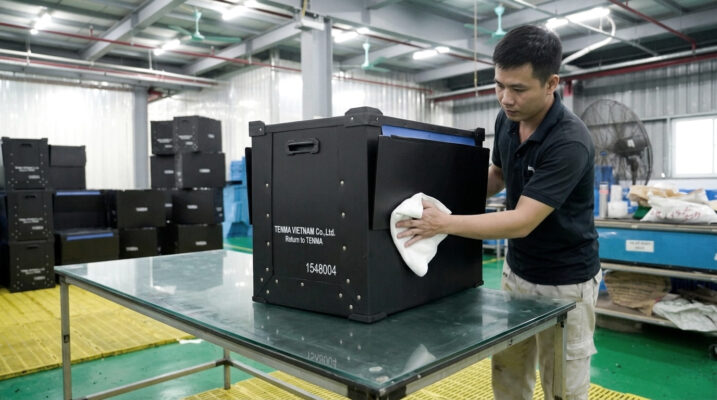
Founded in 2010, SAM makes corrugated plastic boxes and partitions to order. After more than 16 years, the factory now runs 6 lines and over 150 tons per month. Moreover, it uses 100% virgin PP, which keeps durability consistent across batches. That durability, in turn, is exactly what lengthens the reuse count.
For a returnable model, the box structure needs a design matched to the goods and the rotation rhythm. Therefore the engineering team helps you choose thickness, reinforcement ribs and a lid suited to the load. In addition, the systems hold ISO 9001:2015 and ISO 14001:2015, with SGS inspection for export. As a result, each batch is checked before delivery to keep quality stable across many cycles.
Experience serving over 300 clients and more than 15 export markets helps tailor the design to each industry. For the full range, see our reusable corrugated plastic boxes page. In addition, a broader view of savings sits in cost-saving reusable boxes, while the core concept is covered in what is returnable packaging.
Frequently asked questions about returnable packaging ROI
How many trips does a corrugated plastic box last?
A virgin PP box usually lasts many dozens of trips under normal handling. However, the real figure depends on sheet thickness, reinforcement ribs, load rating and handling. Moreover, a closed loop and correct handling extend box life further.
How do you find the break-even point?
Divide the box purchase price by the saving per trip. Here, the saving equals the carton cost per trip minus the returnable operating cost, before depreciation. As a result, you get the number of trips needed to recover the initial investment.
Is returnable packaging always cheaper than cartons?
Not always. In fact, the model only profits when rotation is high enough and shrinkage stays low. Therefore, for very long return legs or one-way shipments, cartons can still make more sense.
Is corrugated plastic the same as Danpla or coroplast?
Yes. These are different names for the same fluted PP sheet material. For example, the Vietnamese and Asian markets often call it Danpla, while coroplast, correx and corflute appear elsewhere. In all cases, the returnable box performance is the same.